
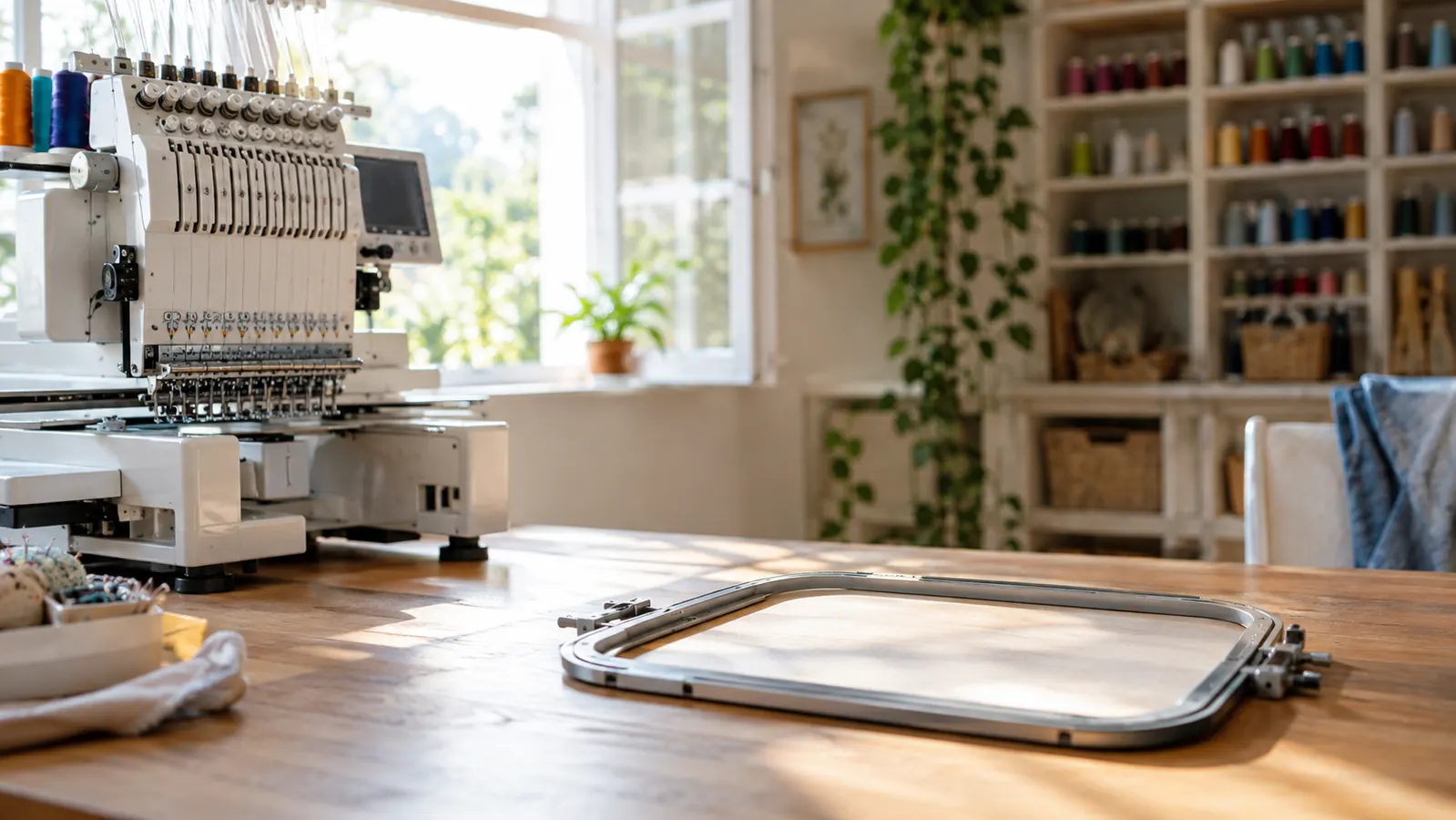
Short answer first. On slippery performance fabric, towel terry, and anything that creases or moves under a hoop, the Sew Tech magnetic hoop holds better than the plastic screw-tension hoop that has sat on my table since I bought my used six-needle in 2019. The magnetic frame holds fabric evenly all the way around, it does not press a lasting crease where the screw rides, and loading it takes about half the time once you have the motion down. It also costs more, which is why my real answer is not to throw the plastic hoops away. It is to own one good magnetic frame for the hard fabrics and keep a few cheap plastic hoops for everything else.
The hoop I am comparing it with is the one that came with my machine, an outer ring, an inner ring, and a screw that squeezes the fabric between them. That hoop is honestly fine on stable cotton; I hooped hundreds of polos with it before I ever questioned it. But my jobs have shifted. Youth leagues order logo towels, and one team wanted the same design on smooth performance polos. Those are exactly the fabrics a screw hoop fights. The fabric pulls tight at the screw and drifts on the far side of the ring. The towel pile gets a dent that will not brush out. On a long, warm afternoon the screw works itself loose, and that is how you discover your registration has wandered two millimeters. I do most of my flat work in 6x10, so I ordered the Sew Tech magnetic hoop in the 6x10 size and ran it against the plastic hoop for six weeks.
How I Tested the Two Hoops
Six weeks was enough to see what each frame actually does. Week one I stitched the same left chest logo on four fabrics: cotton pique polos, a smooth performance poly shirt, heavyweight white terry towels, and ten ounce canvas bags. I used the same 40 wt polyester thread and the same cut-away backing on every piece, the same 12,000 stitch design, and the same machine speed. The only thing I changed was the hoop. I kept a notebook on the table and wrote down how every piece loaded, whether the fabric shifted while I stitched, where the last color landed against the first, and what the fabric looked like the moment it came out of the frame.
I stitched eight pieces of each fabric on each hoop before I drew any conclusions. Then I repeated the test on the two fabrics where the frames disagreed, towels and performance poly, and ran ten more pieces on each. I also left hooped fabric sitting overnight before stitching. That overnight hold matters more than people think. A frame can feel firm when it is new and still let the fabric relax into wrinkles by morning, and a wrinkled hoop is a registration problem you will not see until the design is half done.
I should also say what this comparison did not cover. I did not test a spring tension hoop, a wood hoop, or a magnetic hoop in a size other than 6x10. This is a straight comparison between the plastic screw hoop most of us started with and one specific magnetic frame, the Sew Tech 6x10. If you need a small frame for cuffs or a tiny hoop for patches, weigh the size before you weigh the magnet, because frame size changes how any hoop behaves.
| Sew Tech Magnetic Hoop | Plastic Screw-Tension Hoop | |
|---|---|---|
| Slippery poly hold | Holds flat across the full ring, no drift on smooth performance fabric | Slips toward the looser side, away from the screw, on smooth poly |
| Terry towel marks | Light even pressure mark that fluffs back after washing | Deep crease at the screw that washing does not remove |
| Load and unload | Lay fabric between the two pieces and drop the magnet top on | Press the outer ring over, pull fabric taut, then turn the screw to lock |
| Tension over a run | No parts to loosen; same hold on the first piece and the fortieth | Screw can settle or strip over hours of daily use |
| Price | One 6x10 frame costs several times a basic plastic hoop | A basic hoop costs little, and a set of common sizes is still an easy buy |
| Pre-hooped workflow | One frame means you load and unload each piece as you stitch | Own several and you can hoop ahead on a big run |
| Small placements | 6x10 suits chests and towels but is too big for cuffs and collars | Small plastic hoops handle 4x4 work without drama |
| Best use | Terry, fleece, performance poly; fabric that creases or slips | Stable cotton and quick repeat runs |
What the Pressure Test Showed
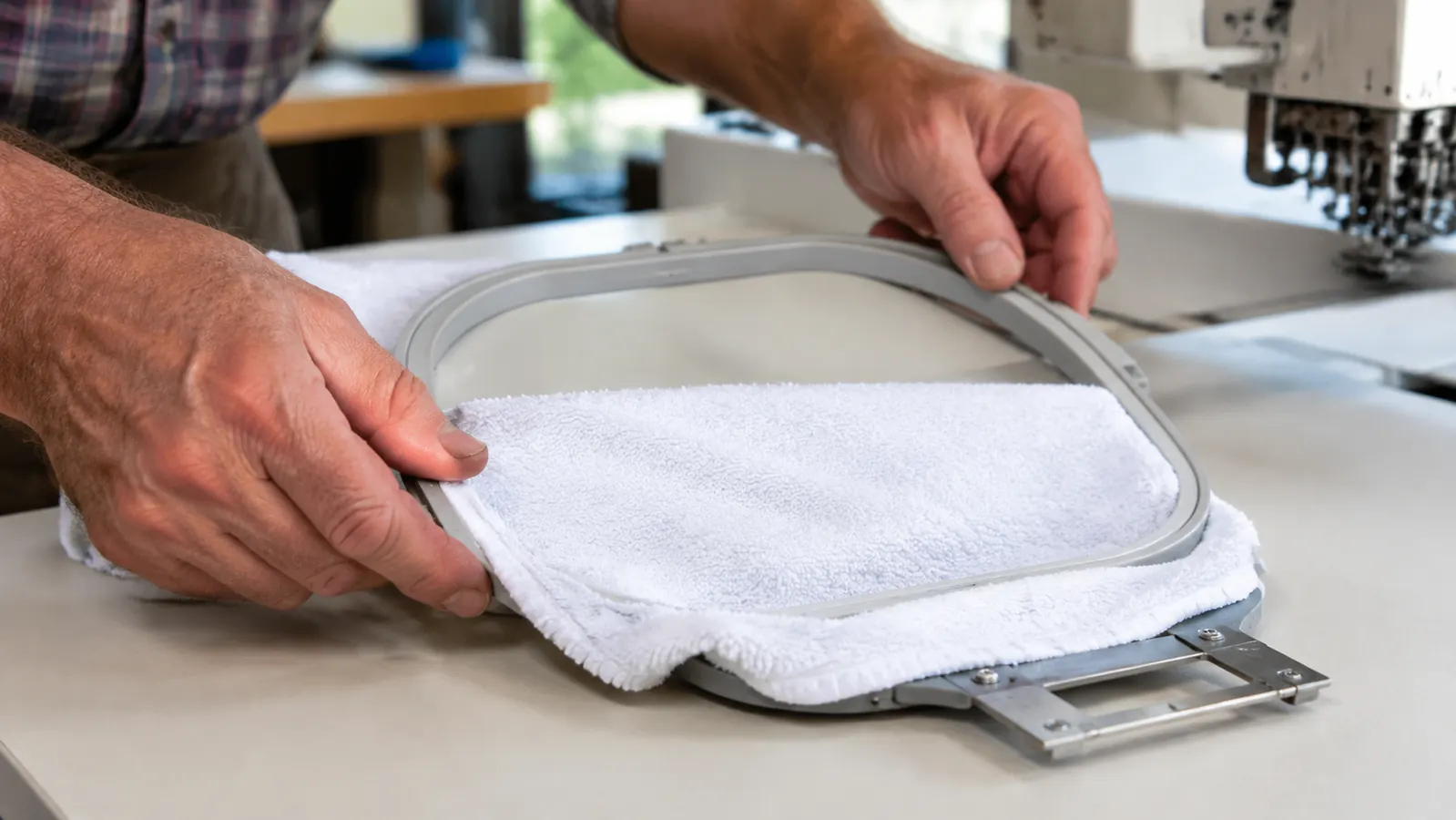
Before I tell you where each hoop won, it helps to understand where the tension actually goes. A plastic screw hoop grips fabric along two thin rings, its inner ring and its outer ring. The fabric between those rings is only held at its edges, and the screw concentrates most of its force at one point. The pressure fades as you move around the circle. A magnetic hoop pulls the top and bottom pieces together through the whole area of the frame, so the pressure is spread across the fabric instead of coming from a rim. On a cotton polo you cannot see that difference, but on terry you can. With the plastic hoop, the loops stand up in the middle and flatten in a faint shadow near the edge. With the magnetic hoop, the surface stays flat and even right up to the needle line.
That even pressure is also why registration stayed true. If fabric cannot slide sideways, the last color has nothing to drift against. I did not trust it at first, so I kept checking the far edge of every design. After four or five poly shirts, I realized the checks were not finding anything. I still check, because checking is a habit I am not willing to lose, but the magnetic hoop stopped giving me a reason.
Where the Sew Tech Magnetic Hoop Wins
The clearest win was slippery performance poly. The film on those shirts does not grip a smooth plastic ring, and it creeps a millimeter or two over a twelve minute run, just enough to throw a satin border off. With the Sew Tech hoop I ran twelve performance polos in a row and the last color matched the first on every one. That is not a claim I could make about the plastic hoop, and it is not a small thing when the customer is a team parent who checks every seam.
The second clear win was on terry towels. The plastic hoop presses one point into the pile for however long the design takes, and on a heavyweight towel that point leaves a mark that does not brush back up. The magnetic frame left a lighter, even pressure mark, and after one wash the loops stood up again. I sold two batches of towels to the same church league, one from each hoop, and no one sent a towel back. I ended up re-hooping the second batch with the magnetic frame before I shipped it, because I did not want to risk the crease showing up later.
Where a Plastic Screw-Tension Hoop Still Wins
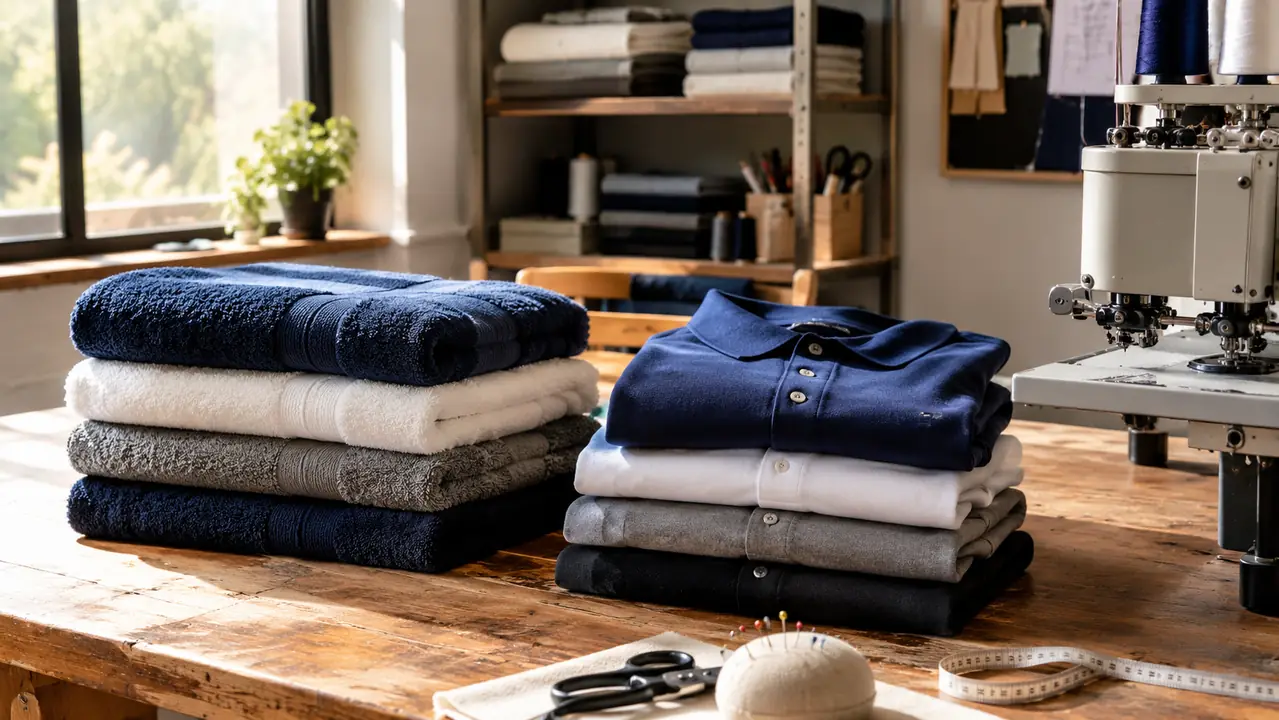
The plastic hoop wins on price and on workflow, and both matter to a one person shop. A single magnetic frame costs several times what a plastic hoop costs, so you are not going to own a drawer full of magnetics. I own one Sew Tech 6x10 and four plastic hoops in the sizes I reach for most. That mix is not indecision; it is how a small shop gets through a large order. The night before a run of fifty two polos, I pre-hoop four shirts at a time in the plastic frames. The next day I stitch one frame while the next waits, and swapping a loaded frame on the machine is faster than loading fabric at the machine. Pre-hooping keeps thread moving and keeps my hands from wearing out.
Plastic also wins for small work. The 6x10 size is right for a chest logo or a towel, but it is a lot of frame for a 4x4 name on a collar or cuff. For those jobs I use a small plastic hoop, because the fabric is stable, the design is short, and I do not need a second expensive frame for it. A small magnetic frame would work, but it would be one more size to buy and store. Plastic earns its place there, and it earns its place as a spare. If a plastic hoop cracks or strips, I can replace it quickly and cheaply. If the magnetic frame ever needs service, I am waiting on shipping, so I keep the plastic hoops as my backup.
I should also note that the Sew Tech 6x10 is a flat hoop, so it is no help with hats. Caps go on a cap driver, not in a flat frame. If your business leans hard on caps, the magnetic flat hoop only earns its keep on the flat work between cap orders.
For the fabrics that slip and crease, this hoop fixes the problem
The Sew Tech 6x10 held towel terry and performance poly in place for a full six-week test. Check today's price and confirm the mount style fits your machine.
Amazon Check Today's Price on Amazon →What Surprised Me Most
I did not expect the magnetic hoop to be easier on my hands, but it was. I work alone, and every piece in an order is loaded and unloaded by me. The plastic hoop takes a firm push to get the outer ring seated over the inner ring, and my thumbs did that hundreds of times a week. With the Sew Tech hoop, I set the bottom half on the table, lay the fabric over it, and drop the magnet piece on top. The magnet does the work. By the end of a long towel order, the difference in my hands was real, and it changed how I felt about the next order on the books.
It also surprised me how consistent it stayed. The screw hoop is only as tight as the last time you set it, and my tension varied from piece to piece, especially at the end of a long day. The magnetic frame does not have a screw, so there is nothing to forget. Piece one, piece twenty, piece forty, the hold felt the same. That consistency showed up in the stitching long before I could put words on it: fewer wavy letters, cleaner corners, fewer pieces I wanted to set aside and redo.
Who Should Buy Which
If your work is mostly stable cotton polos and dish towels, keep using the plastic hoop you already own. You are not losing quality by waiting, and you are not being cheap. If you sew towels, fleece blankets, or any performance fabric for teams, that is the moment to add a magnetic hoop in your main flat size. Those fabrics are exactly where the difference shows, and one ruined order pays for the gap in price pretty quickly.
The honest recommendation is not either/or. It is both: a Sew Tech magnetic hoop for the hard fabrics and a shelf of cheap plastic hoops for pre-hooping and small work. Before you order, confirm that the magnetic frame uses the same mount as your machine arm. The 6x10 Sew Tech is built for a specific mounting style, and the mount has to line up the way your plastic hoop does. When it lines up, the changeover takes minutes and the first towel order tells you the rest.
Final word: the magnetic hoop will not fix bad stabilizer or a design that is too dense, and it will not hoop a cap for you. But for the flat work that makes up most of my towel and polo orders, it held better than the screw hoop from the first weekend. I kept the plastic hoops for pre-hooping and small collars, and I kept the Sew Tech for the jobs that used to make me nervous.
See Today's Price for the Sew Tech Magnetic Hoop
If you have watched one too many towel orders come out creased, it is worth checking the current price and the mount style for your machine.
Amazon Check Today's Price on Amazon →