I buy embroidery thread the way I buy printer ink. Find a brand that works, and I stay with it until the company moves a factory, changes the formula, or runs a backorder that lasts six weeks. Last October that is exactly what happened with the brand I had used for three years. So on a Tuesday afternoon I did something I almost never do. I ordered the New brothread 40-color polyester kit with a sinking feeling that the box would sit on my table for a month before I trusted it.
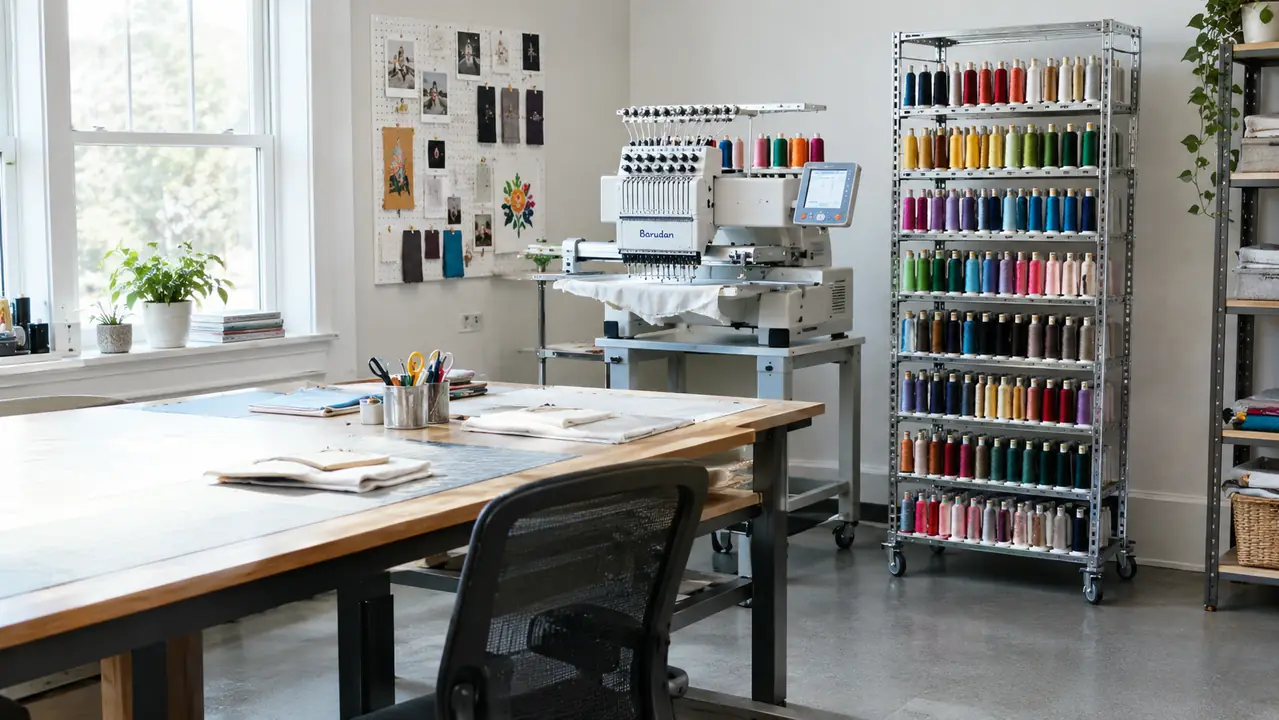
For context, I run a one-person shop out of a spare bedroom in Macon, Georgia. One used six-needle, one rolling thread stand, one long work table, and a window over the driveway that I look through when a design refuses to stitch out. I mostly do small runs. Twelve to sixty pieces at a time. Hats, left-chest polos, towels, canvas bags for youth teams, two churches, and a barbecue place that goes through more logo napkins than you would believe. My standard is simple: the thread has to behave the same on piece one and piece sixty, because I do not have anybody else to blame when it does not.
The Quick Verdict
A dependable 40-color polyester workhorse for a one-person shop. It will not match every custom color, but the set earns its space for daily runs.
Amazon Check Today's Price →Enough Color to Finish the Job Without a Midnight Run
If you have ever stood at a supply store at 9 p.m. because a red spool ran out, this set is worth a look.
Amazon Check Today's Price on Amazon →How I've Used It
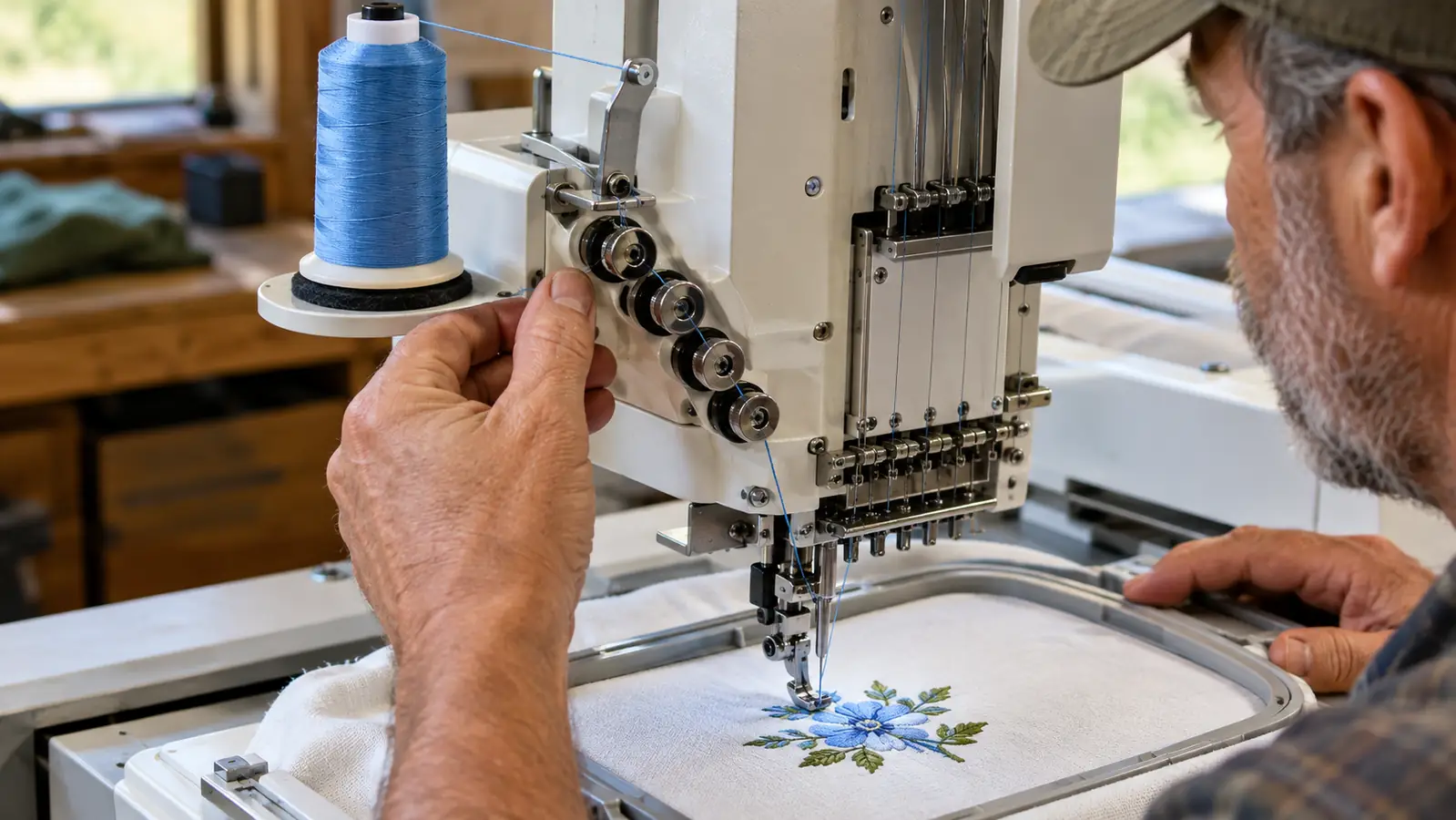
I do not put a new thread on a customer's order the day it arrives. I thread one needle with a color I know I will use, hoop a scrap of towel, and run a test pattern that covers fill, satin lettering, and a couple of tight corners. Fill tells me how the thread lays on a wide pass. Satin tells me whether it splits at the needle. Corners tell me if it will birdnest. The whole test takes fifteen minutes, and it has saved me from ruining more than one shirt.
When I opened the New brothread kit, I started with the black because black does not let a thread hide. I ran the fill, the satin column, and a tight star shape. The fill was smooth, the satin edge stayed crisp, and the star did not leave loops on the back. The next day I moved to a navy polo test because navy fabric shows every pull, every skipped stitch, and every bit of lint. It came out clean.
The test pieces gave me enough confidence to use this thread on real work. Over the six months since, I have sewn maybe one hundred and forty orders out of this spare bedroom. Some were twelve-piece hat runs and some were sixty-piece tote batches. I kept one color loaded for an entire run and only changed spools when the design changed. I wrote down every thread break. In the first two weeks there were none, and they have stayed rare since.
Understanding a thread takes longer than a day. I have had threads behave for one job and then act up on the third run, when the needle dulls or the humidity changes. My six-needle was bought used in 2019, so it is not brand new, but it runs steady. This thread wanted the same tension I use for other 40-weight polyesters, and it did not drift after an hour. That stability is what keeps a small shop running.
Why a 40-Color Set Earns Its Place in a One-Person Shop
I used to buy thread one spool at a time, per job, when I needed it. That system works until it does not. I have driven across Macon at nine o'clock at night for a single spool of red before a school order. With the New brothread 40-color kit I have an inventory that covers about ninety percent of what my regulars order. The convenience is not about having a big collection. It is about never stopping the machine because the shade you need is not on the rack.
A forty-color set sounds like overkill until the third week in a row brings three jobs with three different colors. One week I did a red and gold logo for a youth league, a blue and white church crest, and a bright orange barbecue apron. All three were already in the box. I did not have to tell a customer that I could not match their color or push a deadline because the right spool was in the mail.
I still keep special colors. A 40-color kit is a foundation, not a complete library. One HVAC customer has a blue that is somewhere between navy and royal, and I buy that as a single spool. For everything else, this kit has the everyday core, black, white, enough reds and blues, and a handful of odd colors used twice a year. It fills the gaps without making me keep a warehouse.
One less obvious benefit is that all the spools in one kit are the same finish. I have mixed threads from two brands in a single design before, and the slight difference in sheen showed up on the final piece. When I run a design that needs four colors, they are all from the same manufacturer, same weight, same finish, and the result looks like one coherent piece. That matters more than people think.
How It Behaves Where It Counts
Hats are where cheap thread goes to die. The needle has to pass through a seam, the design has tight curves, and ball cap fabric does not give the way a polo shirt does. Polyester thread has a little stretch, which suits a cap better than rayon. I run my tension about half a turn tighter for caps than for towels. Through six months of cap orders, this set has gone through stiff brims and textured fronts without making me stop and rethread.
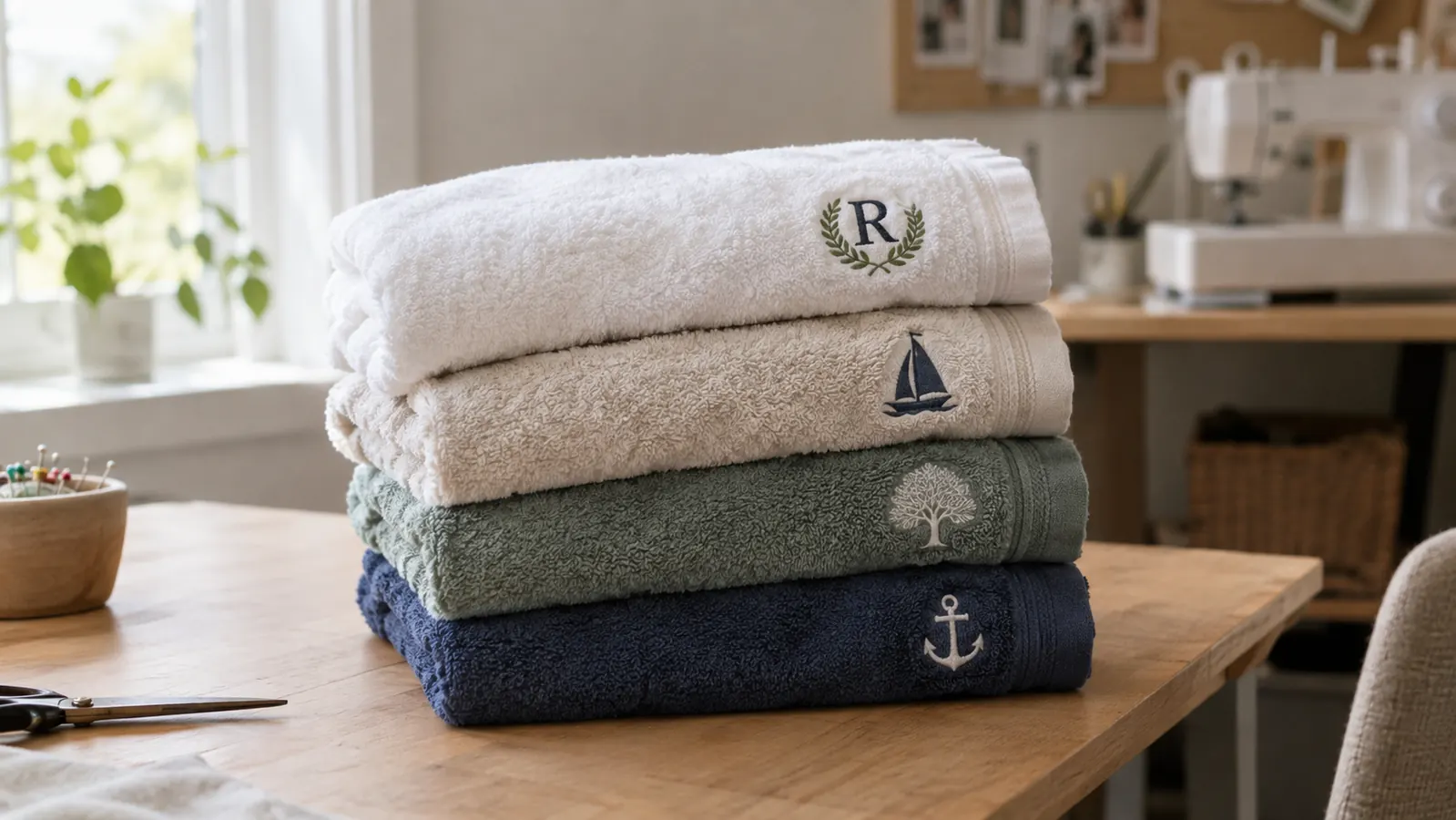
Towels are the opposite test. A terry loop acts like fine sandpaper, and a thread that pills or frays will show it in the first hundred stitches. I stitched fifty towels for a church retreat in early spring, dense lettering in red and black. The satin columns stayed clean, and no white fuzz collected along the stitches afterward. Some budget polyesters start to pile up in the needle area after two towels. This one did not.
Canvas bags showed me long-run consistency. A two-hour run of fifty totes, same color, same needle, same tension, puts stress on the spool itself. If a thread has a rough section or inconsistent thickness, it will snap or birdnest by the end of the batch. Piece fifty matched piece one. The last tote had the same stitch density and the same clean underside as the first.
I would not use this thread for delicate letters on sheer dish towels or baby dresses. When I need a finer hand, I switch to a lighter thread and a smaller needle. Forty-weight polyester is a workhorse for most orders, but it is not the only tool. Knowing when not to use a set is part of the job.
What Six Months of Washing Taught Me
Thread can look perfect in the hoop and fail in the first wash. I keep a notebook for wash tests, and I run every new thread through the same routine. A stitched towel, hot water, regular detergent, and a full dryer cycle. I did that the first week and again after six months. The New brothread colors stayed bright, the stitching stayed tight, and there was no bleed onto the white fabric around the design.
I also did a bleach soak on a separate sample, because one of my customers runs a barbecue place and their towels get a hard life. After six months and repeated washes, the red and black on those test towels did not bleed and did not turn dull. Bleach is brutal on thread. A cheap thread will tell you on the first soak. This one did not.
The sun test was less formal. I left a stitched sample on a south-facing windowsill for six full weeks, between jobs, just to see what happened. The New brothread sample did not noticeably fade. A rayon sample sitting right next to it did, and the difference was easy to see. For anything that will live on a porch, a tailgate, or a custom boat seat, polyester is the safer choice.
Washing also told me about lint. Every thread sheds a little as it goes through the needle, and some brands leave enough lint to build up in the bobbin case. In six months I have not had to clean my bobbin case more often than normal, and I have not found lint wrapped around the tension discs. That may not sound like a feature until you have spent an afternoon unpicking skipped stitches caused by a fuzzy thread.
Where This Kit Falls Short
No forty-color set is going to match a customer's exact brand color. One of my HVAC accounts has a blue that is hard to pin down, and the set does not claim to hit it. I keep a single spool of that exact blue for that customer and swap it when the order comes in. If your work is mostly one or two exact logo colors, you will still be buying singles. That is true of any thread line that is not custom dyed.
You also get colors you will barely touch. Four or five pastels have sat in the rack for six months, which is fine for me because team and company logos are my main work. If you stitch mostly baby shower gifts and monogrammed dish towels, a 40-color kit means a lot of spools taking up space for colors you rarely need. A smaller set plus singles would serve you better.
One more honest issue: a kit bought all at once means one spool of each color. If one shade is a best seller, that spool will run out before the rest of the set is anywhere near empty. I go through red faster than any other color. That might be the same for anyone who sews team logos. Plan around it. When a favorite color starts to run low, order a single spare before you absolutely need it.
The box itself is not the storage answer, at least not for my one-table setup. Forty spools need a home where they stay upright and clean, and the box they ship in only works if you do not have a rolling stand. I gave mine a dedicated rack near the machine. If you do not have room for that, think about how many spools you actually want sitting on your table before you order a forty-shade set.
Would I Buy It Again
Yes. Six months in, I keep reaching for this set every time I start a job. I did not plan a big brand loyalty announcement. I just know the thread runs true, the colors on the spool match the stitch out, and the wash tests came back clean. When the everyday shades run low, I will order the same set again and move the old spools to backup.
For a small shop, the value is in the setup. Buy a set for your foundation, keep custom colors as singles, and do not treat any one kit as the answer to every order. That is the same advice I give a neighbor who just started selling shirts for her kid's school. Start with a set, use it, and learn which colors you actually sell before you buy more.
The New brothread set has not changed my machine maintenance or made me a better digitizer. It has done something simpler. I spend less time worrying about thread and more time stitching orders with clean, consistent results. For a one-person shop in Macon, that is the outcome I was looking for when I clicked order.
What I Liked
- Thread ran consistently through roughly 140 orders over six months
- Colors in the kit covered nearly every real job I took in
- Polyester held up in hot washes, a bleach soak, and sun tests
- One clean test towel earned my trust before the first customer order
Where It Falls Short
- Four or five colors sat unused for six months
- Exact brand colors still require single-spool purchases
- Forty spools need a storage rack, not the box they ship in
Fifty towels, hot water, one bleach soak, and no thread breaks. That is the test that made me trust this kit.
Who This Is For
For the embroiderer who sews most weeks and sells what she stitches, this kit does the quiet job. It is for the person who has a stacked order on the table, wants thread she does not have to think about, and likes the idea of having a red spool on the rack the night before the deadline. New brothread is not fancy, but dependable is what counts when the machine starts.
Who Should Skip It
Skip it if embroidery is a twice a year hobby, if you only use a handful of colors, or if your customer demands exact brand matching every time. A 40-color set becomes clutter on a small table when it is not earning its place. Buy the few shades you actually use and add singles as your orders grow. You can always move to a set later, once you know which colors you really need.
Buy It for the Nights You Used to Spend Driving for Thread
If this sounds like how you run a shop, check today's price on Amazon and see if a 40-color set fits your rack.
Amazon Check Today's Price on Amazon →