For the last six months, nearly every cap that left my work table had a sheet of New brothread tear away stabilizer behind it. That comes to somewhere around four hundred hats, plus a steady pile of towels, canvas bags, and left chest polos for the same local teams, churches, and small businesses that keep a home shop busy. I am Ruthann Kessler. I run a one person embroidery business out of a converted spare bedroom in Macon, Georgia. This is the review I wish I had found when I bought my first roll of tear away back in 2016.
The reason I am writing it at all is that I learned backing the expensive way. I started with whatever the cap supplier stocked, then blamed my machine for shift, then blamed my hooping, then tore out a full design and started over. Tear away is not a place for guesswork, but it is not a place where you need a drawer full of specialty rolls either. You need one roll that behaves the same on the first cap of an order and on cap thirty. That is the test I ran, and it is the test that matters when a church picnic does not wait for a redo.
The Quick Verdict
A consistent, no nonsense tear away that earned a permanent spot in my cap hoop. Not for knits or stretchy fabrics. For structured fronts, towels, and canvas, it is the roll I reach for first.
Amazon Check Today's Price →The Tear Away I Reached For on Four Hundred Caps
If caps and other structured fabrics are most of your work, New brothread tear away is the backing I would grab first. It tears clean, holds registration, and keeps behaving through the end of the roll.
Amazon Check Today's Price on Amazon →How I've Used It
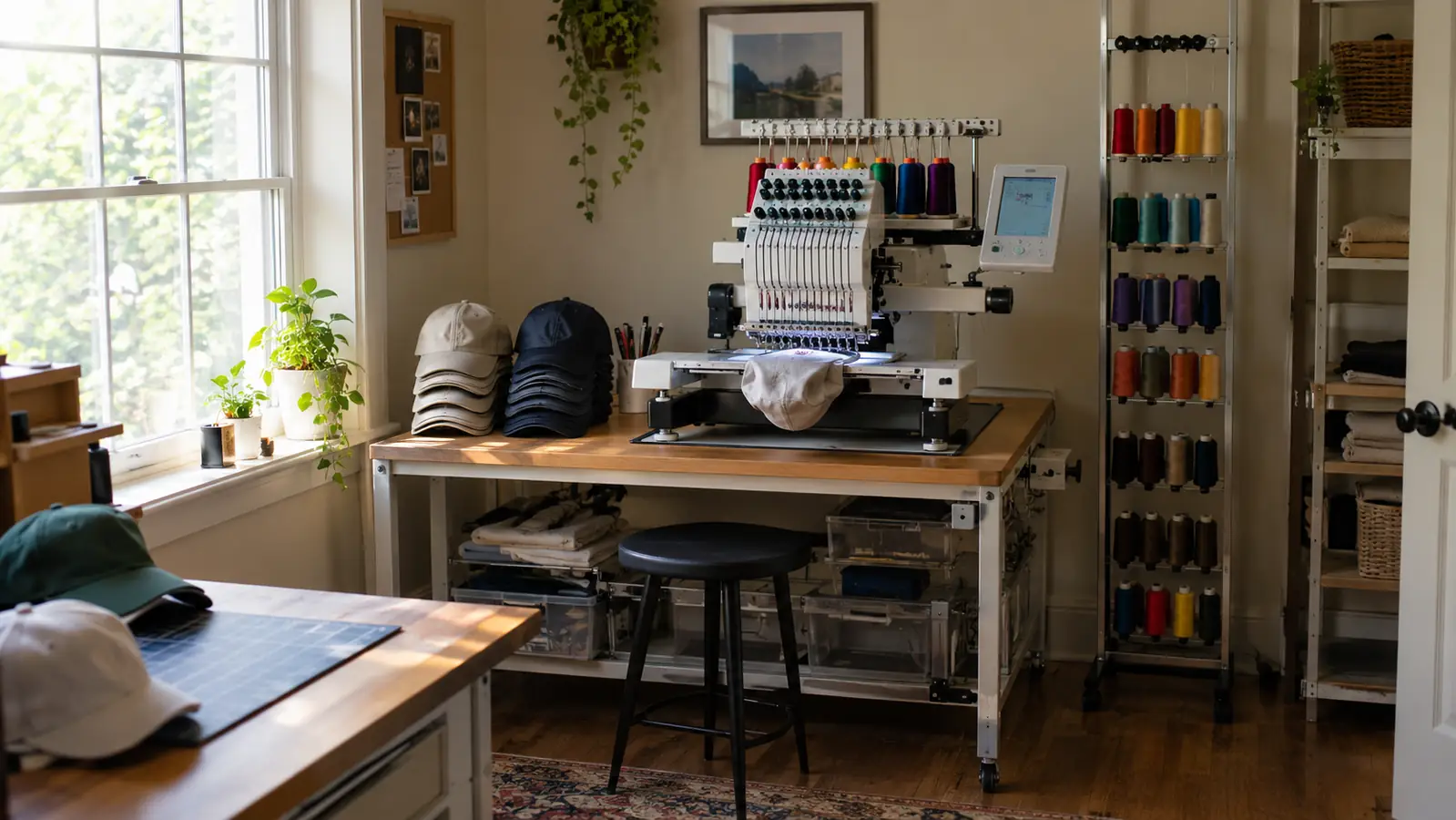
My setup is small on purpose. I run one six needle machine on a work table in a spare bedroom, with a rolling thread stand beside me and a window on my left. I work alone, so every order has to behave the first time through. There is no one to rehoop a cap while I finish a towel, and there is no second machine to pick up the slack. Stabilizer matters to me for that reason: it is the variable I control before the needle drops.
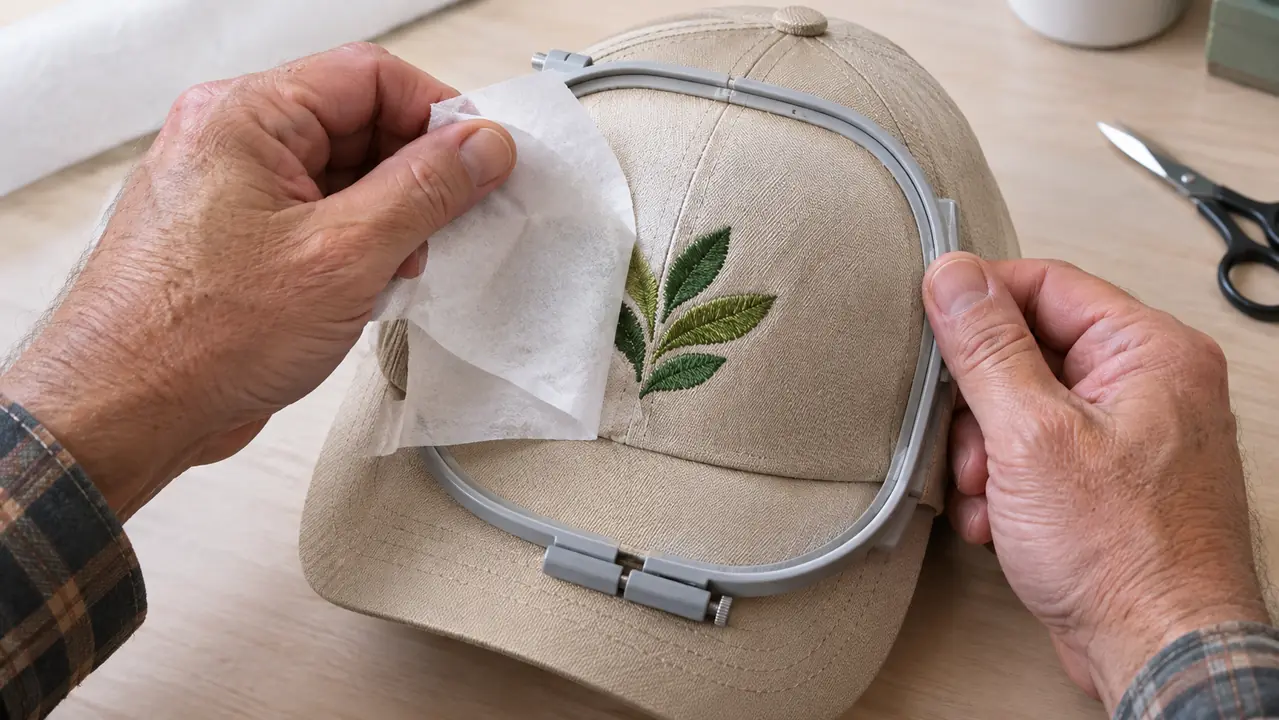
For this review I did not change my routine to make anything look good. I used the New brothread roll the way I use tear away: one layer behind the structured cap front, hooped with the design, stitched at my normal density, then torn away after the piece comes off. On towels I put it behind the stitch area. On canvas bags I put it behind the panel. I kept notes on every run that failed for any reason, then I went back and asked whether the backing caused the problem or cured it.
Over six months I went through a roll and a half, and that repetition is the part no short test can give you. Anyone can hoop one cap and tell you how it tore. I needed to know how the roll behaves in late August when the air in Macon is thick, and how it behaves on the third Saturday of a month with three big orders stacked. That is the test that matters to a one person shop.
What Tear Away Does Well
Tear away backing earns its keep when the fabric can hold the stitch after the hoop comes off. Structured cap fronts, twill, canvas, and most towel weaves can do exactly that. The backing steadies the needle while it works, then leaves without adding stiffness behind the design. The best sheets do it so quietly you forget they were ever in the hoop.
The New brothread roll did that part consistently. The sheet is stiff enough to hold small lettering and dense fill in place, yet it tears along a clean line instead of shredding into flecks that stick to everything. My closest comparison is the no-name roll I keep in the cabinet for test runs. The difference shows up in the trash can: clean strips instead of confetti.
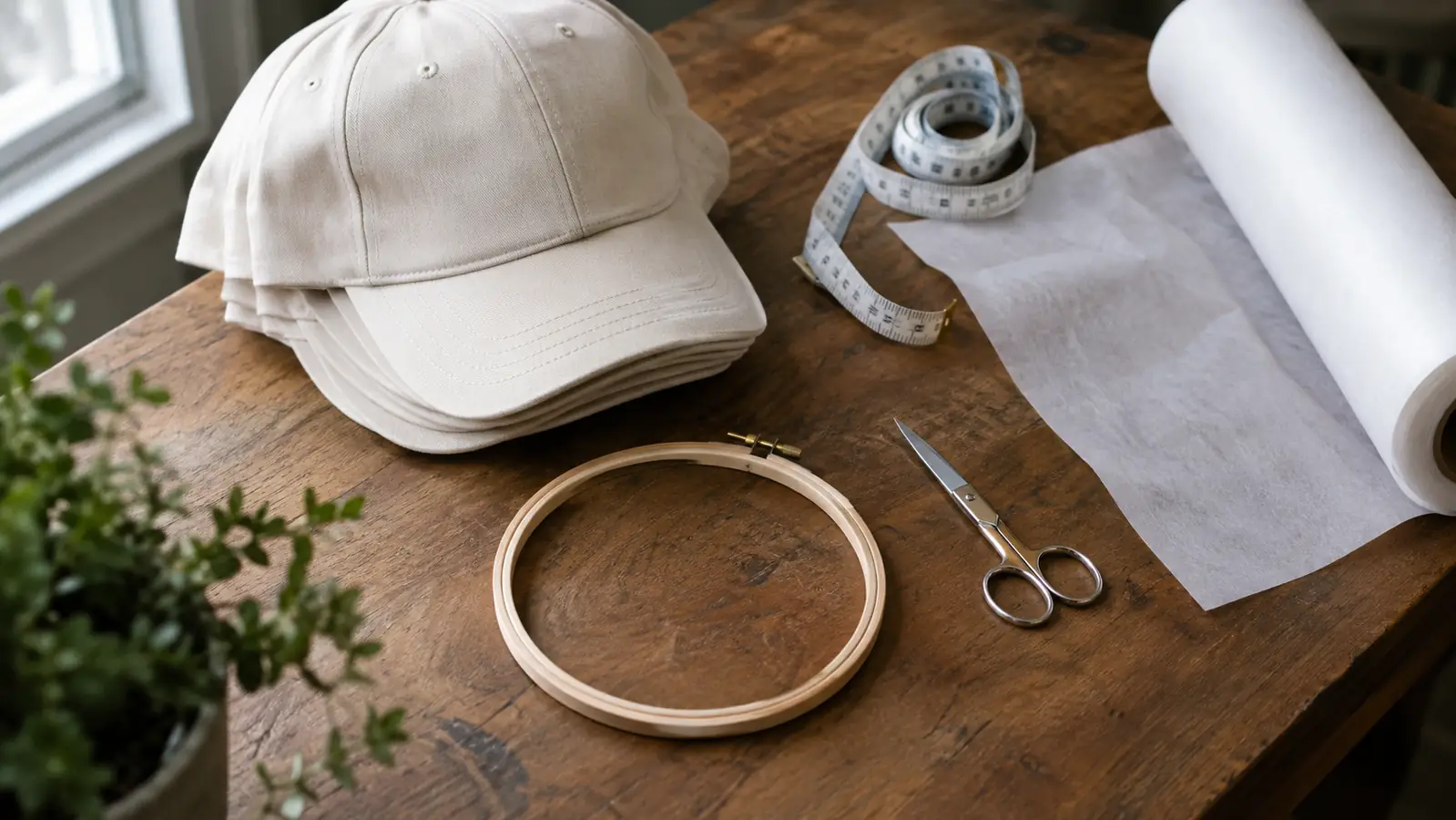
The 12 inch width matters more than I expected. My cap hoop wants the backing to reach just past the design on both sides. Twelve inches covers a cap front with room to spare. When I cut pieces for a run, I get more usable pieces per roll and fewer odd overlaps to fight at the hoop. Less waste means I stop thinking about the backing and start thinking about the design.
Where It Let Me Down
Start with the obvious limit: tear away is the wrong tool for any fabric that needs permanent support after washing. It does not matter how good the roll is. I took a knit beanie order last fall, put this backing behind the first hat, and watched the logo pull out of round. The fabric stretched where the backing had been torn away. I stopped the run, ordered cut away, and redid every piece. That was my mistake, not the product's, but it is the same mistake new embroiderers make when tear away is what they already own.
Second, summer in Georgia is hard on a roll of tear away. In July and August the room sits damp even with the window unit running. The edges of a hooped sheet curl just enough to catch the needle on the first stitch of a run. It never ruined a cap. It cost me a few seconds of smoothing on every hoop. Keeping the roll in its plastic sleeve with the end tucked under fixed most of the problem, and I have to own that as storage advice, not a complaint about the sheet.
And there is the lint question on textured towels. That is physics, not a flaw in this roll. When I tear a sheet out of a terry towel, the break wants to follow the loops instead of my line. Pull carelessly and I can tug a loop loose. Pull the excess straight down, keep the towel flat, and it comes out clean most of the time. I am telling you about the most of the time because that is the honest part of any backing review.
The Grain, the Crease, and Other Small Tells
Every tear away has a grain, and cheap rolls make you find yours the hard way. Hoop a piece the wrong direction and it tears in chunks, often pulling at the edge of a letter. I test every new roll by tearing a scrap across the width before I cut pieces for an order. The New brothread sheet peels straight when you work with the grain and still breaks reasonably when you do not.
The crease down the middle of the roll tells you more about storage than quality. Every long roll arrives with a fold. Cheap rolls let that crease turn into a weak line that splits when you hoop it. This one held its fold without turning it into a fault line. The last yards near the core behaved exactly like the first yards out of the package, and that is the kind of detail that only shows up after months of use.
The other habit I picked up is layering. When a design is dense or sits over a seam, I cut a second small piece and place it behind the first before hooping. Thin tear away slides around when you try that. This sheet stays where you put it, so the extra layer does not become a second problem in the middle of a run. Small things, but small things are what a long term review is for.
How Long a Roll Lasts and How It Holds Up
I got roughly two hundred and sixty cap fronts out of the first roll before I opened the second. That count includes test hoops and pieces I wadded up and threw away, so it is a real production number, not a best case. The roll also backed a couple of dozen towels and close to fifty canvas bags in that same stretch. The second roll is partway through now and behaving the same as the first.
Consistency matters more than yield. A roll that tears like paper for ten yards and then turns tough is a tax on every order you run. This one never changed character. Same stiffness at the core as at the start. Same clean tear in August as in January. I have only bought a few boxes, so I will not promise every single one is identical, but six months of daily use gave me no reason to go looking for another brand.
I used to keep three brands of tear away in the cabinet, just in case one behaved differently on some fabric. This roll cleaned that drawer out. I still keep cut away for knits and a water soluble topping for napped towels. For plain tear away, one box is enough now. That is the highest praise I can give a supply item, and it came from watching the roll work, not from the label.
Three Things I Do Differently Now
First, I test the grain before I cut anything. It takes one scrap and ten seconds, and it has saved me more hooping frustration than any other habit. If the tear runs straight, I cut across the width and move on. If it fights, I rotate the sheet a quarter turn and test again. The roll itself is consistent, but I am not above making a silly error on a busy day.
Second, I store the roll in its sleeve even between orders. Georgia humidity will teach you this faster than any article, but a roll left open on the table picks up moisture and behaves differently on Friday than it did on Monday. The sleeve keeps the rest of the roll honest while the hooped piece does the work.
Third, I trust the sheet enough to judge it on a full order. The first cap is not the test. The thirtieth cap is. If the design is still registering clean on cap thirty with the same hooping, same needle, same density, the backing did its job. That is how I ended up telling two other embroiderers I trade shop talk with to give this roll a try.
What I Liked
- Tears clean and straight when you work with the grain, with none of the confetti shredding cheap sheets leave behind
- Stiff enough to hold dense lettering and small logos without shifting on structured fronts
- Consistent from the first yard to the last, no thin spots or surprise weak creases
- 12 inch width cuts efficiently for cap hoops and leaves less waste
- Lays flat in the hoop even when the room is damp
Where It Falls Short
- Not for knits or stretchy fabrics that need permanent support from a cut away backing
- Leaves some lint when torn out of napped towels
- Edges can curl in high humidity if you leave the roll open on the table
- You have to respect the grain or the sheet will tear in chunks instead of a clean line
Cap two hundred sixty tore out as cleanly as cap one. That kind of consistency is the whole review.
Who This Is For
This is for the home embroiderer who does structured work: caps, twill bags, kitchen towels, and corporate polos with a left chest logo. If your orders are small runs and your machine time is precious, a tear away that behaves predictably saves you from the worst kind of problem, the one that shows up on piece thirty when the client pickup is tomorrow.
It is also for the person who keeps one drawer of backing and wonders whether the more expensive sheets are worth it. This roll is a fair place to land. It does not need a special technique or a heavy hand. It works the way tear away is supposed to work, and in this category that is harder to find than it should be.
Who Should Skip It
Skip this if most of your work is stretchy. Performance jerseys, knit beanies, athletic wear, anything that lives or dies by four way stretch, all of it wants cut away backing that stays in the garment. Tear away, even good tear away, will leave you with a design that shifts after the first wearing and a customer who notices.
Skip it too if you expect one backing to do everything. No tear away will cover every fabric you own, and pretending otherwise just leads to ripped out designs and late orders. Keep this roll for the caps and towels and structured bags it is good at, and keep a separate cut away roll for the knits. That division of labor is not a flaw. It is just how the materials work.
One Roll Will Tell You Everything
If caps and structured fabrics are part of your rotation, this is the New brothread tear away I would buy again. It held up through a full season of real orders, and one roll is enough to know whether it fits your shop.
Amazon Check Today's Price on Amazon →