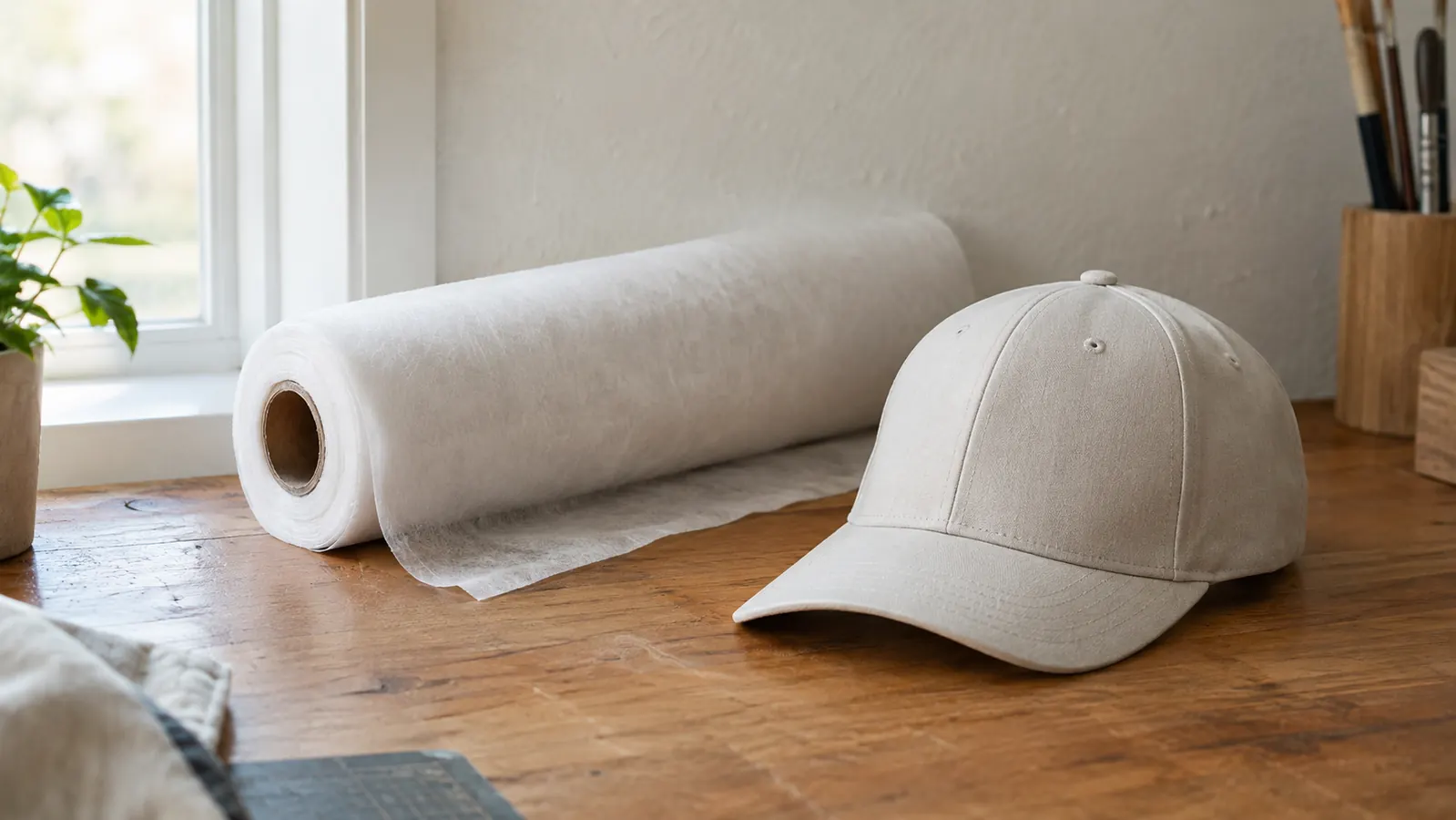
Tear away was the backing that finally made hats easy for me. I run a one-woman shop from a converted spare bedroom in Macon, Georgia, and a big slice of my week is front panels: ball caps for a youth league, structured hats for an HVAC crew, the occasional 12-piece order for a church picnic. For all of them, New brothread tear away is the roll I grab. It is not the only backing in my cabinet, but it is the one that saves the hat.
Cut away has its place on stretchy knit polos, but a structured cap already has its own shape. Buckram in the front, a seam around the crown, a sweatband on the inside. Add a cut away tail and you are stacking stiff layers where there is no room. Tear away supports the run while the needle is in the cap, then comes out and lets the cap be a cap.
Keep the Whole Roll Within Reach of Your Machine
For structured hat orders, New brothread tear away is the roll I order. It is light enough to pull out cleanly and stiff enough to hold a dense left-chest logo. When the order is small and the deadline is short, this backing keeps the front panel flat.
Amazon Check Today's Price on Amazon →Respects the Structure a Hat Already Has
A structured cap comes with buckram stiffening and a shaped front panel. It does not need an added sheet of permanent backing to hold its form. Tear away supports the stitches while the needle is working, then breaks away when the cap comes off the frame. On a cotton twill cap with a curved bill, that means the seam around the sweatband stays flat and the bill sets the way it did before I touched it.
No Stiff Tail Presses Against a Forehead
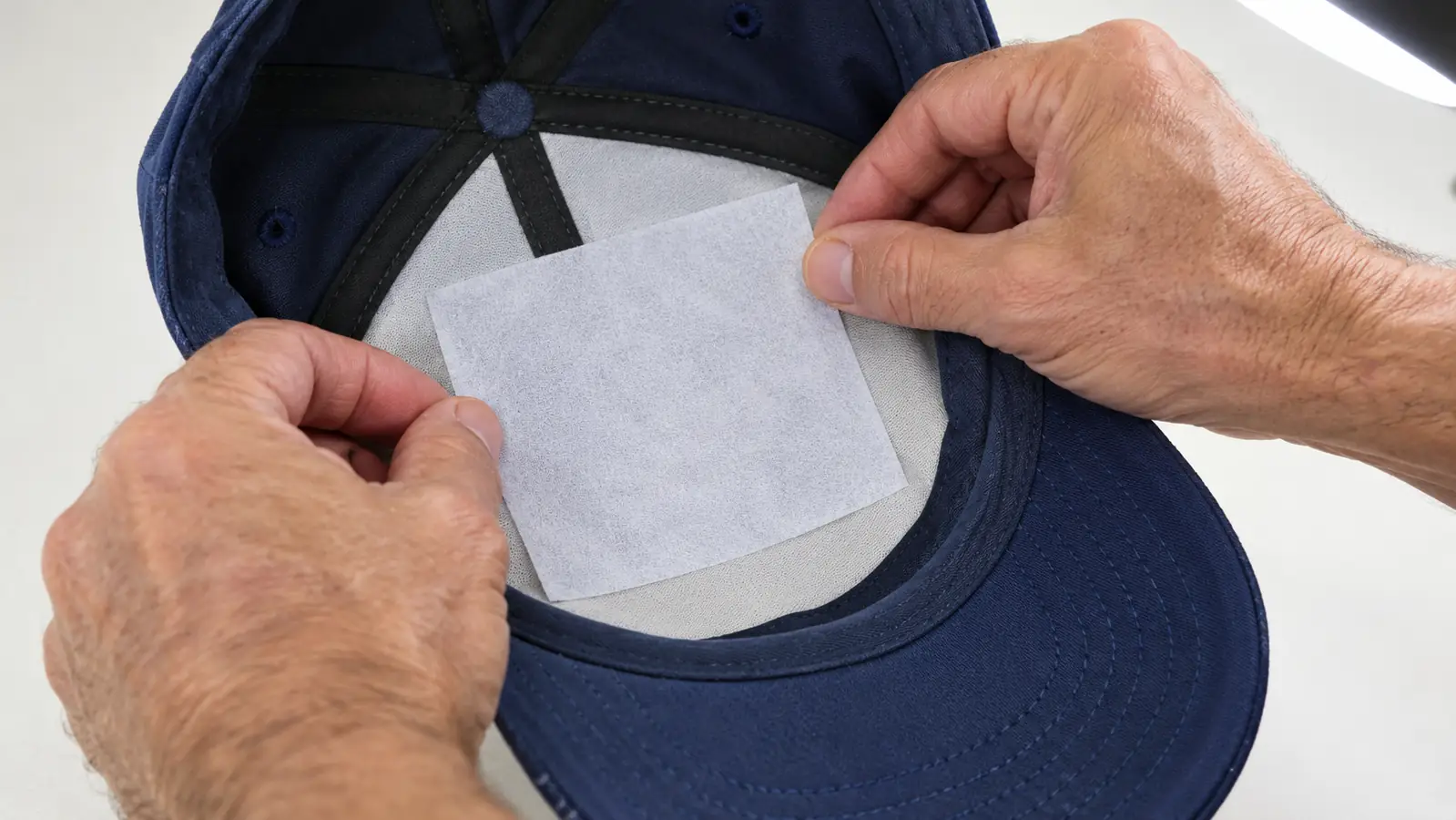
On a shirt, a leftover cut away tail sits against a cotton chest and nobody notices. A hat is different. The inside front touches skin, and the sweatband seam is right there. Tear away pulls at the stitch line, so I am not leaving a scratchy shelf behind the logo. Customers who wear caps on a job site notice the first time they put the hat on. That keeps return customers coming back.
Comes Out Cleanly from a Curved Frame
Caps do not go in a flat hoop. They sit on a hat frame, and the curved front panel makes trimming awkward because you cannot always see the back of the work. Tear away lets me pull from the inside by feel. It snaps along the line of stitching when I tug it side to side. The soft fringe left behind disappears into the fabric, and I am not bent over the machine with small scissors for ten minutes on every cap.
Works on Felt, Twill, and Cotton Canvas Caps
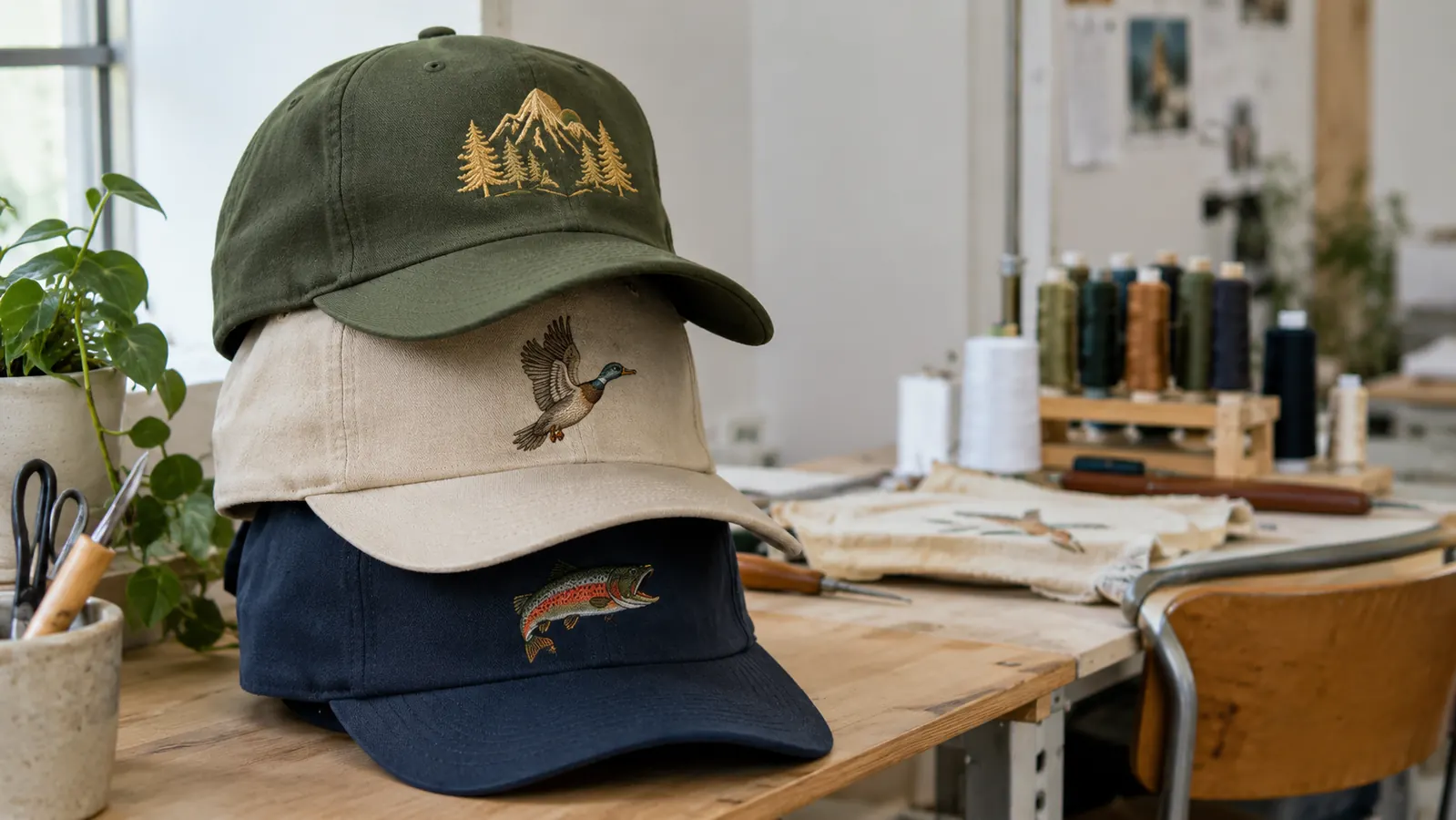
Structured felt caps, cotton canvas work hats, and classic twill caps all have a tight enough weave to hold tear away. I use it for the main front logo and for a side placement on corporate orders. There is enough support under the needle, and the small holes the needle leaves do not show once the cap is off the frame. The finished front looks clean the day it ships, and it still looks that way a year later.
Small Runs Finish Faster Without Trimming
Shirts often need a trim pass after they come off the machine. Hats can go straight to the table for a quick tear. On a 24-piece order of structured caps, that trim pass adds up. When I switched to tear away for front panels, my finishing time dropped noticeably on every batch. It does not sound like much until the order is due before a Saturday youth league game and you are working alone through the lunch hour.
Holds Registration Without Adding Bulk Under the Cap
Tear away has a little give, so I cut the piece to the frame and set the tension on the lighter side. Done that way, it holds the fabric steady through a dense logo and keeps the design from drifting. Because the backing comes out afterward, it adds no permanent thickness under the crown or the brim. That keeps the hat from sitting high and boxy. I have seen hats from other shops that look padded in the front; that is usually a cut away backing that had no business going inside a cap.
Leaves Fewer Ridges Around Embroidered Fronts
On a lightweight cap, a stiff backing can push the fabric away from the needle and leave little ridges around the edges of the design. Embroiderers call it whiskering. Tear away sits close to the weave, so the front panel stays smooth where the thread meets the fabric. I saw the difference on a pale order where any shadow would have been obvious. The logo looked painted on instead of appliqued.
Works with the Pins and Clamps on a Hat Frame
Cap frames hold the front panel in place with pins, a clamp and a plastic shell. You are not hooping through the cap the way you hoop a flat shirt. Tear away can be floated behind the front panel and pinned at the same points as the fabric. Since it is lighter than cut away, it does not fight the pinning system or create a hard lump under the clamp. I cut it to the width of the frame, pin once, and stitch.
Nothing Left Behind to Crinkle in the Wash
Structured caps get dirty. Customers throw them in the washer and hang them on a hook to dry. A permanent cut away backing can crinkle and pull loose after a few machine washes. Tear away has already come out, so there is nothing behind the logo to crinkle. The embroidery is held by the thread itself. I have washed test caps from a year ago, and the front design is still just as flat as the day it came off the frame.
The 12-Inch Roll Cuts Cleanly and Stacks on a Shelf
I buy the 12-inch by 50-yard roll. The width is easy to cut down to the short pieces a cap panel needs, and I am not wrestling with a giant bolt on my work table. One roll lives on a shelf beside the machine and lasts through several team orders. When a Saturday job shows up late, I know there is enough on hand to finish it without a trip to the supply store.
What I'd Skip
Tear away is not the right call on every hat. I keep cut away for stretchy knit polos and performance fabric because those materials move under the needle and need a permanent backing. I also skip tear away on loose knit beanies and on very dense all-over cap designs. Once the fill count passes a few tens of thousands of stitches, a lightweight tear away lets the fabric sink under the presser foot. For those jobs I use a breathable cut away that is made for caps.
The 40-cap fire department order finished without a single trim pass because tear away snapped clean from every front panel.
Order One Roll and Try It on Your Next Hat Batch
You have already got the cap frames and the thread. Add a roll of New brothread tear away and see how much faster a structured hat order moves when you are not trimming cut away out of curved seams. Keep the roll beside your machine for the next time a team order lands on a short deadline.
Amazon Check Today's Price on Amazon →