If you ask me which 40-color polyester thread kit deserves to sit on your machine, I will say New brothread without hesitating, and I have six months of notes to back that up. I ran the New brothread 40-color kit and the Simthread 40-color kit on my six-needle from January through June, stitching the same towels, polos, canvas bags, and hat orders that fill my normal week. New brothread won on the two things I care about most, thread breaks and color matching. Simthread is a perfectly decent kit and it is gentler on the wallet when you want a spare. For work I get paid for, New brothread is the one I keep loaded.
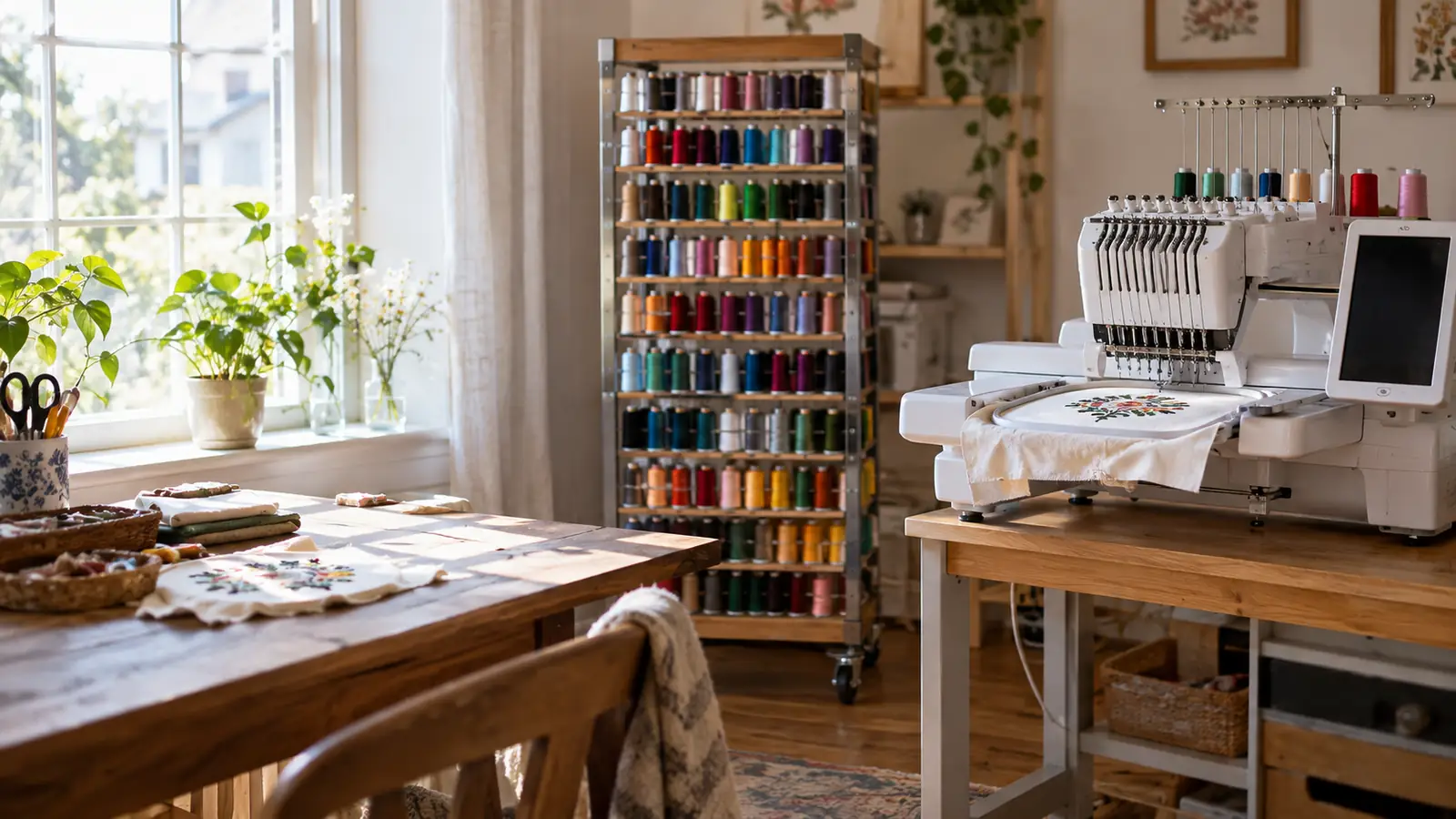
A word about my setup before I get into the details, because thread performance depends on the machine, the backing, and the person doing the hooping. I am Ruthann, and I have run a home embroidery business out of a converted spare bedroom in Macon, Georgia since 2019. I stitch alone on a used six-needle commercial machine I bought that same year, and I have never owned a second machine. Most of my orders are small runs for local teams, churches, and a handful of companies: left-chest polos, terry towels, canvas bags, and the occasional structured hat. I started stitching in 2016, so I have broken enough thread to know the difference between a genuine flaw and a bad hoop day.
How I Tested Both Kits
I tested the way I work instead of the way a lab would, because a lab test will not tell you what a thread does on a sixty-piece order with a deadline. Both kits sat on my rolling thread stand from early January to the end of June. I loaded one kit, stitched my normal jobs, and dated every entry in a spiral notebook I kept on the corner of my table. Each thread break, each lint clean-out, each time the tension drifted enough to make me stop and look went into that book. Then I switched kits and repeated the same work. That is the only test that means anything to a person who sews for a living.
I kept the variables as fair as I could. Same 80/12 needles, same cut-away backing, same hoops, same digitized files, and the same mix of orders. I did dense towel logos, left-chest lettering on polos, and several structured hats with heavy backing, because hats are where a thread problem announces itself first. I did not pre-wind bobbins or handle the spools with extra care. I used each kit straight out of the box the way a customer would, and I counted a sloppy tail or a loose wind against the brand that shipped it. By the end of June I had logged about sixty hours of run time and filled eleven pages of notes.
One example sticks with me. On the last Saturday of February, I had a twenty-four-hat order for a local travel ball team with a dense three-color left-chest logo and several color changes. I ran the first six hats with Simthread and watched my first break happen on the third hat. I re-hooped, re-ran that hat, and the break did not come back on that design with the New brothread spools later in the same order.
I also paid attention to the small things that do not show up on a spec sheet. Did the spool numbers line up with the color card? Could I read that card under my shop light, or did I have to walk to the window? Did the thread sit evenly on the spool, or did the tail tuck under and tangle? Those details decide whether a kit saves you time or steals it, and the two brands answered differently.
I did not test every one of the 40 colors in either kit, because that would take a full year of orders. I stitched most runs with the colors a working shop actually uses: black, white, navy, red, royal blue, and a couple of grays. Roughly three quarters of the logged run time went to about ten spools in each kit, and the rest went to one-off colors for specific orders. That mirrors how a kit really gets used.
Here is the short version of what those eleven pages said.
| New brothread 40-color kit | Simthread 40-color kit | |
|---|---|---|
| Colors per kit | 40 colors, 40 wt polyester, 500 m per spool | 40 colors, 40 wt polyester, 500 m per spool |
| Color card | One numbered chip per spool; readable under shop light | Smaller chips, and two close blues looked alike in my room |
| Spool winding | Even wind on all 40 spools; one loose tail in six months | Two messy tails out of the box, and one dug into the wind |
| Thread breaks | Zero breaks across roughly 40 jobs | Two breaks, both on dense hat logos with heavy backing |
| Lint | Cleaned after about eight hours of run time | Needed a lint wipe about two hours sooner |
| Storage | Taller case with a handle, stacks on my shelf | Slimmer box slides flat into a shallow drawer |
| Out-of-pocket for a spare kit | A bit more when you replace the whole set | Less, which is why I keep one as a backup |
| Best for | Paid client work where the color must match | Backup kit and personal projects |
Where New brothread Wins
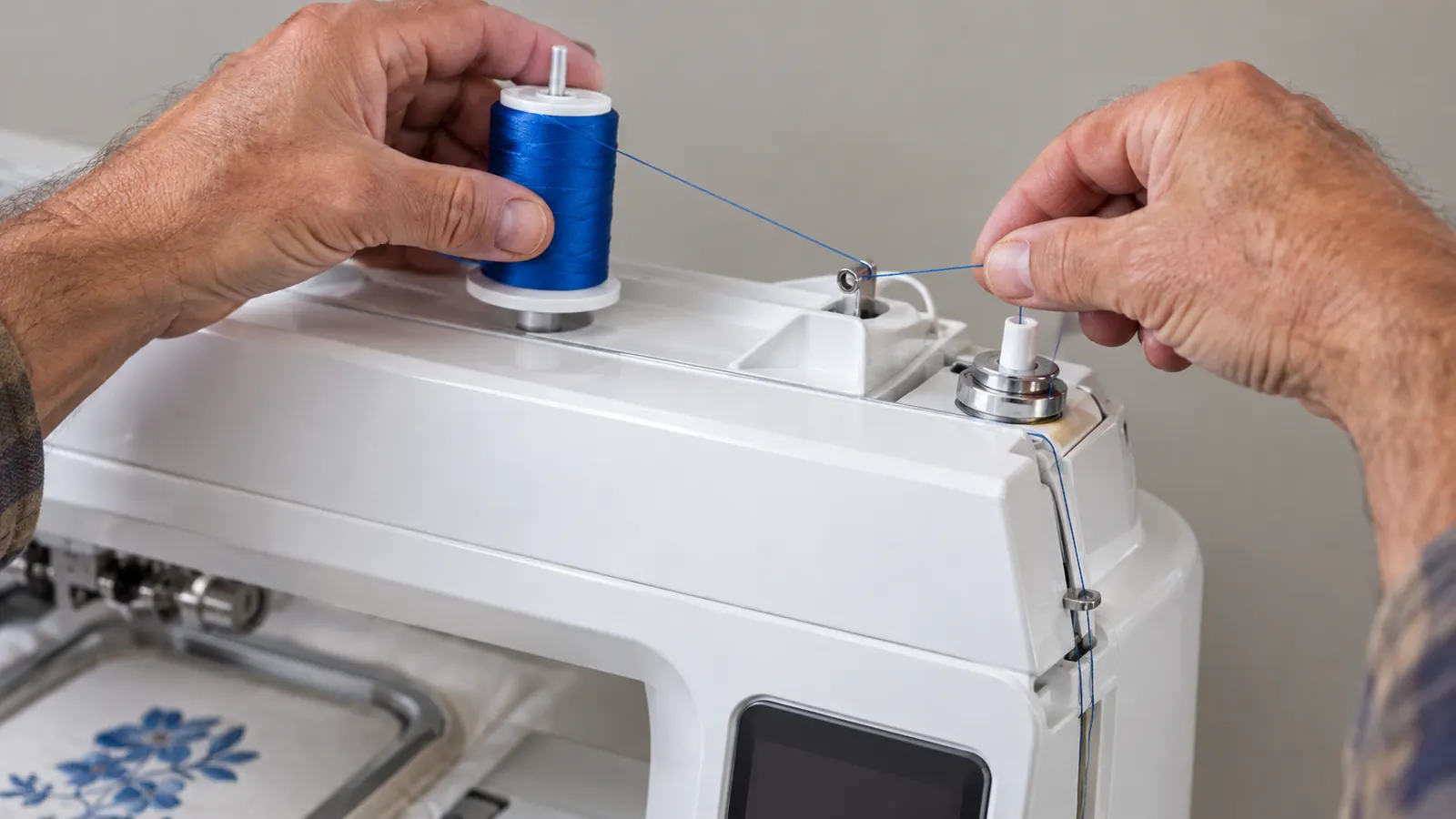
The first New brothread win showed up the first time I tried to match thread to a customer's logo. Every spool in the kit is numbered, and the printed color card shows each number as a chip in the actual thread color. I could hold that card next to the proof sheet, pick a spool, and get back to hooping without leaving my chair. With Simthread I carried spools to the window twice in the first month because two close blues looked the same on its thinner card. That sounds small, but it is exactly the kind of friction that adds up when you are matching a team teal at nine o'clock at night.
The break record is the bigger difference. Across six months New brothread did not break a single time in roughly forty jobs, including a forty-eight-towel order for a church fundraiser and sixty left-chest polos for an HVAC company. Simthread broke twice, both times on structured hats with dense logos and several layers of backing. Two breaks in six months is not a terrible record, and I want to be honest about that. But each break happened on a job with a promised delivery date. Each one meant re-hooping a hat, re-aligning the design, and stitching a garment a second time. On a deadline that is not a small thing.
Lint is the quiet difference, and it showed up in my notebook more than any other problem. Polyester thread makes lint, and lint drifts into the tension disks, which turns into skipped stitches, dull color, and mysterious thread breaks later in a run. With the New brothread kit I wiped the thread path after roughly eight hours of sewing. With Simthread I reached for the lint brush closer to six hours. Cleaning takes two minutes. A tension problem in the middle of a run costs you a ruined garment and a re-hoop. I will take the thread that runs clean longer even if it costs a little more to buy.
One more New brothread detail worth naming is the twist of the thread itself. The polyester has a slightly firmer twist, so it frays less at the needle eye when you push speed on a dense design. I saw less fuzz on the top thread between the spool and the first guide. That is hard to measure in a notebook, but it is easy to feel after years at the same machine.
Where Simthread Wins
I want to be straight with you here, because it would be easy to write Simthread off after a section like that, and that would not be fair. Simthread is a good thread. It sewed smoothly on towels and polos, it sat well on my thread stand, and it gives you the same forty-color range at a lower out-of-pocket cost. If you are new to machine embroidery and you stitch mostly gifts for family, this kit will treat you well. My complaints are about the edges, the color card, the extra lint, the occasional messy tail. Those matter less when the person wearing the shirt is your nephew rather than a customer who paid a deposit.
On hats I run the machine slower on purpose, and at those lower speeds Simthread behaved itself. The two breaks I saw both happened while I was pushing the pace on dense hat logos with heavy backing, not on a relaxed run. If you stitch mostly at moderate speed on fabric that is not heavily backed, you may never see a break at all, and this kit could serve you for years.
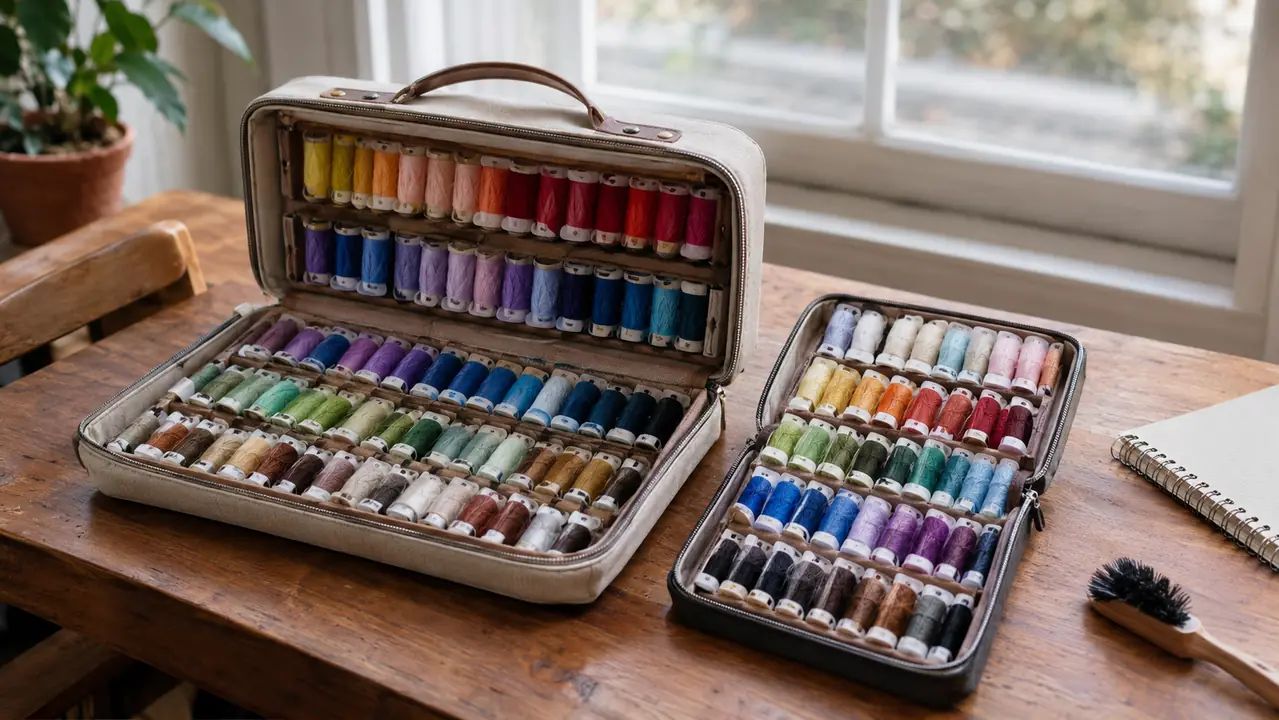
The Simthread box also earns its place in a small workroom. The case is slimmer than the New brothread case, so it slides flat into the shallow drawer under my rolling stand, where I keep spare bobbins, cone caps, and the colors I burn through on hats and towels. Working alone in one spare bedroom means every inch of shelf space has a job. I keep a Simthread kit in that drawer on purpose. When a rush order needs a color I use twice a year and the main kit does not have that spool in the current rotation, the spare is right there, and I do not have to stop the machine to go hunting through boxes.
Simthread also sells smaller replacement sets of individual colors, which suits someone who has already learned exactly which shades they use. For a backup kit that lives in a drawer, easy to replace and easy to store, Simthread is the practical pick. I just would not make it the kit that stays on the machine.
Start With the Kit That Never Broke on a Deadline
After six months of real orders, New brothread is the polyester kit that stays on my machine. Same clean 40-spool format, one readable color card, no theatrics. If you are ready to stop re-hooping hats, this is where I would start.
Amazon Check Today's Price on Amazon →Who Should Buy Which
Buy the New brothread kit if you stitch for other people, even a few orders a month. The color card saves you time on every new job, and the clean-running thread means you are less likely to stand at the machine at nine o'clock re-hooping a hat while the clock runs. If you match thread to customer logos, digitize your own designs, or sell embroidered goods to teams and small businesses, you will feel the difference in the first week. That is the group New brothread is built for, and it is the group I recommend it to.
Buy Simthread if you are learning on your first machine, embroider mainly for family and friends, or need a second kit to cover the colors you reorder most often. It is good thread at a friendlier price for someone who does not live on deadlines. If your budget is tight this month, Simthread is a better decision than putting off a purchase you need for a gift. And here is my honest bottom line: when I buy one more 40-color kit for the machine I charge with, I buy New brothread, and the Simthread kit stays in the drawer as my backup.
If you want more before you decide, two other pieces on this site will help. My long-term New brothread review covers how the same kit behaved after a year of use, and the piece on why 40-weight polyester thread matters explains the difference you will feel in stitch quality and thread breaks. Both come from the same worktable as this comparison. When you are ready to buy, the button below goes straight to today's Amazon listing.
One last note on color applies to both kits. Thread colors look different on a phone screen, on a printed proof, and under your shop light, and dye lots shift over time. If a job has to match a specific team color, order a spool first and stitch a small sample before you commit the whole run, no matter which kit you choose.
Still Deciding Between the Two Kits?
Read my long-term New brothread review for a full year of notes, or check out why 40-weight polyester thread matters before you buy. When you are ready, the button below opens today's New brothread listing on Amazon.
Amazon Check Today's Price on Amazon →