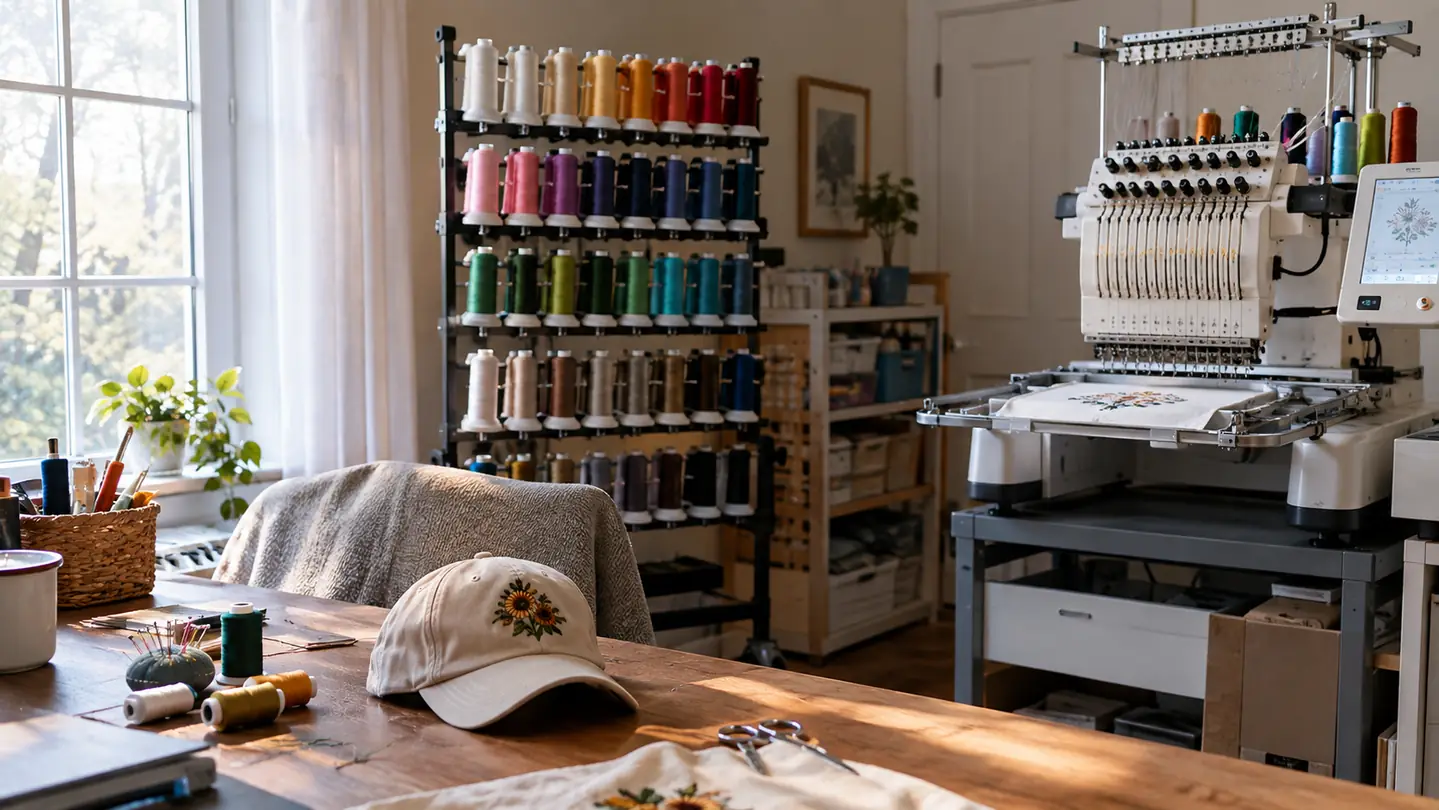
I bought my used six-needle machine in 2019 and turned one of the spare bedrooms in my Macon house into a shop. What comes off it is mostly hats, left-chest polos, towels and canvas bags for the same teams, churches, an HVAC company and one barbecue place that reorder every season. Early on, I bought whatever thread was on sale, and that cost me more ruined orders than I like to count. When I finally standardized on 40 weight polyester, my thread breaks dropped, colors stopped bleeding into the weave, and logos came out of the wash looking the way they did the day I stitched them. The kit I keep on my rolling thread stand is the New brothread 40-color polyester set. Here are the ten reasons that weight and that material matter for the work most of us actually hoop.
None of this is theory from a spec sheet. Every reason below is something I have watched happen in my own hoop, usually after ruining a customer's shirt first. If you run a single needle or a multi needle out of a spare room like mine, you already know the vocabulary. What I want to give you is the why, so the next time a design misbehaves you know which variable to check first.
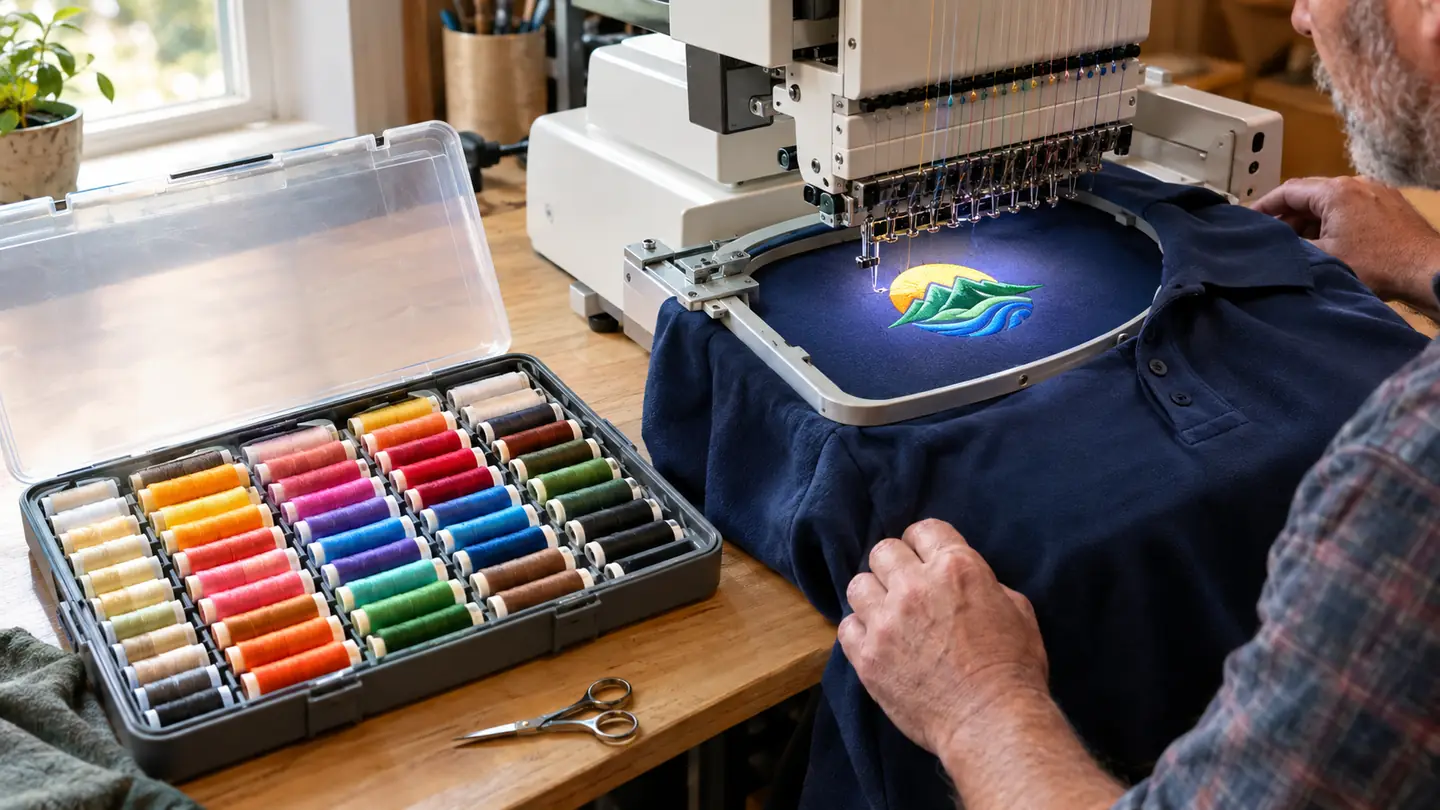
The 40-color polyester kit I keep threaded and ready
On my machine, the same New brothread 40wt poly that lives in this kit has cut my thread breaks and kept colors true through dozens of washings. It is the spool set I recommend before anything else.
Amazon Check Today's Price on Amazon →Designs are digitized around 40wt thread
When a digitizer sets stitch density, underlay and pull compensation, they make those choices for a 40 weight thread. That is the assumption baked into the design you bought. I saw what happens when you fight it: run the same logo with a thicker thread and the fill has nowhere to go, so the fabric puckers around the letters. Run it with a lighter thread and the fill goes thin, letting the shirt color ghost through. Once I kept every needle loaded with 40wt, designs stitched out the way the preview promised. That alone saved me a week of chasing problems that were never in the design file.
Polyester holds color through bleach and sunlight
Polyester thread is dyed to survive hard washing, and that is the difference between a logo that lasts a season and one that fades by the third wash. The team shirts I stitch get bleached. The towels from that barbecue place go through a commercial wash. Cotton and rayon thread bleed or soften in hot water, and I have unpicked more than one rayon monogram that turned pink. My red and navy polyester logos have gone through those same loads and come out exactly the color they went in. When you sell to people who abuse their laundry, that is not a small thing.
A low-lint thread keeps your tension honest
Lint is not just dust under the needle plate. It collects in the tension discs and along the thread path, and as it builds, tension drifts. That is why a machine that sewed beautifully on Tuesday starts breaking thread on Thursday for no reason you can find. Cotton thread is the usual suspect. Polyester filament thread, like the New brothread spools in this kit, sheds almost nothing. I still clean my machine between jobs, but I no longer find a mat of fuzz wrapped around the tension assembly after a long run of towels.
Fewer thread breaks mean fewer ruined pieces
A thread break costs you more than the two minutes it takes to rethread. If it breaks at stitch 4,000 of a 12,000 stitch towel logo, you are pulling out dense satin stitching that does not want to come out, then hoping the fabric does not show the damage. I used to plan for two or three rescues per run. After I switched the whole machine to 40wt polyester, a break became the exception instead of the routine. When you are stitching a 40-piece hat order alone, with no one to watch the machine while you run the other job, that reliability is what lets you sleep.
It takes the abuse that hats and towels actually get
Some thread is beautiful in the hoop and fragile in real life. 40wt polyester is the opposite: it is a workhorse. Hats get grabbed by the brim, towels get yanked out of the dryer, canvas bags get dragged across parking lots. The thread has to hold up to abrasion, not just look good under the needle. I have a canvas tote that has been through the wash a dozen times with its embroidered logo still intact, every stitch accounted for. That is the durability your customer is paying for, and polyester delivers it in a way finer threads cannot.
Its sheen reads as finished, not flashy
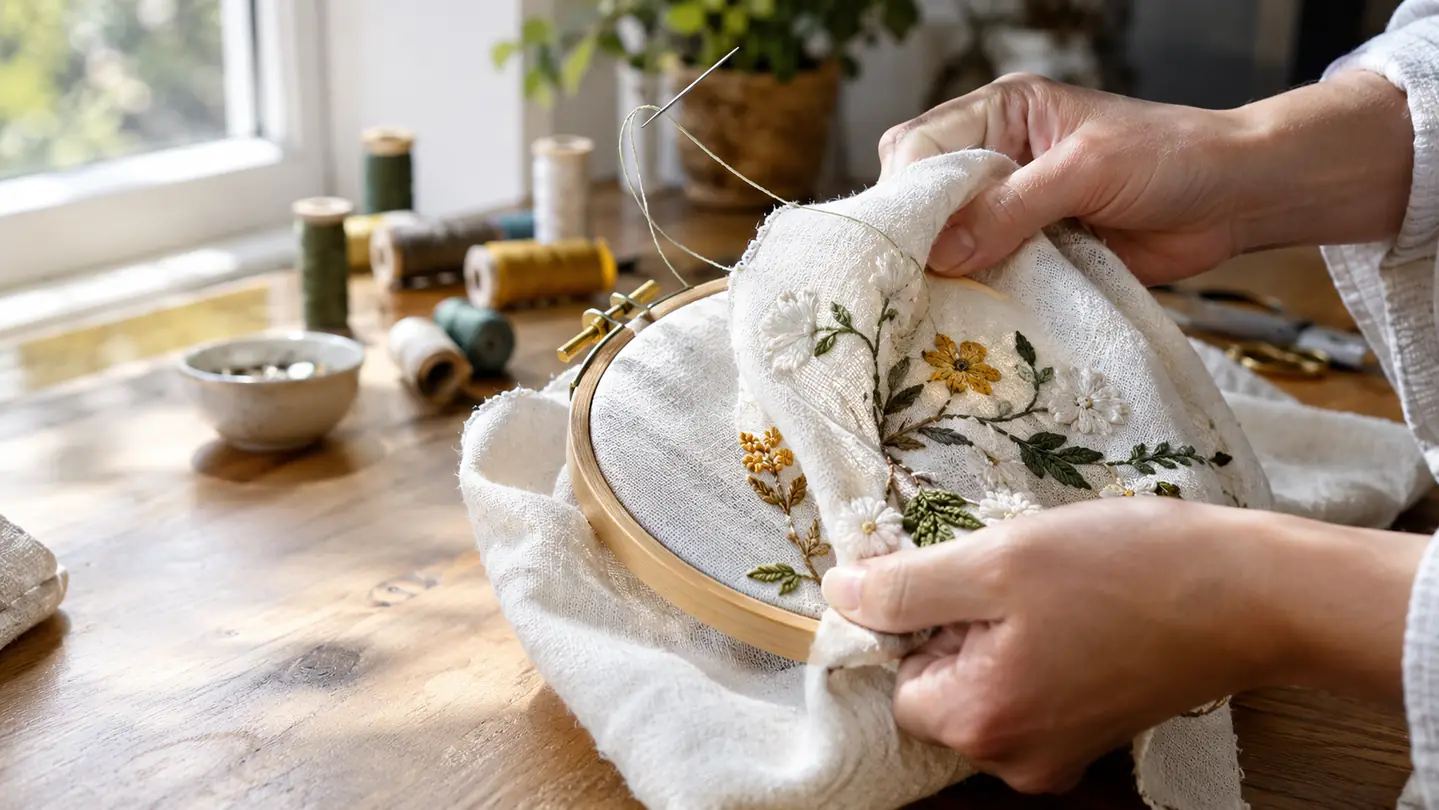
Thread has a visual weight that changes the whole piece. Rayon has a high gloss that can look beautiful on a baby blanket but wrong on a work shirt, where it glares under fluorescent lights. Matte cotton can look flat and dull on a hat. 40wt polyester sits between the two, with a soft sheen that catches light without shouting. When a customer looks at a finished left-chest logo across a counter, that is the difference between handmade and homemade. The finish is one of those details people cannot name but absolutely notice.
One weight on every needle means fewer tension adjustments
When every color on your machine is the same weight and from the same maker, the tension stays predictable across the whole design. I used to mix brands, and every color change was a small gamble: this spool runs tighter, that one runs looser, the navy birdnests at 600 stitches. With the New brothread kit loaded six colors at a time, I set my tension once and stop thinking about it. The machine just sews. The time I used to spend fiddling with tension between color changes I now spend on the next order.
Forty colors means the rush order can start today
The real value of a color kit is not the colors you use every day. It is the color you need twice a year, like the safety orange for a flag football team or the burgundy for a church picnic. If you do not have it on hand, you wait on shipping and pay rush fees, and the customer still calls you twice a day asking if it arrived. With the 40-color New brothread kit on my thread stand, I have yet to meet an order I could not start the same day. For a small shop, that turnaround is what keeps the phone ringing.
One weight covers small lettering and dense fills alike
You could swap thread weights for every order: something finer for tiny lettering, something heavier for dense fills. Nobody actually does that when they run 12 different jobs a week. 40wt is the versatile middle: fine enough that a one-inch name on a towel reads clean, strong enough that a dense satin monogram holds its edge. I run names, logos, borders and small left-chest designs all day without changing my spools. Versatility is the quiet reason this weight became the standard in the first place.
Consistent thread keeps the whole run true, first piece to last
The last piece in an order has to match the first, and thread is part of what makes that true. If the spool changes hand, or the tension walks, or the thread thickness varies between cones, the design slowly shifts and by piece 30 the registration is off. Polyester 40wt from a single kit is consistent from cone to cone. I have stitched 60-piece runs where the final hat lined up exactly like the first. When your name is on the order, that consistency is the difference between a repeat customer and a refund.
What I'd Skip
If you only embroider a few pieces a month for yourself, you can skip the full 40-color kit and buy the handful of colors you actually use. The kit earns its place when you take paid orders, because the color you need is never the one you predicted. I would also skip any thread that does not say the weight on the cone, and skip mixing a new brand of 40wt into a live job without a quick test piece first. Same weight, different maker, can still behave differently under the needle. Test it before it matters.
The box of ruined samples under my work table stopped growing the day I stopped buying thread on sale. That is what 40wt polyester bought me: a season without a single refund.
Stock your machine with thread you can trust
The New brothread 40-color 40wt polyester kit is what I keep on my thread stand. It cut my thread breaks, held my colors and made my runs predictable. If that sounds like your week, this is the kit to load next.
Amazon Check Today's Price on Amazon →