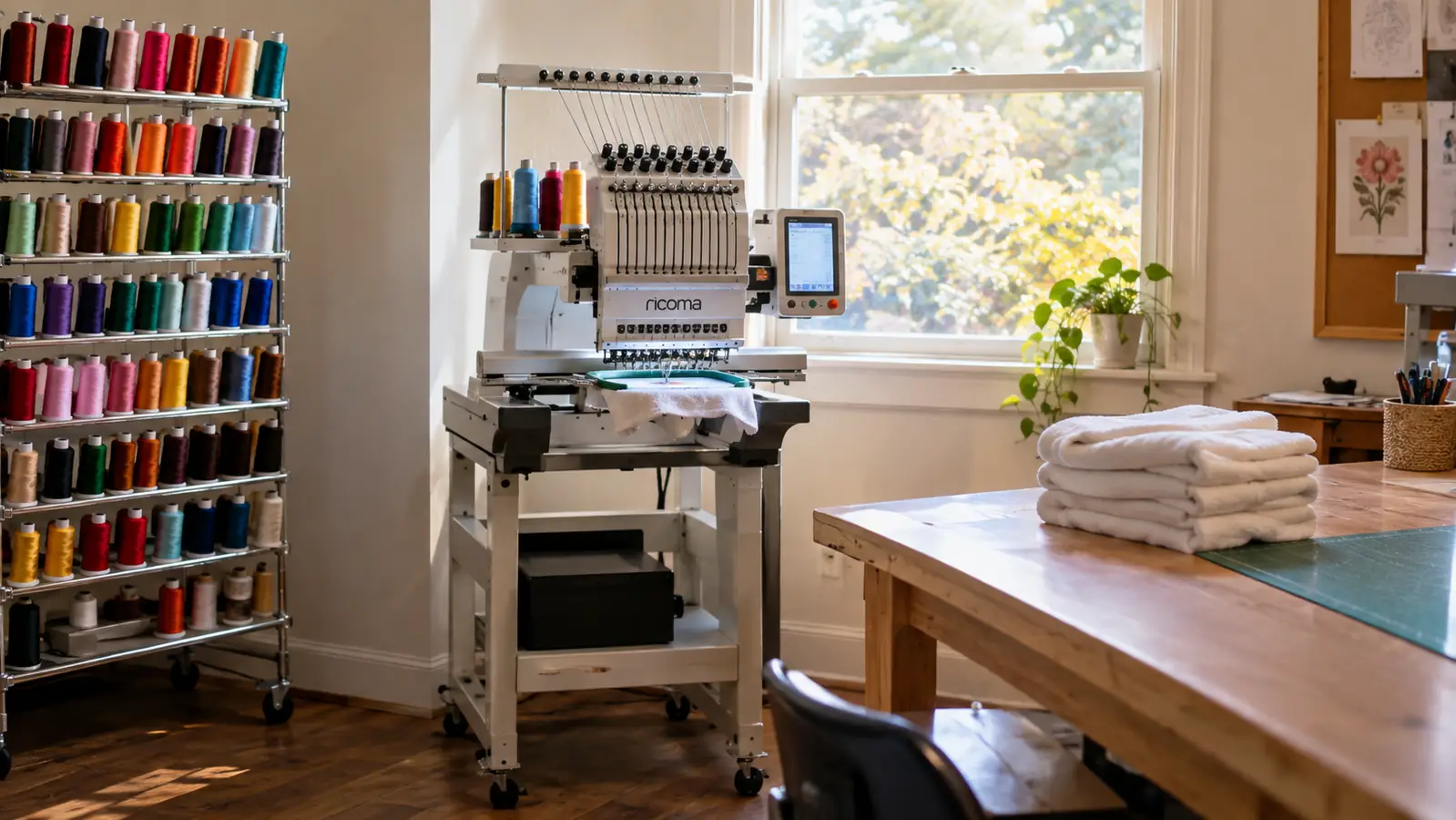
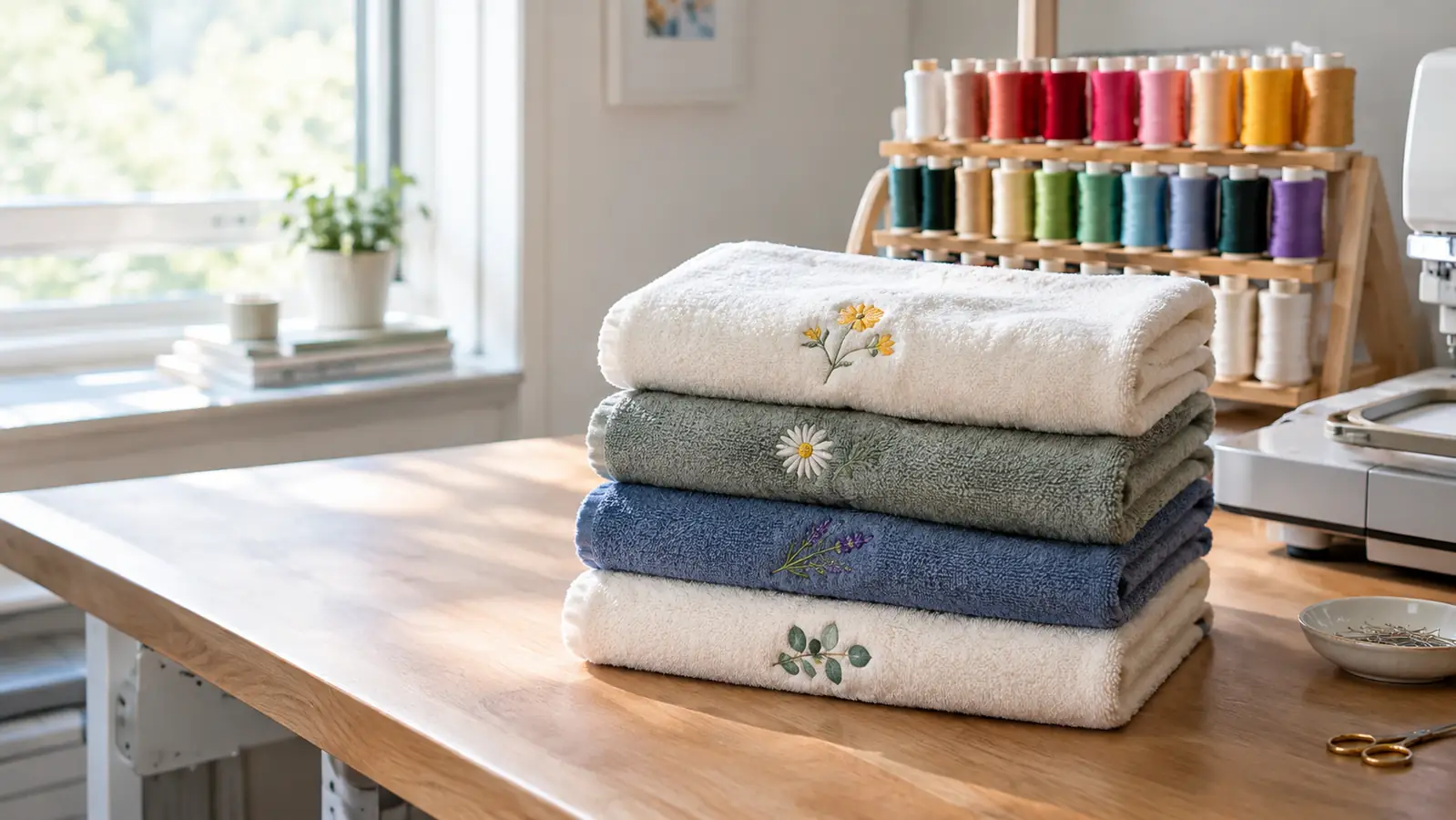
I spent the first six years of my embroidery business winding bobbins like it was part of the order. I wound them by hand, checked the wind under a light, and rewound any bobbin that looked uneven. The habit made sense when I ran only a few color changes a week. It made less sense on a deadline. In June, a week before 48 towels were due at a church women's retreat, my bobbin winder started to whine. I had no time to order a part, so I ordered DOUBLELIN prewound bobbins as a stopgap.
The package came in time for the towels. I loaded one DOUBLELIN, size A bobbin into my six-needle, stitched a test square, and called it good because the deadline did not give me room to be picky. Six months later, those bobbins are still my first choice. I have not gone back to winding my own for everyday orders. This review covers what changed, what did not, and the moments when a factory bobbin still was not the answer.
The Quick Verdict
DOUBLELIN prewound bobbins have held up through six months of small commercial runs. Bobbin tension stayed consistent, changes were fast, and I traced almost no thread problems back to the bobbin. They are not for every thread type or every dense design, but they are the easiest switch I have made in years.
Amazon Check Today's Price →The bobbins I reach for first
If you are still winding every bobbin by hand, try a box of DOUBLELIN prewound bobbins. They fit standard size A bobbin cases and arrive ready to use.
Amazon Check Today's Price on Amazon →How I've Used It
The towels were only the start. Over the next six months I used DOUBLELIN bobbins for left chest polos, hats, canvas tote bags, and more towels. My work comes in small runs, usually 12 to 60 pieces, so a bobbin rarely finishes in the middle of a run unless the design is heavy. I kept a cardboard tray beside my machine, one section for installed bobbins and one for spares. The tray made me slow down enough to see what was actually changing.
I measured success in three ways. I counted thread breaks, bird's nests, and the number of times I stopped to fix a bobbin issue. I also noted how often the machine ran out of bobbin thread at an inconvenient moment. After the first month, the bobbin related issues were rare enough that I stopped keeping the count. That was the moment I started trusting them.
I should say my machine is not a delicate single-needle machine. It is a six-needle commercial unit I bought used in 2019, and it has looser tolerances after years of work. A bobbin that runs slightly out of round or has rough edges shows up fast on a machine like that. DOUBLELIN bobbins did not make my machine quieter or slower. They simply stayed out of the way.
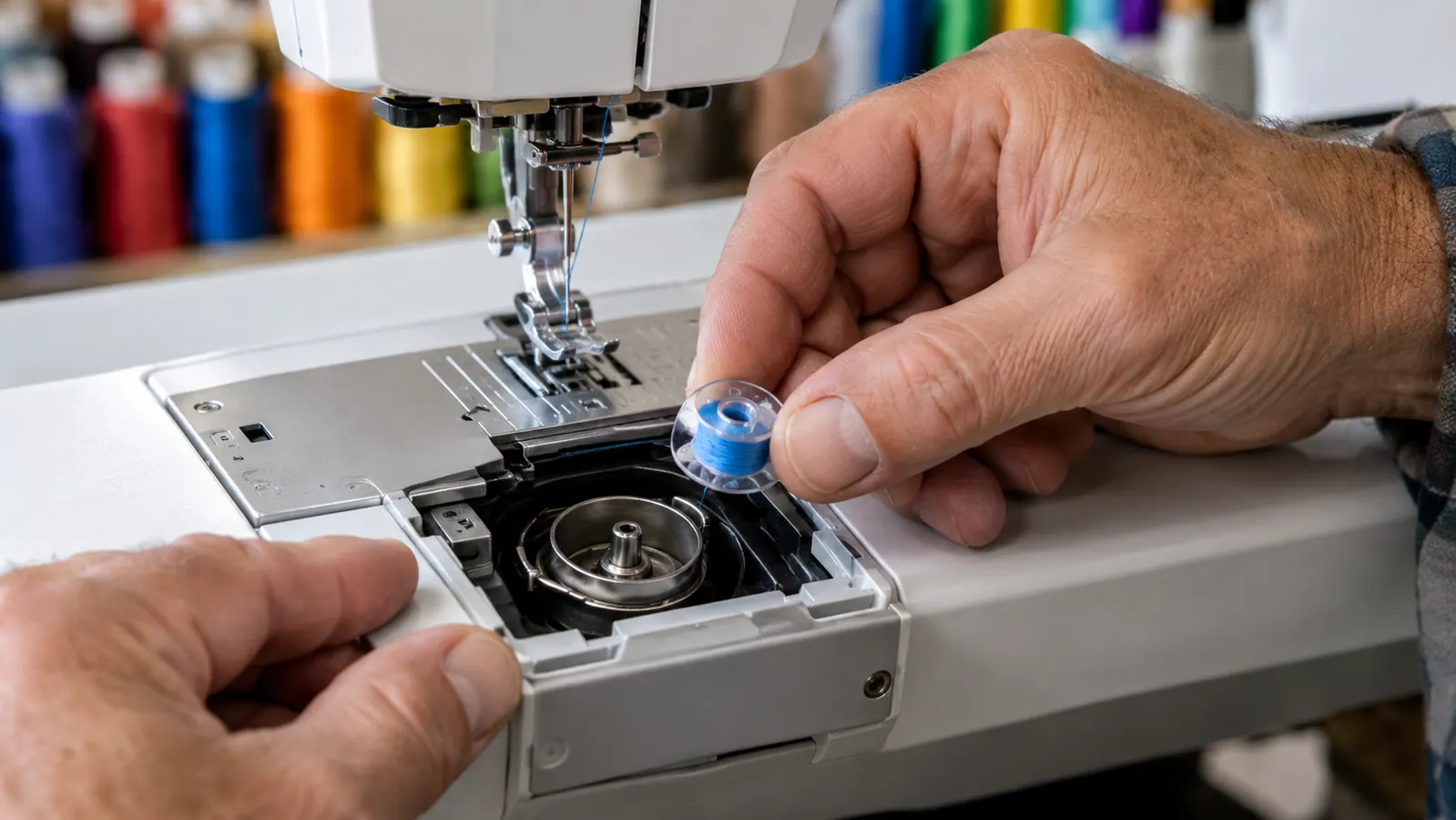
Tension and Thread Breaks Over Six Months
The worry most people have is tension. A factory bobbin is wound on a high speed machine, and the wind is denser and more consistent than anything I produced at my work table. That consistency matters when you stitch dense satin letters on a left chest pocket. I did not change the bobbin case tension on my machine for the whole six months. The top tension stayed where I always set it. Thread lay flat on top and pulled cleanly from underneath.
Thread breaks tell the real story. On the 36 polos for a church softball team, I stitched the first 30 shirts without a single break. The thread finally gave out on one design that was so dense I should have digitized it differently. It broke on the needle, not at the bobbin, and I found a small burr on the needle afterward. The bobbin was not the culprit.
Bird's nests also decreased. I had two in the first two months, and I traced both to my own hooping mistakes. One happened when the towel shifted in the hoop, and the other happened after I forgot to seat the top thread between the tension discs. Neither had anything to do with the bobbin. When a machine stops making those nests, you start checking your own habits instead of blaming the supplies.
The most useful data came from a Tuesday order of 60 towels. I used the same design, the same top thread, and the same hoop, then switched from my hand wound bobbin to a DOUBLELIN bobbin halfway through. The stitch quality looked the same from the top, but the underside was cleaner with the DOUBLELIN. That is the kind of proof I trust more than any spec sheet.
When a Bobbin Runs Out
My hand wound bobbins changed as they got close to empty. The last layer often felt looser, and I could see a difference in stitch quality just before the thread ran out. DOUBLELIN bobbins did not do that. They ran at the same speed right up to the last row. The machine gave me a low bobbin warning and I changed it. There was no slow, sloppy final stitch out, and no mystery about how much thread was left.
The clearest example was an order of 24 canvas bags for a barbecue restaurant. The logo had enough stitches to chew through a fair amount of bobbin thread. My machine warned me during bag number 14, and I changed the bobbin before hooping bag number 15. I did not lose one bag to an empty bobbin. With my own hand wound bobbins, I would have changed bobbins at the first sign of uneven bottom tension, but with these I could trust the warning.
A low bobbin is a signal, not a crisis. The machine stops with the needle out of the fabric, so there is no damage to the garment. In six months I never had to rip out a stitch because the bobbin ran out in the middle of a logo. That alone is worth the switch.
I also learned to trust the machine's thread sensor instead of my eyes. With my own wound bobbins I looked at the remaining thread every time the machine paused. With DOUBLELIN, I only looked after a warning. That may sound small, but it changes the rhythm of a whole day of stitching.
Inside the Box, Day to Day
The bobbins come in a sturdy box of 144, which is enough to keep my machine running for months. I keep the box on a shelf by the work table. The label on the box tells me the bobbin size, and the bobbins slide out without sticking together. Each one has a dense, even wind with no loose loops around the edge. I have used enough off-brand bobbins to know this is not true everywhere.
When I compared them to a fresh hand wound bobbin under the machine light, the factory wind was a little firmer to the touch. That firmness is what prevents skipped stitches and bottom bunching in a fast commercial machine. The more I ran them, the more I understood why I had waited so long to try prewound bobbins.
No package is perfect. I found two bobbins in the first box with a slightly fuzzy edge, likely from the factory cutting process. I set them aside for test sew outs. They did not fail, but I did not trust them for a customer order. With 144 pieces, that is a small number, and it is why I always keep a few hand wound bobbins ready.
Where I Still Wind My Own
Prewound bobbins are not universal. I keep my bobbin winder working for two situations. The first is metallic thread. Metallic filament does not have the same stretch as 40 weight polyester, and it needs a softer wind. On the rare project that uses metallic thread, I wind my own bobbin and set the bobbin tension a little looser. The second situation is very dense designs with heavy satin fill. Those designs need the option of a slightly looser bobbin so the fabric does not pucker around the edges.
Finding when to use a hand wound bobbin was the most useful lesson of the six months. I started by treating prewound bobbins as the only answer, then learned to watch for pucker or skipped stitches. When that happened, I switched to a hand wound bobbin for that single design, finished the run, and went back to DOUBLELIN for the next order.
Another place I wind my own is when I want to use up the end of a spool. If I am down to the last few yards of a thread color, I put it on a bobbin and use it for a test sew out, because it would otherwise sit in my thread stand until I forgot it. Bobbin thread does not need to match the top thread exactly unless a design is very light, so it is a good use for leftovers.
What Still Annoyed Me
I want to be honest about the downsides. Prewound bobbins cost more than winding my own, and I have to add that into every job. They also come only in the size you order. If your machine needs a different size, a 144 piece box is not the moment to discover it. And the color selection in prewound bobbins is more limited than the thread colors I already own.
The other adjustment was the fixed fill. Once a bobbin is wound by a factory, the fill tension is what it is. I cannot loosen it without rewinding onto my own core, which defeats the purpose. I also had to get used to storing a large box of bobbins in a small spare bedroom shop. I found a place for the box, but it took longer than it should have.
What annoyed me most was not the product. It was my own old habit of reaching for the winder without thinking. It took about three weeks to stop winding a bobbin when I changed colors. The second week, I caught myself winding an empty bobbin just because the motion felt normal. That is not a flaw in DOUBLELIN; it is simply how long it took me to update my routine.
After six months, I have one sentence for another home embroiderer. Prewound bobbins will not fix a machine that needs service or a design that is digitized poorly, but they do remove one more daily variable from your hands. A stable bobbin, the same every time, is a quiet thing until you do not have it. That is the whole point, and it is enough.
What I Liked
- Ready to use with no measuring or test winding
- Consistent tension across long runs
- No more slowing down when the bobbin gets low
- Color changes take seconds instead of minutes at the winder
- Dense and even wind with no rough edges
Where It Falls Short
- Prewound bobbins cost more than using your own thread stock
- You have to match the exact bobbin size to your machine
- Dense or speciality designs may still need a hand wound bobbin
- The box of 144 takes up more space than a couple of spools
The biggest change was not zero thread breaks. It was that I stopped wondering whether the bobbin would be the reason I wasted a shirt.
Who This Is For
If you run even a few color changes a week, prewound bobbins save you more time than you think. They are a good fit for a one-person shop that works in small runs, because the biggest cost of a bobbin change is not the thread, it is the stop and start. DOUBLELIN prewound bobbins are also a good fit for anyone who has ever been blamed for a tension problem that started at the bobbin winder. Keep a box near the machine and you will understand in one afternoon.
Start with a simple run where the deadline is not too tight. That way you can compare tension without the pressure of a rush order. I wish I had done that instead of waiting for my winder to fail, but a deadline is a fine teacher too.
Who Should Skip It
Skip these if your machine takes a bobbin size other than A. A prewound bobbin only helps when it fits. Skip them if you mostly stitch with metallic or specialty threads, because those often need a bobbin wound to a different tension. And skip them if you are happy with your own winding routine. Prewound bobbins are a convenience, not a requirement. For my small shop, the convenience won out. For someone who stitches once a month, hand winding is fine.
If you only stitch a few pieces a month, the box of 144 may feel oversized. You will use the bobbins eventually, but you might prefer a smaller package or a few hand wound bobbins. There is no shame in staying with your own winding routine if it already gives you clean results.
Give your winder a break
For everyday embroidery with 40 weight polyester, DOUBLELIN prewound bobbins are a reliable choice. Order a box and compare them to your own hand wound bobbins on your next run.
Amazon Check Today's Price on Amazon →