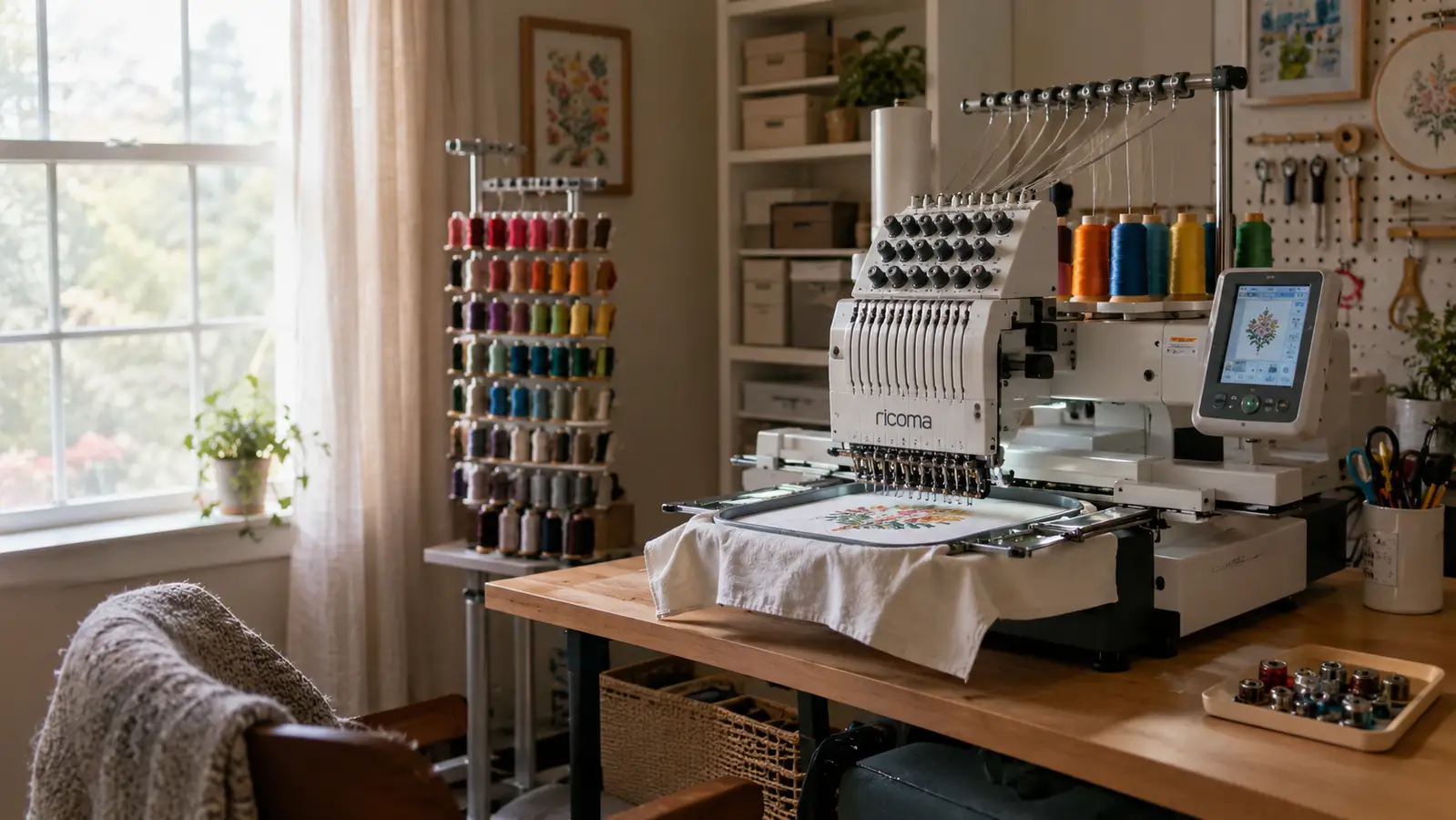
I have wound my own bobbins since I bought my used six-needle machine in 2019. For six years I did it the way most home embroiderers do. I fill the little winder on top, pull the thread through the tension disc, and let it spin while I walk away to hoop the next item. Some days that works fine. Other days I stand at my table at nine thirty at night, thirty pieces into a forty-piece order, and watch a bobbin I had wound an hour earlier turn into a nest of loose loops under the plate. The thread has shifted, the tension is suddenly light, and the last twenty stitches have started to look loose. I shut the machine off, cut the jump stitches, pull the item, re-hoop it, and start that color again. That is the exact moment I started wishing I had bought prewound bobbins instead.
The question I had was not whether prewound bobbins exist. The question was whether they pull their weight in a one-woman shop that sews hats, polos, towels, and canvas bags for local teams and small businesses. So for three months I used DOUBLELIN APW-60S2 prewound bobbins, size A, on real orders. I kept a pad of paper next to my machine and wrote down every bobbin change, every thread break, every tear-out, and every re-hoop. I ran the same designs side by side with bobbins I wound myself. By the end I had completed fifty-one jobs and roughly 190,000 stitches. Here is the honest comparison.
| DOUBLELIN Prewound | Wind Your Own | |
|---|---|---|
| Cost per bobbin | More than winding from a spool you already own | Nearly free if you use thread from the same spool |
| Time before a run | Loads in seconds, no winding step | 60 to 90 seconds per bobbin plus test stitching |
| Tension consistency | Machine wound at the factory, layers stay flat | Can shift if the winder piles thread unevenly |
| Color choices | Only the shades you have in stock | Any color you already own on a spool |
| Thread breaks | Two on eleven towels in my test | Ten on eleven towels in the same test |
| Best fit | Runs of twelve or more in one color | One-offs, monograms, and quick color changes |
Where DOUBLELIN Prewound Bobbins Win
On any job where every garment uses the same bobbin color, prewound bobbins saved me real time. Take the forty-eight polos I stitched in March for an HVAC company. Each polo used about two and a half yards of bobbin thread, which means I needed to change bobbins sixteen times over the course of that order. With DOUBLELIN, I reached into a fresh box, snapped a new bobbin into the case, and sewed the next polo. I did not wind a single bobbin that day. I did not stop on the way back to the machine to check whether the thread on the bobbin had piled up on one side, because a machine wound bobbin comes off the line flat. The whole order ran from one in the afternoon to five thirty, with one needle change and no bobbin breaks.
I have a more useful number than time, though. Last June I stitched twenty-two towels for a church picnic and used that run for a direct comparison. The first eleven towels, I wound bobbins myself on my machine winder. The next eleven, I used DOUBLELIN prewound bobbins from the same box I am reviewing. Same machine, same cotton poly thread, same design. On the hand wound side, I stopped for ten thread breaks over those eleven towels. Two were bobbin breaks. On the prewound side, I stopped twice, and one of those was a needle thread break caused by a knot in a spool, not a bobbin problem. A tear-out on a towel is not the same as a tear-out on a shirt you can recut. Once a towel has a visible needle line, you cannot sell it.
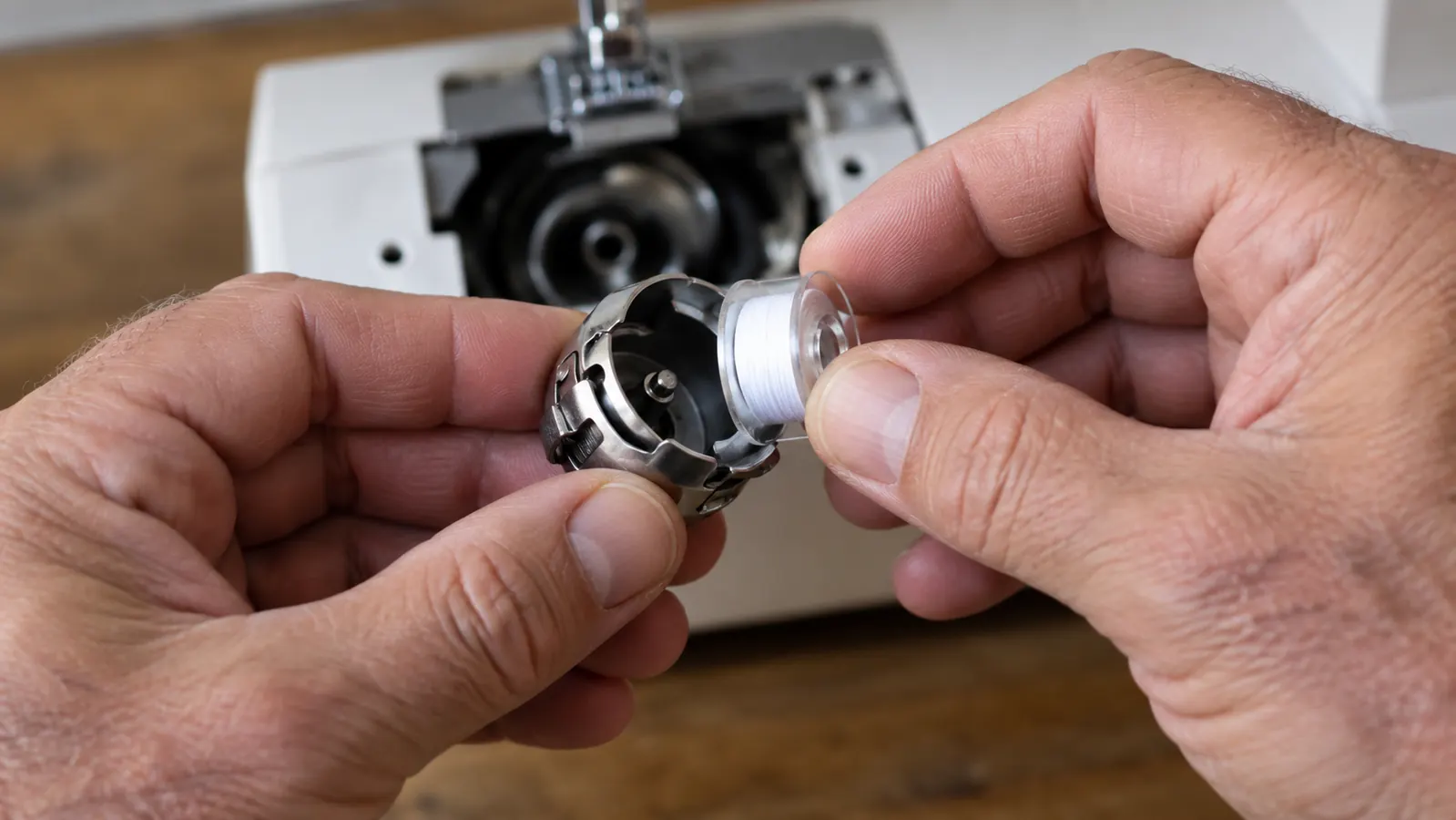
The reason for the difference is tension consistency. A bobbin wound on the little arm of a home machine depends on how fast you wind it, how much tension you put on the thread with your fingers, and whether you let it run until the sides are even. I am careful about these things, and I still have days where the thread stacks higher on one side. When a tilted bobbin goes into the case, the tension spring rides against the high side, so the lower thread pulls too hard or not hard enough. DOUBLELIN prewound bobbins are wound under even machine tension to a set diameter. The thread layers sit flat, so the bobbin case does what it is supposed to. I can feel the difference in the stitch quality on the back of the fabric and in the lack of bird nests on the front.
The storage and inventory advantage is hard to overstate. A flat case of one hundred forty-four prewound bobbins takes up less shelf space than a pile of loose bobbins. I keep a box of each staple color on the same shelf as my thread stand. When I am down to the last ten, I order another case, because a bobbin supply is an operating supply, not an impulse buy. I also like that I no longer spend the end of every job hunting for a loose bobbin under the work table. It used to take me five minutes to dig through a tub of wound bobbins, because they all look the same from the top. The label on the box tells me what is inside, and I never have to guess whether a bobbin is empty on the bottom.
I also noticed fewer late-night mistakes. When I wind bobbins by hand, I occasionally forget whether I stopped the winder before it reached the top, or I let one spin on too long until the flanges packed tight. Both things cause a different lower thread tension. With prewound bobbins the diameter is already correct for the size A case, so there is no chance I overfill it. If I run out mid-design with a prewound, I can see the empty plastic core and know exactly why the machine stopped. That sounds like a small thing, but on a white towel with a dense monogram it keeps me from blaming the design file.
Cost per run is where prewound seems worse until you add what did not happen. In my notes from those three months, the DOUBLELIN bobbins never once caused a thread break that led to a tear-out. I had eleven re-hoops in the same period with hand wound bobbins, and every re-hoop costs me fabric, thread, and time. On a busy week with three rush orders, prewound bobbins paid for their difference in avoided re-hoops alone. I am not saying they saved me money every single week, but the weeks they saved me the most were exactly the weeks I could not afford to lose an hour.
Where Winding Your Own Wins
Now for the reasons I still wind my own, because pretending otherwise would not be an honest review. The clearest reason is cost. A prewound bobbin always costs more than the few yards of thread it takes to wind the same bobbin yourself, especially when you already own the spool for the top thread. The thread on my roll is already paid for, and the small amount used in a bobbin is not a rounding error on a busy job, but it is still less than buying a box of prewound and letting half the bobbins sit unused for six months. For a small shop that watches every receipt, that difference matters.
Color matching is the reason I will never be one hundred percent prewound. My machine spends most of its time stitching navy, black, or white logos, and DOUBLELIN prewound bobbins cover those shades perfectly. But last month I sewed sage green towels with a burgundy monogram. I did not have sage or burgundy prewound bobbins in size A, and I was not going to order two boxes of one hundred forty-four just for a twelve towel order. I wound eleven bobbins from the spools I already had, one monogram color and one background color, in about four minutes. The backs of those towels matched the fronts exactly because the bobbin thread was the same color as the needle thread.
Winding your own also lets me match the exact weight and type of thread. I stitch most of my work in forty weight polyester because it is strong and resists sunlight, but I have customers who ask for cotton thread on baby blankets or on soft knit tees. My machine does not love cotton thread in the needle, and when it does handle it, I need the bobbin thread to be the same cotton so the stitches settle evenly. With prewound, I have to buy a separate box in that fiber and hope the formula behaves. With my winder, I use the same spool that is on the needle and I know it is compatible, because I choose it.
Another advantage is how much bobbin thread I can put on for a long dark design. Some of my canvas bag orders have names monogrammed in a dense satin column that runs two thirds of the way down the bag. That design uses a surprising amount of lower thread. A prewound bobbin is wound to a standard diameter, and if it runs out at the top of a nickname on a bag, I have to unpick and start over. When I wind my own, I can fill the bobbin all the way to the top. That extra thread is what gets a sixty piece bag order through without a bobbin change on the last letter.
Feeling in control of my bobbin case tension is part of it too. I have adjusted the tension screw on my bobbin case for the thread I buy most, and when I wind my own to the same diameter every time, the stitch stays even. Some prewound bobbins run wider or tighter than the same size from a different brand, which means I have to re-check my case adjustment every time I switch brands. I did not have this issue with the DOUBLELIN bobbins I tested, but it is a real consideration if you buy prewound bobbins from a supplier you have not used before.
Finally, winding your own is the right answer when you only need one or two bobbins for an order that is due in an hour. It takes me less than two minutes to wind a bobbin on my machine, and I can do it while the machine is idle between color changes. If I discover on a Friday afternoon that I need a bobbin in a color I do not stock, the winder solves the problem immediately. Waiting for a delivery of prewound bobbins would cost me the whole weekend. For that customer, my winder is the better product.
If you sew runs of matching pieces, this box pays for itself
DOUBLELIN prewound bobbins come in a 144-count case, load in seconds, and kept my towel test to two thread breaks instead of ten.
Amazon Check Today's Price on Amazon →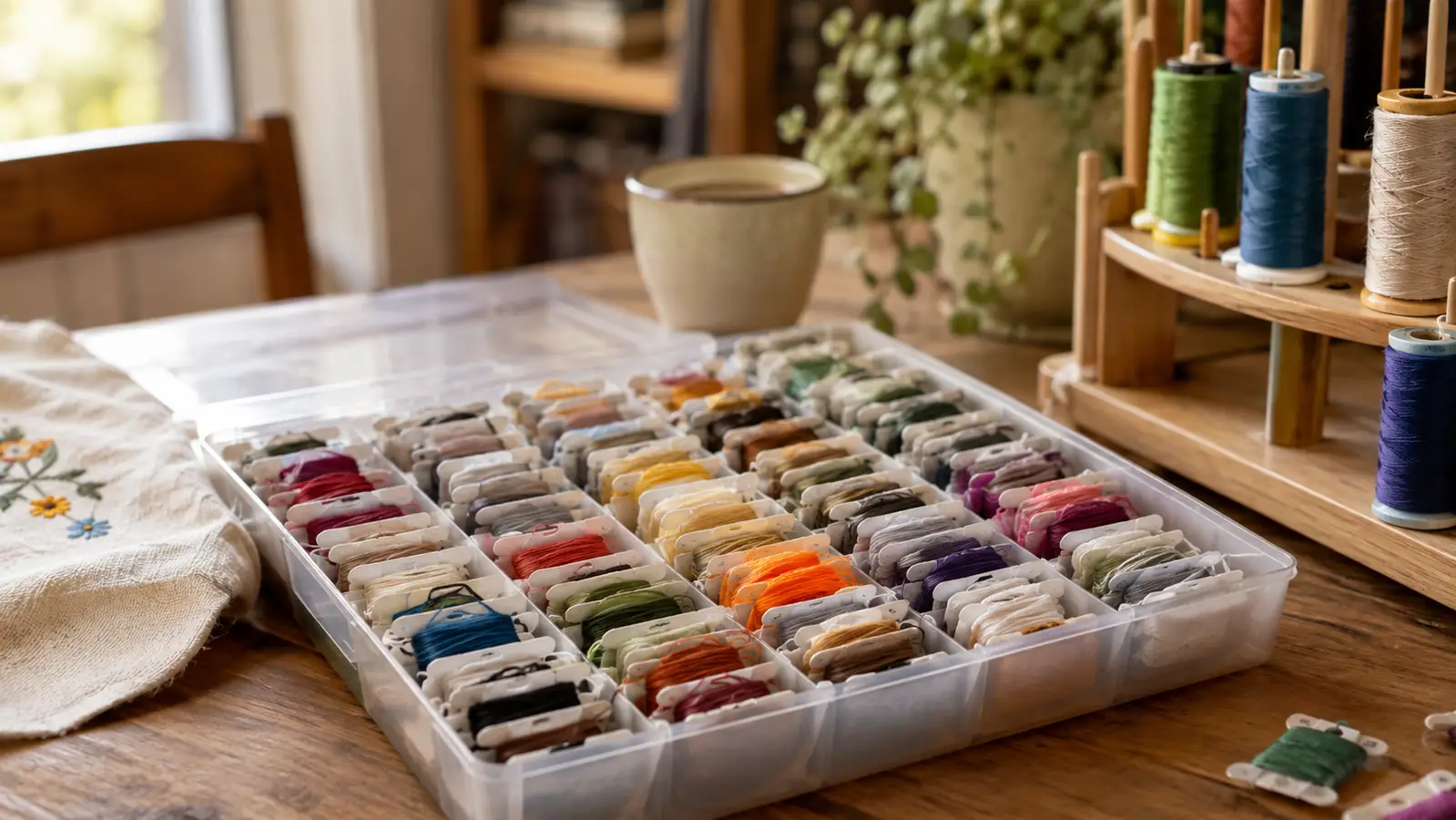
Who Should Buy Which
So who should buy the DOUBLELIN prewound bobbins? In my view, you if you run sets. If your average order is a dozen or more pieces in a matching color, if you sew the same high school colors every fall, or if you ever find yourself winding sixteen bobbins the night before a delivery, you are the customer. One box of one hundred forty-four prewound bobbins will carry you through a season of lettering and left-chest logos. I keep mine on the shelf and reorder when the box gets light.
Who should skip them and keep winding your own? You, if almost every order is different. A monogram shop that does two personalized towels an evening, a shop that changes colors on every design, or someone who only embroiders occasionally does not need one hundred forty-four bobbins in a single color sitting around. You will pay more up front, and you will not get the savings back if you only use a dozen bobbins in a year. Your winder is fast enough, and your colors change too often for prewound to help.
A reasonable middle path is what I have settled on. I buy prewound DOUBLELIN bobbins in navy and black, the colors I use on about seventy percent of my orders. For everything else I wind my own from the spools I already carry. That lets me take the time savings where it matters and keep the flexibility where I need it. If you are new to prewound bobbins, I would start with one box in your most-used color and measure on your own orders. It took me about two weeks of real jobs to see the difference in thread breaks, and the difference was clear enough that I have not gone back.
I know it is tempting to make this an either or choice, but it does not have to be. Put the same design through a run of twelve towels using hand wound bobbins and then twelve more with prewound, and keep the stitch count and the break count in a note on your phone. That is a better test than anything I can describe here, because your machine, your thread, and your designs are not built like mine. My only advice is to run the test on a job you would have sewed anyway and let the numbers decide.
Start with one box in your most-used color
Run your own side by side test on the next matching order. DOUBLELIN prewound bobbins are easy to try without changing anything else about your setup.
Amazon See Today's Price on Amazon →