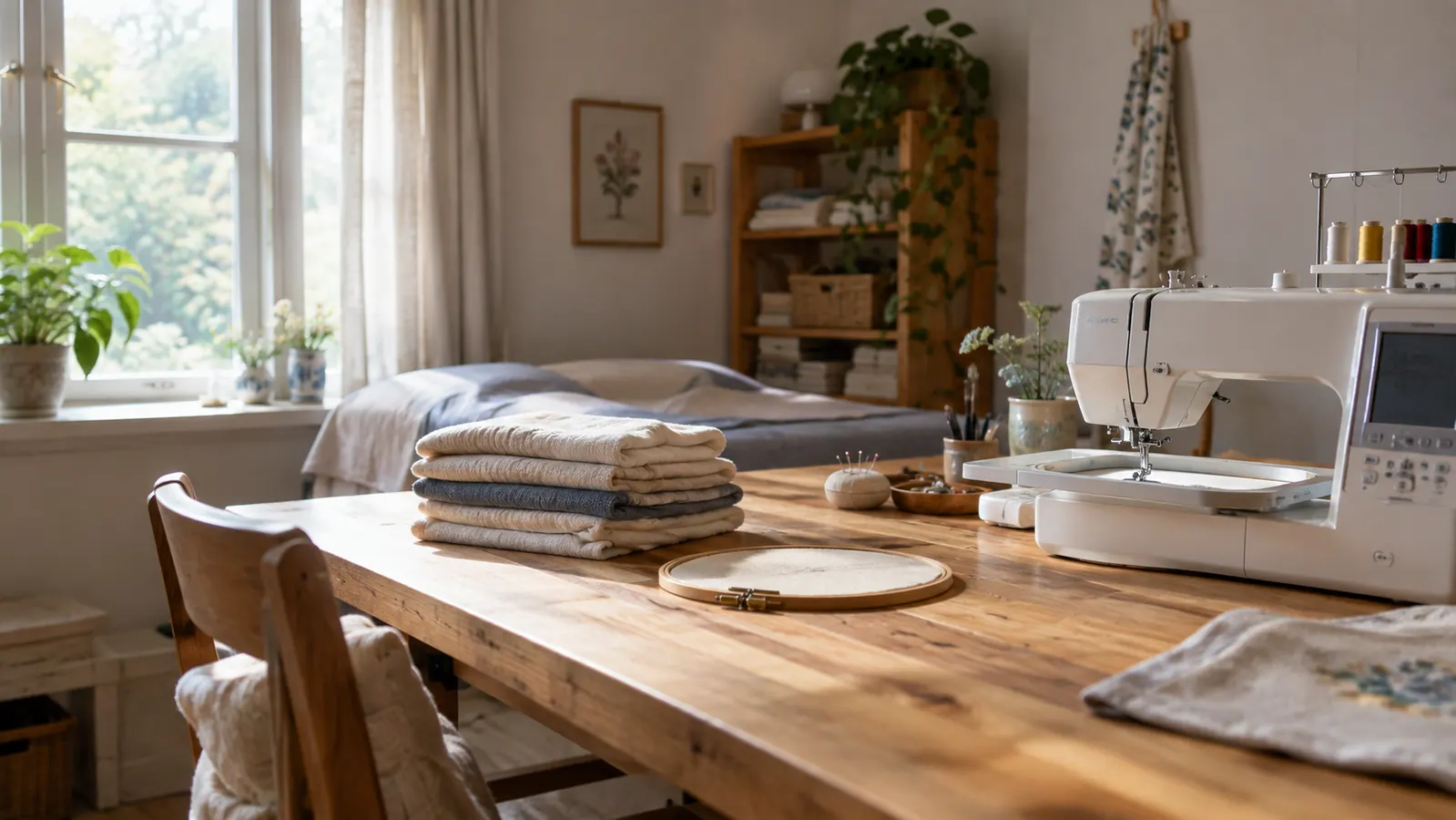
I bought the Sew Tech magnetic hoop ready to send it back. My shop habits were built around the plastic hoops that came with my six-needle machine, and two of those had already cracked in the same season, both on towel runs. The reviews kept saying the same thing: thick and awkward fabric hoops easier with a magnet than with a screw. I had a church order of forty-eight towels due at the end of the week, so I decided to test that idea on real work. I run a one-woman shop out of a converted spare bedroom in Macon, Georgia. I bought my machine used in 2019, and I still hoop the way I did when I started: by hand, one piece at a time, alone. This is that review, written at my own table.
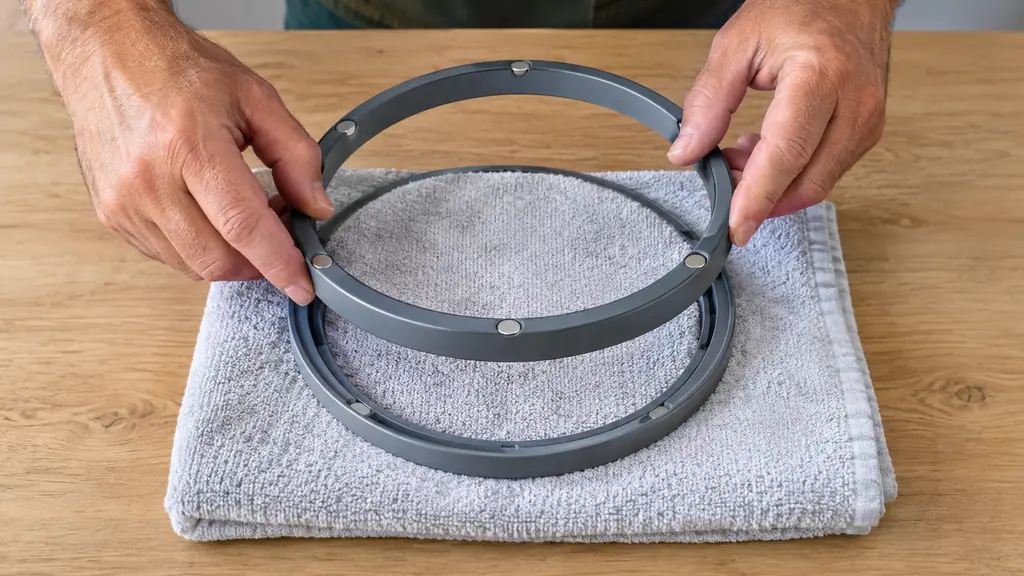
What nobody tells you is that the magnetic hoop is not a faster version of the hoop you already know. It asks you to work differently. You lay the fabric over the bottom ring, smooth it flat with both hands, and let the top ring drop onto it. Done that way, it is the quickest hooping I have found. Done the way I did it my first afternoon, pulling each towel tight like I had done for years with a screw clamp, the fabric puckered and slid and I nearly boxed the thing up. This is the honest side of the review. The hoop is good. It is also easy to use badly, and nobody puts that warning on the box.
The Quick Verdict
Genuinely better for towels, canvas, and anything thick. It will not replace your whole hoop drawer, and thin knits will test your patience. Worth the switch if you give it a weekend to learn.
Amazon Check Today's Price →The 6x10 that turns the worst part of a towel run into the fastest part
In my shop, the Sew Tech magnetic hoop took hooping from the job I dreaded to the job I finished first. Check today's price for the 160 by 260 size.
Amazon Check Today's Price on Amazon →How I've Used It
I have run this hoop on flour-sack towels for a barbecue place in town, canvas totes for an HVAC company, a batch of fleece throws for a teacher's group, and a few left chest polos where the placket was too close to the design for comfort. The 6x10 size is the frame size I already used for large backs and tote bags, so it did not ask me to change how I lay out a job. The difference came in the hooping, not the digitizing.
My old rhythm with a screw hoop was simple: loosen, place the fabric, pull, clamp, check, repeat. On a run of forty-eight towels, that check and repeat ate my afternoon, and every third clamp needed a second try because the terry slipped out from under the screw. With the Sew Tech hoop, I smooth the towel over the bottom ring and drop the top ring. My first full towel run took less time than the old hoop used for twelve towels, and I did not lose one placement to fabric that walked away from the clamp.
Its arrival was unremarkable. The box held two rings and no instructions worth the name, which should have told me something. The bottom ring goes under the fabric and the top ring is the magnet; that is the whole product. Simple tools reward you for listening and punish you for assuming they work like the ones you already own.
The First Afternoon Will Not Go Well
This is the part star ratings do not carry. A magnetic hoop does not tighten in stages. A screw hoop lets you start snug, look at the fabric, and pull one corner harder when a wrinkle starts creeping in. The magnet is all or nothing. The moment the top ring seats, the tension is decided. If you stretched the fabric out of shape by habit, that distortion is locked in with it.
My first three towels had ripples along the bottom edge and the designs pulled toward the center. Fixing it meant lifting the top ring straight off, smoothing the towel again, and dropping it again. That is the other thing nobody tells you: repositioning is fast and painless, but you have to be willing to do it. This hoop assumes you will learn to smooth outward from the middle and trust the magnet. It took me about an hour of bad hooping to believe that.
My advice from that hour: start on a towel you are not in a hurry to ship and hoop it ten times before you hoop anything real. Your hands know the screw motion too well. They need a few reps to unlearn it. The first correct hooping feels almost too loose, and that is exactly when the design comes out best.
Where It Earns Its Keep
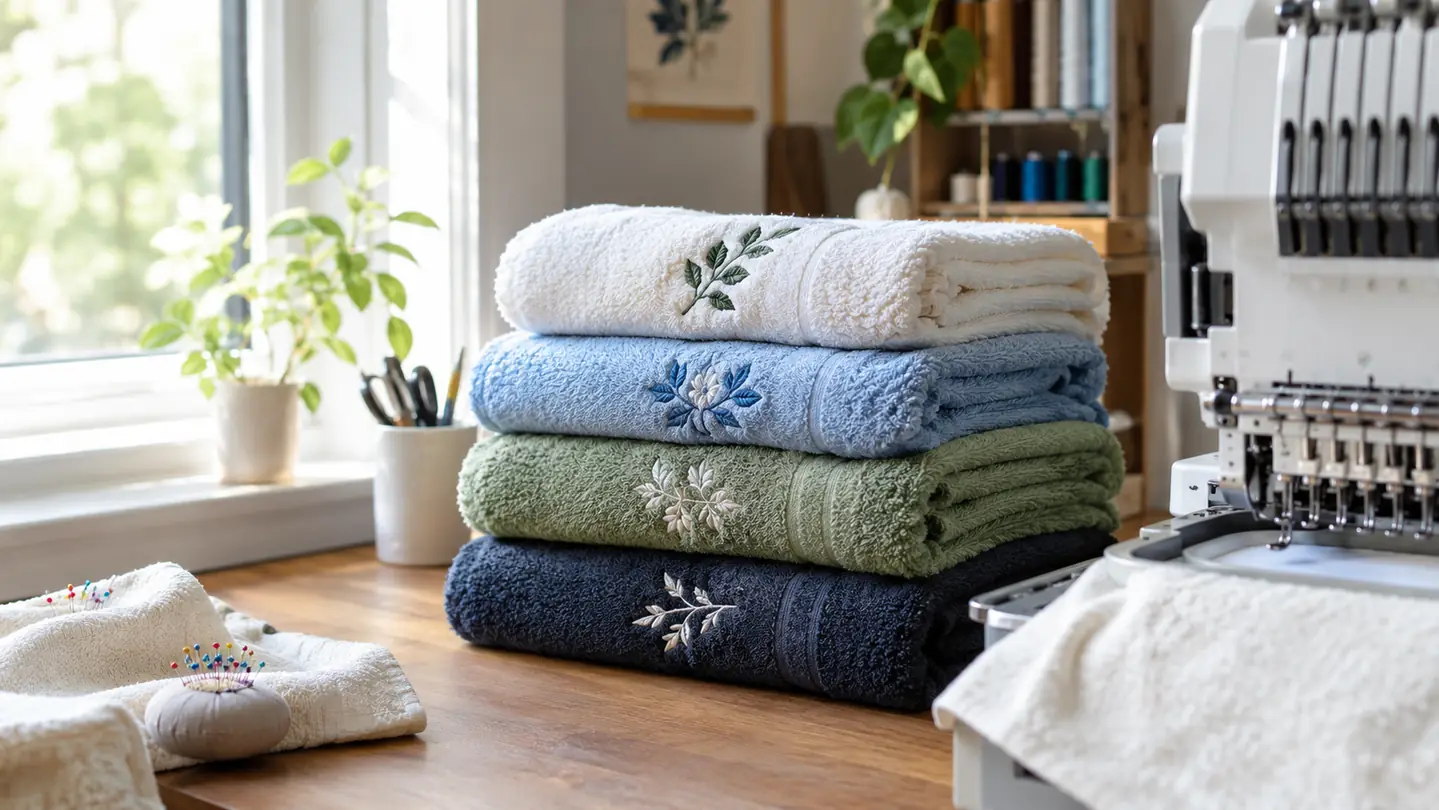
Towels are where this hoop justifies itself. Terry cloth is spongy, and a screw hoop always seems to grab one side tighter than the other, which is why you spend the whole run watching for drift. The magnetic ring presses the whole hoop area at once, evenly, and the towel stays where you put it. For the barbecue place's towels I used a medium cut-away and a water-soluble topping over the nap, and every logo came out clean and square.
Canvas totes are the second win. The HVAC company's bags have a doubled hem and a side seam, and in a screw hoop that hem sits under the clamp and tilts the whole frame. With the magnets I lay the seam flat, seat the rings, and stitch a dozen bags without a single re-hoop. The condition is that you smooth the seam area first. The magnet will not flatten a fold for you, and if thick fabric sits under the ring, the two halves will not seat evenly.
Fleece is the quiet third win. It is thick, and the wrong side is slick, and I used to fight it in my smallest hoop. The magnets hold the nap without crushing it, so I do not get that shiny clamp line a screw hoop leaves on high-pile fabric.
Polos surprised me. A left chest design that runs close to the placket never sits flat in a screw hoop, and the placket fights the clamp. I smooth the polo over the bottom ring, drop the magnet, and the placket stays flat outside the stitching area. I still reach for the smaller hoop for most left chest work, but when a design runs close to that edge, this hoop is my answer.
Where It Gets Oversold
The first truth is thin, stretchy knit. Reviews make it sound like this hoop does everything, and knit cotton shirts will teach you otherwise. A screw hoop stretches a knit drum tight across the frame, and that tension is what keeps the fabric still under a dense fill. The magnetic ring holds the fabric flat, but it does not stretch it. On a soft tee, a heavy design can walk a thread or two by the final pass. For that work I still grab the plastic hoop, and I am fine saying so.
Small work is the second limit. I do a steady number of two inch monograms and small left chest logos that belong in a compact hoop, and this six by ten ring is too much frame to balance on a small item. You can center a small design inside a large hoop, but the frame hangs off the edges of the fabric and catches as you work. For that reason alone, the magnetic hoop is an addition to my hoop drawer, not a replacement for it.
And keep hardware out of the ring. A zipper, a button, or a heavy pocket that sits under the magnetic top will stop the two halves from seating evenly. The design can go anywhere inside the open area, but anything bulky has to be outside the ring or you will see the difference in the stitches.
I hooped and stitched a full run of forty-eight towels without one fabric shift. With a screw hoop, I expected at least two re-hoops on a run that size.
The Fine Print Nobody Puts in a Review
The hoop earned its 4.7 stars with me, and that is not faint praise. It is well made, the magnet holds through an eight hour day, and I would buy it again. What a star rating cannot show you is the small stuff that will surprise you at your own table, so here is that list.
The magnet is stronger than you expect. The first time I dropped the top ring onto the bottom, it snapped together and caught the heel of my hand, and I wore the bruise for three days. Now I seat it with one hand on the edge, guiding it down at a slight angle. To separate the halves I lift straight up. I do not pry at the rim with any tool, and I do not let my fingers drift between the rings.
Keep needles, pins, and scissors away from the rings when they are apart. That same magnet has pulled a needle case off my rolling thread stand and dragged a pair of scissors halfway across my work table. A lost needle on a stitching room floor is not a small thing when you work alone.
It does not like heat. I left it in the car one July afternoon and spent the rest of the week worried I had weakened the magnet. Neodymium loses strength in high heat, and a Macon car in July is plenty high. Now it lives flat on a shelf in my stitching room, and I do not think about it again.
Now, the sliding complaint that shows up in the one star reviews: smooth, silicone finished fabric will slide between two flat magnetic faces. A layer of gripper film between the fabric and the bottom ring fixes it in one try. That is a fabric problem, not a hoop problem.
The Stitch Side of the Story
I made two changes to my routine once the magnetic hoop became the default for towels. The first was backing. I moved from tear-away to a medium cut-away on terry and canvas, and I kept a water-soluble topping on any towel with a dense logo. The magnetic ring holds the stack together, but it will not give a flimsy backing the stiffness it does not have.
The second change was in my digitizing files. My large satin borders on canvas bags showed faint pull at the corners in the first run, so I lightened the density slightly and added a touch of compensation. That had nothing to do with the hoop and everything to do with the fact that the hoop let the fabric start out flat instead of overstretched. The machine showed me the truth that my old hooping habit had been hiding.
That is the real lesson of this hoop for me. It will not fix bad digitizing, weak backing, or a poor design. What it does is remove the variable that used to cause most of my re-hoops: fabric that was not held evenly across the whole frame. When the fabric starts out flat, your mistakes show up in the first piece, not the fortieth.
What I Liked
- Even pressure across the full hoop, so towels, fleece and canvas stay put
- Hooping is faster once you learn to smooth the fabric and drop the ring
- Re-hooping takes seconds, and there are no clamp marks on the fabric
- Strong enough to hold thick, multi layer blanks without crushing the nap
- No screw to wear out and no plastic teeth to crack
Where It Falls Short
- Tension is all or nothing. You cannot fine tune one corner after the magnet seats
- Thin stretch knits and slick performance fabric need extra grip or a different hoop
- The large 6x10 frame is too big for small monogram work
- Magnets pull needles, pins and scissors, so storage has to be deliberate
- The snap can pinch. You will learn to guide it down with one hand
Who This Is For
Buy the Sew Tech magnetic hoop if your week looks like mine: towels for a restaurant, canvas totes for a local company, and a pile of fleece that showed up at the door. It earns its place on thick, textured, multi layer blanks that fight a screw clamp at every step.
It is also for the person who is tired of re-hooping the same item three times because the fabric shifted at the clamp, and the person whose hands ache after a long run of big hoops. This hoop will not make every run perfect. It removes the most common reason a run goes wrong, which is uneven tension at the ring.
And the one person this is for is the shop owner who is tired of blaming her machine for what is really a hooping problem. In the runs since I switched, I have stopped watching the fabric edge like a hawk and started watching the needle again, which is where any embroiderer's eyes belong.
Who Should Skip It
Skip it if almost everything you stitch is small: keychain patches, two inch monograms, and little left chest logos that belong in a compact hoop. The big magnetic ring would sit on your table more than it sits on your machine.
Skip it if your work is mostly soft, stretchy knit or performance fabric with spandex. The flat magnetic hold needs the right backing and a careful hand. A screw hoop gives that fabric the drum tension it wants.
And if you are not ready to spend one patient afternoon unlearning the pull, start with a smaller change in your routine. The magnetic hoop pays back the people who give it that first day. The payoff comes after, not before.
Give the Sew Tech magnetic hoop one patient weekend
I kept my screw hoops for knits and small work. For towels, totes, fleece, and fussy plackets, the Sew Tech 6x10 is what I reach for first now. See today's price on Amazon.
Amazon Check Today's Price on Amazon →