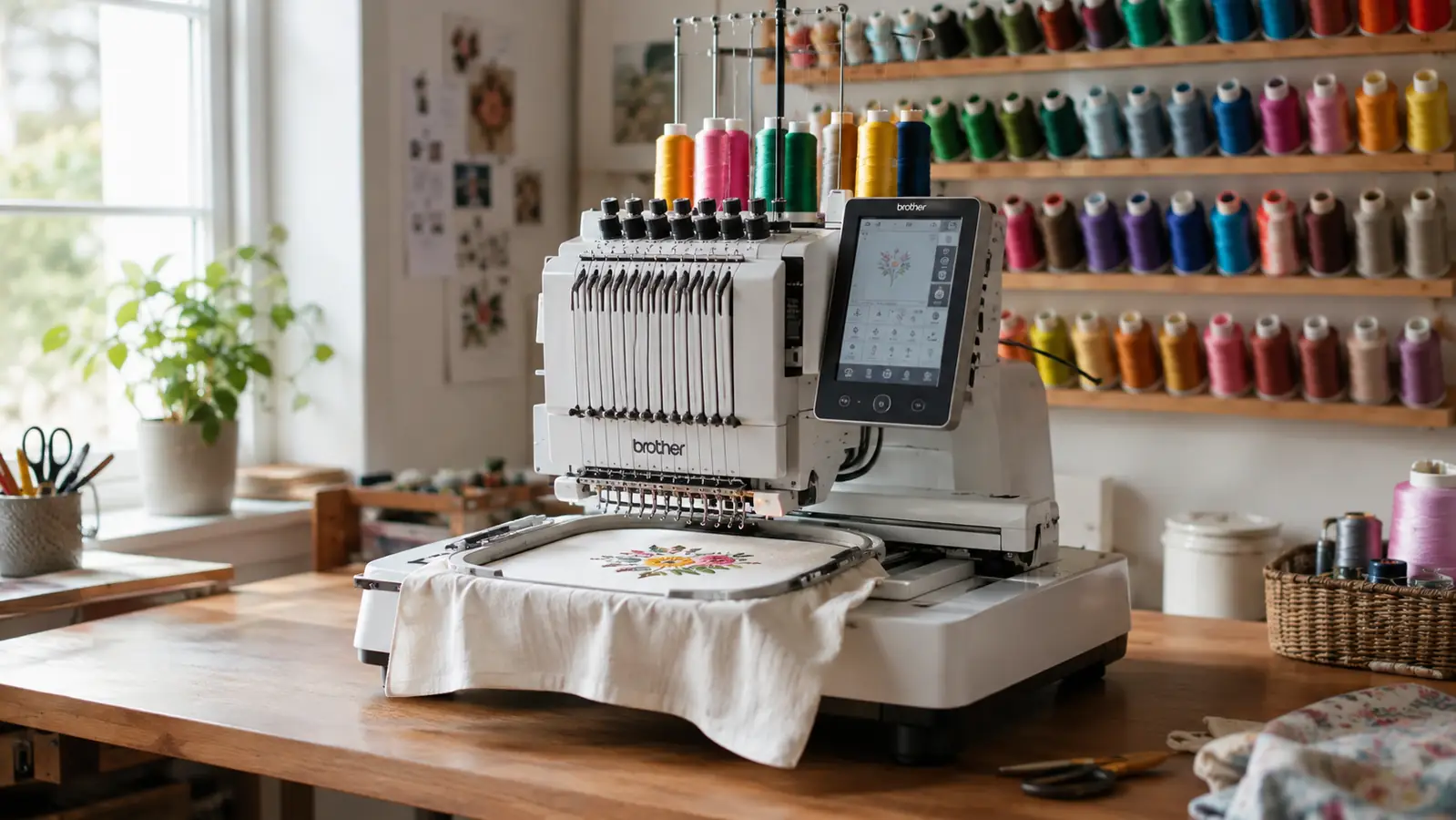
A skipped stitch is the hardest mistake to hide on finished work. On a towel it is a tiny gap. In a left chest logo it is a broken line through a letter, and a customer will find it before you do. I have run a one person embroidery shop out of a spare bedroom in Macon since 2019, doing caps, polos, towels and canvas bags for local teams, churches and a barbecue place, on a used six needle machine. When a design comes off the hoop with a skip, my first move used to be rehooping, redigitizing, sometimes a call to the thread supplier. Now I check the needle before I touch anything else.
Most of the time the needle has done nothing dramatic. It bent a hair on a cap seam, or the point finally dulled after a long run of dense satin, or it was never the right size for the spool in the first place. The design was fine and the machine was fine. The needle was the weak link. For everyday work I keep SCHMETZ Gold embroidery needles, size 90/14, and when a row starts to drop I run through the ten causes below in the order I actually see them.
Change the needle before you touch the tension.
A fresh SCHMETZ Gold 90/14 removes the most common needle causes of skipped stitches in one move. It is the first thing I do when a design starts dropping stitches.
Amazon Check Today's Price on Amazon →A bent tip that still looks perfectly straight
The cap seam is where this shows up first in my shop. Let the needle clip a seam, a pin left in a hat band, or the edge of a plastic hoop and the tip bends a hair. You will never see that bend with your eyes, but the hook will miss the loop just often enough to run a break through a letter. Roll the needle across a flat surface and watch the tip. If it wobbles or the point lifts, do not straighten it. Throw it out and put in a fresh one.
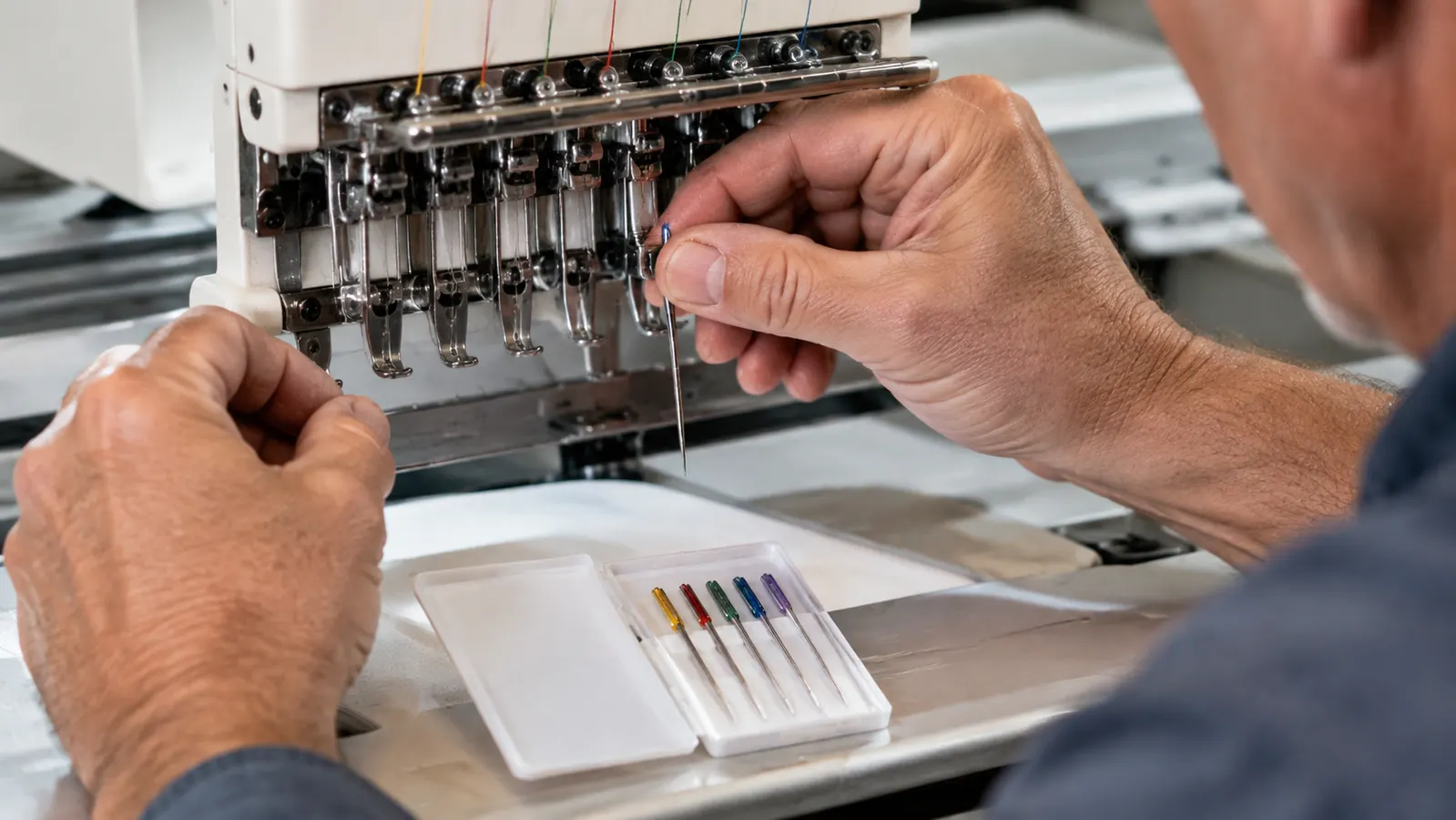
A universal needle doing embroidery work
Universal needles are ground for straight stitching at sewing speed. The scarf, which is the scoop above the eye, is cut for that job. An embroidery needle is shaped so the loop forms cleanly when the hook comes around fast. Sew a dense design with the wrong needle and you will chase skips that look like machine trouble. Keep a needle made for embroidery in the machine. SCHMETZ Gold needles are true embroidery needles, which is why I keep a card beside my thread rack.
A point that went dull after a long dense run
A needle is a wear part. Each pass through cutaway, tear-away and cap backing takes a little off the point. A dull needle stops piercing and starts pushing. The fabric sinks below the needle plate, the loop does not form, and you get a skip that shows up in the middle of a satin column. I change needles at the beginning of jobs that matter and again after long dense runs. Twelve hours of actual stitching is about the limit before I stop trusting a point.
A skinny size 75 flexing through a dense logo
Dense satin columns, heavy underlay, and a seam in the middle of a cap all push a thin needle around. If the shaft flexes while the hook is coming across, the timing changes for that one stitch and it drops. It shows as a random skip in the middle of a dense fill. When a logo is heavy, I move up to a 90/14 so the needle holds its line. The larger shaft also survives the push through multiple layers of backing.
An eye too small for the thread on the spool
The eye has to clear every thread with no drag. When I jump from 40 wt polyester to a heavier 30 wt cotton for towels, a needle that sailed all morning can start skipping by afternoon. The thread drags through an eye that is too small, the loop forms late, and the hook arrives early. Match the needle to the thread you actually loaded. Heavier thread earns a larger eye, and a 90/14 covers most of the work in my shop.

A rough eye that grabs the thread
Any scratch or burr in the eye puts drag on every passage of the thread. Drag slows the loop just enough that the hook arrives before it is ready, and you get skips that come and go. When a needle starts acting up, look at the eye under a magnifying lamp. If you see a rough rim or fluff gathering on the thread, the finish is the problem, not your tension. I do not fight rough needles, I replace them. A smooth, polished eye is the whole point of buying a decent needle.
A needle that was not pushed all the way into the clamp
When I am changing needles between orders, it is easy to seat one a little low. The hook timing is set for a needle sitting at the stop, so a needle that sits even a little low throws the loop off. The machine acts like the timing walked off. If the skipping started right after a needle change, loosen the screw, push the needle up until it touches the stop, and tighten again. I fix more skipped stitch calls this way than with any tension adjustment.
The scarf set on the wrong side of the needle bar
The needle has one flat side for a reason. That flat side lines up in the clamp and points the scarf, the scoop that lets the hook catch the loop, toward the hook. Install the needle without looking and you can end up with the scarf on the far side. The hook then hits the blade and skips from the very first stitch. When a needle change suddenly causes skips, check the orientation drawing in your manual before you touch the timing.
A nick from a snap, zipper or hoop edge
A nick in the point is not always from fabric. A metal snap on a tote, a zipper stop on a jacket, even the edge of a hoop that shifts mid design can scratch the point. Every time the nick catches a fiber, the needle jumps and the stitch skips. I check a new needle's point under a loupe before I blame a design. If the skip came after the needle met something hard, replace it on the spot. Why dig around for another cause when this one takes ninety seconds to rule out.
A point shape that fights the fabric
Fabric matters as much as size. On a stretchy knit, the fabric moves under the point. If the point cannot get a clean entry, the needle deflects sideways and the hook misses. If skips only show up on performance shirts, sweatshirts or fleece and never on towels and bags, test a different point shape. Matched to fabric, the same machine will stitch cleanly. The right point type clears up a whole class of skipped stitches that no amount of tension work will fix.
What I'd Skip
Skip the bargain needles sold in bulk with no size marking and the advice that one needle should last a season. I bought the unmarked packs once and paid for them twice in frogged letters and thread breaks. I also skip the habit of switching brands every time a skip shows up. Pick one decent needle, learn how it behaves in your machine, and change it on schedule. SCHMETZ Gold needles cost more than the plain chrome kind, so they are not the budget pick. But after a run of skipped letters on a rush order, the difference shows up fast in the piece count.
A machine that skips with a tired needle will run clean with a fresh one in the same hoop, same design, same thread.
Before you touch the tension, change the needle.
The screw adjustments you make to hide a worn needle will create trouble somewhere else. Put a fresh SCHMETZ Gold 90/14 in the machine, run the design again, and save the tension dial for when a needle change does not solve it.
Amazon Check Today's Price on Amazon →