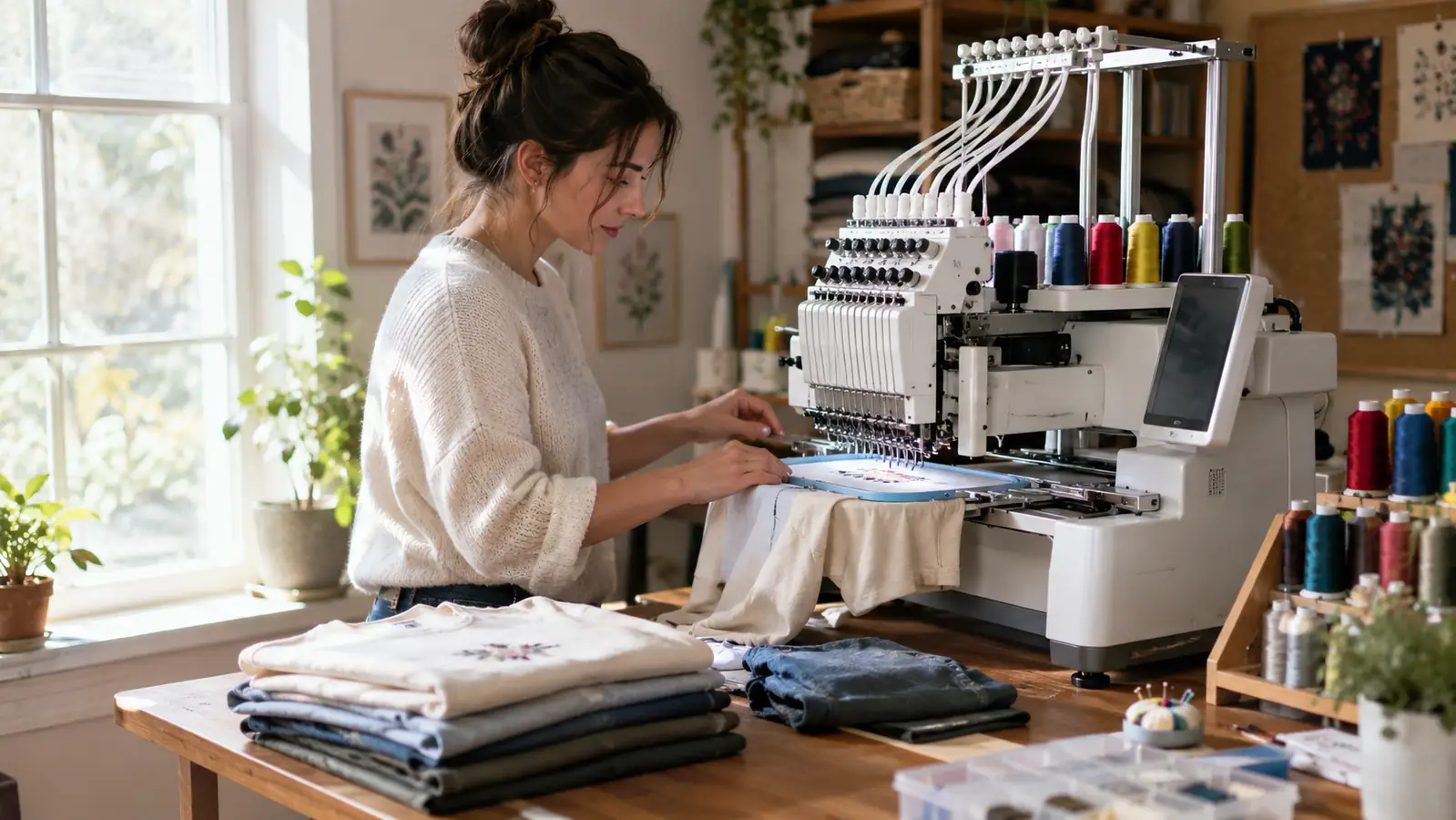
I spent three weeks acting like the thread was the problem. I run a one-woman embroidery business out of my spare bedroom in Macon, Georgia, and I had a rush order of 24 left-chest polos for a local HVAC company. Every few pieces, the machine would throw a skipped stitch, a small gap in the letters that showed up under the bobbin thread. I changed thread weights. I rethreaded the machine six times. I adjusted tension until I had yellow notes stuck to the hoop frame. The skipped stitches kept coming back.
Then I stopped blaming everything upstream and looked at the needle. It was an old universal needle, the kind I had bought in a multipack years ago, and it had sewn a lot of towels before this polo job. The point looked fine. The shaft looked fine. But after a few thousand stitches it was not penetrating this fabric cleanly anymore. I replaced it with a SCHMETZ Gold embroidery needle, size 90/14, and the first polo came out clean. I stitched ten more. Not one skipped stitch.
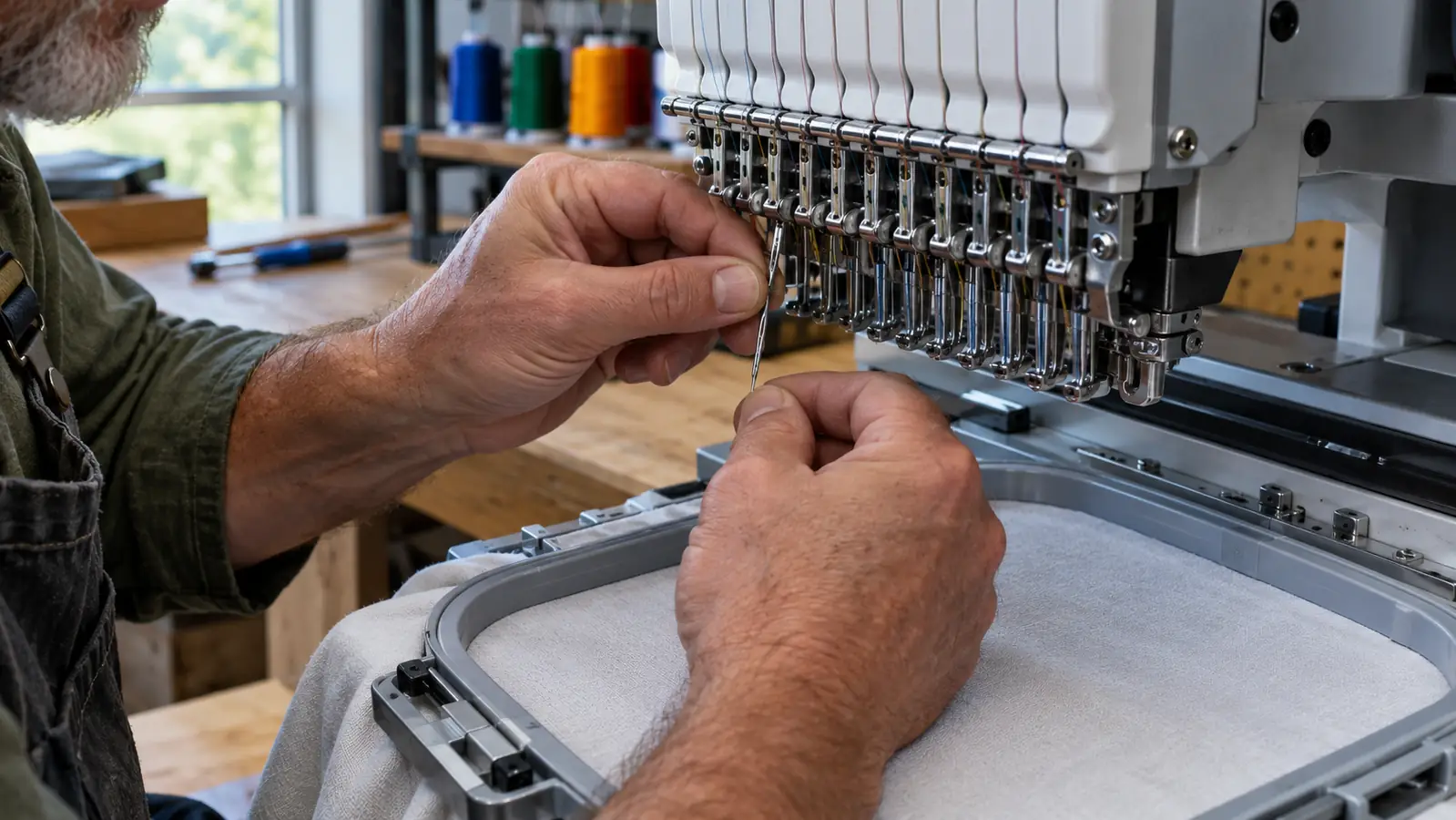
The difference did not stop with one project. My machine is a used six-needle commercial model I bought in 2019, and it has always been picky about needles. Since I switched to the SCHMETZ Gold 90/14 needles, I have noticed fewer thread breaks, cleaner lettering on tight weave fabrics, and a lot less stopping to rethread in the middle of a run. I do not baby my needles. I stitch hats, polos, towels and canvas bags in the same week. The titanium coating holds up longer than the plain steel needles I used to buy by the card.
That is the story in one line: a skipped stitch is often not a machine problem, a tension problem, or a digitizing problem. Sometimes it is simply a dull needle. I found that out in the middle of a rush order, and it saved the deadline. The only reason I am writing this down is because I wasted three weeks before I thought to swap one needle.
Part of what made this so maddening is that the machine sewed perfectly for a while, then skipped, then sewed perfectly again. A skipped stitch is not like a thread break. A thread break stops the machine and you fix it. A skipped stitch hides inside the letter and you do not see it until you pull the hoop and hold the fabric up to the light. That is how a whole run of shirts can go out with tiny gaps in the same letter.
Not one skipped stitch after the first ten polos. It was the needle.
Fresh needles made that order easy. See the card I keep in stock.
SCHMETZ Gold embroidery needles are size 90/14 titanium coated cards, and they suit a home machine running everyday jobs. If skipped stitches have you chasing tension, start here.
Amazon Check Today's Price on Amazon →I want to be honest about what the needles did not fix. They did not cure bad hooping. They did not make cheap polyester thread behave. When I had the fabric too loose in the hoop or the design digitized too dense, a premium needle still broke thread. But it gave me one less variable to blame. That matters when a job is due Friday and the machine stops at 4:40 in the afternoon.
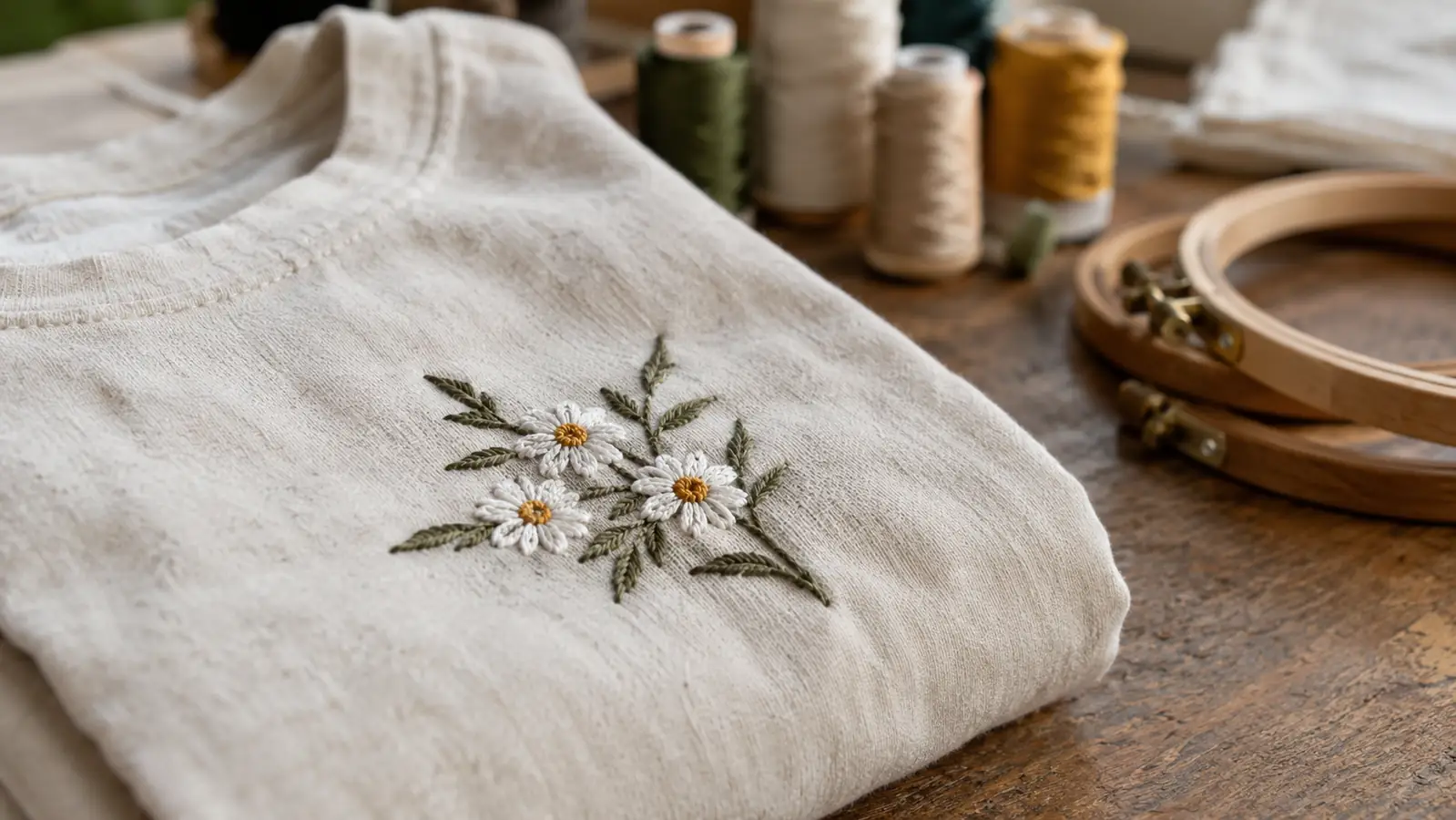
Here is how I use them now. I keep a card of size 90/14 needles at the machine, and I change the needle at the start of every job. For a long run of canvas bags I change it halfway through. For hats I change it once the hoops start feeling softer, because the folded fabric dulls the point faster than a flat polo. It sounds wasteful if you came up on inexpensive needles, but a needle costs less than the shirt it is stitching.
The other thing nobody tells you is that an embroidery needle wears out long before it looks worn. The point is small. I cannot see the difference by eye. But the machine can feel it. When I started treating the needle as a consumable, like stabilizer, my thread break count dropped. My re-hooping dropped. I finished jobs without ripping out the same letter three times.
Would a cheaper needle have worked? Probably, for a while. Universal needles did get some of my work done, and they are fine for straight sewing. But on a six-needle machine running tight logos into performance polos, I saw enough of a difference to switch. The SCHMETZ Gold needles have become my default. I still keep the universal needles around for simple mending, they just do not go into my embroidery machine anymore.
The skipped stitch problem comes back when I get lazy. I can tell you exactly how it starts. I finish a run of towels, the machine is threaded, the hoop is still set, and I decide to start another job without changing the needle. Somewhere around piece seven, a letter loses its bottom corner. Now I change the needle whenever I change the job type, and I write the date on the card with a marker. That little habit is the reason I do not dread embroidery jobs the way I used to.
What I'd Tell You If We Were Sitting at My Kitchen Table
If you are chasing skipped stitches, thread breaks, or fuzzy lettering, do not rebuild your machine and do not rewrite the design. Before anything else, change the needle. Pick an embroidery needle, not a universal one, size to the fabric, and change it more often than feels reasonable. In my kitchen, over coffee, that is the first thing I would say. It took me three weeks and a near-miss deadline to learn it, so I am telling you for free.
The next time a design skips, change the needle before you touch the tension.
A card of five SCHMETZ Gold 90/14 needles is cheap insurance for a long run of hats or polos. I keep one by the machine, and I change the needle more often than I used to. That habit took me from pulling thread out to finishing on time.
Amazon Check Today's Price on Amazon →