I am going to start this needle review at the end, because that is the part I would have wanted to read six months ago. Six months ago I put SCHMETZ Gold embroidery needles, size 90/14, titanium coated, into all six positions on my machine and started keeping a plain log of what broke. Roughly 40 jobs later, somewhere north of 1,100 pieces across structured hats, split towels, left-chest polos, and canvas bags for two HVAC crews and one barbecue place here in Macon, the short version is this: zero skipped stitches I could trace to the needle, and zero thread breaks that started at the needle eye. That has never happened for me in six months of work on any needle I have run before.
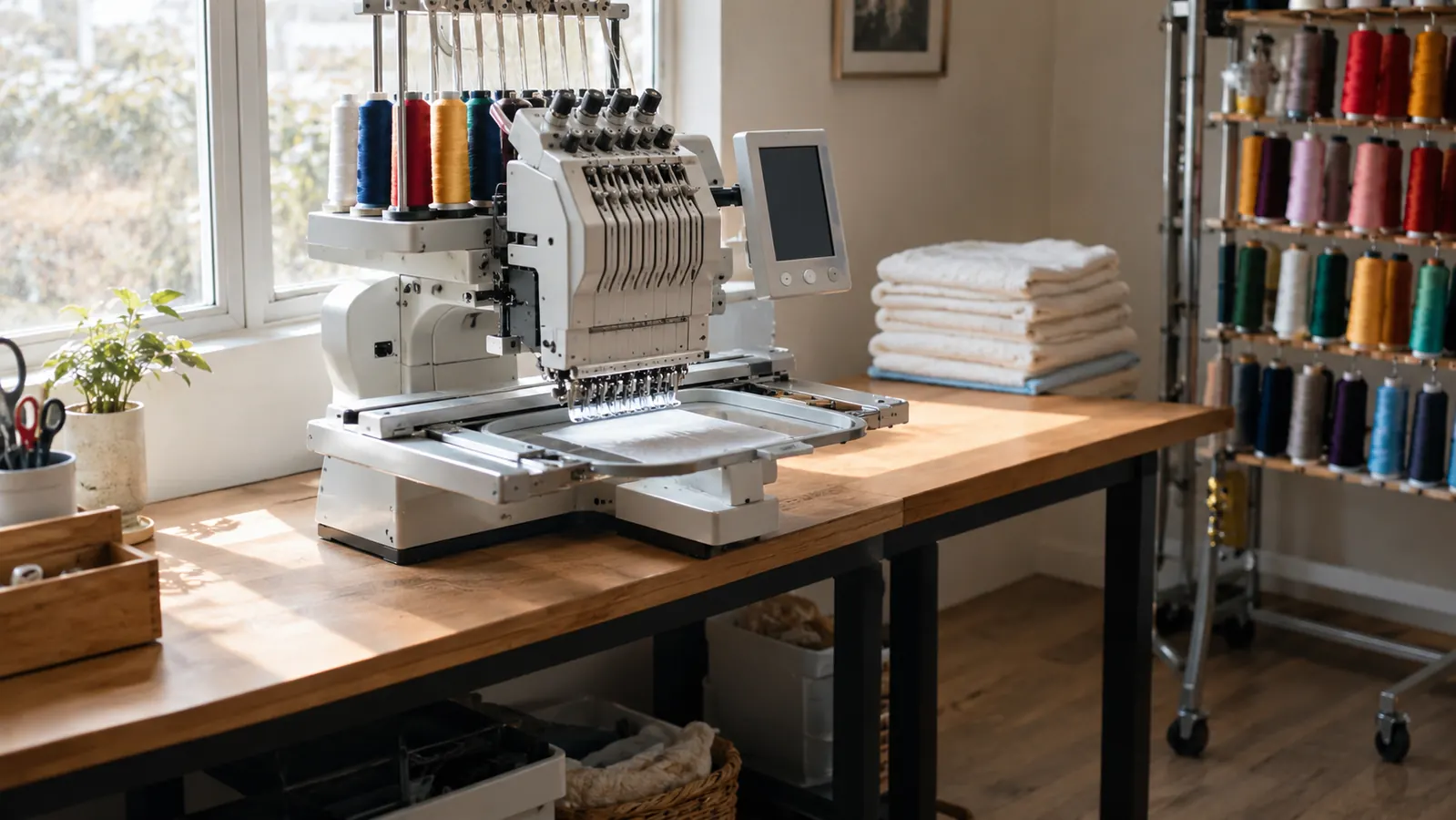
A word about my setup, because needle life does not exist in a vacuum. I run one six-needle commercial machine, bought used in 2019, in a spare bedroom I converted into a shop. I work alone, and my runs are small, 12 to 60 pieces: team hats, church fundraiser towels, left-chest polos, canvas totes. That mix matters. Hats, towels, and canvas are the fabrics that grind needles down. They are dense, abrasive, or full of thick seams, sometimes all three. When I say a needle handled this workload for six months, I mean it survived the hard work. Hats alone, with their stiff fronts and the hops across seam allowances, will expose a tired needle inside one run.
The Quick Verdict
The SCHMETZ Gold 90/14 is the longest-wearing embroidery needle I have run since I started this shop in 2019. On hats, towels, and canvas it cut my needle changes roughly in half and put an end to mid-run skips. On soft knits it earns nothing extra, so I keep a standard 75/11 in the drawer for those jobs.
Amazon Check Today's Price →Six months, more than a thousand pieces, zero needle skips.
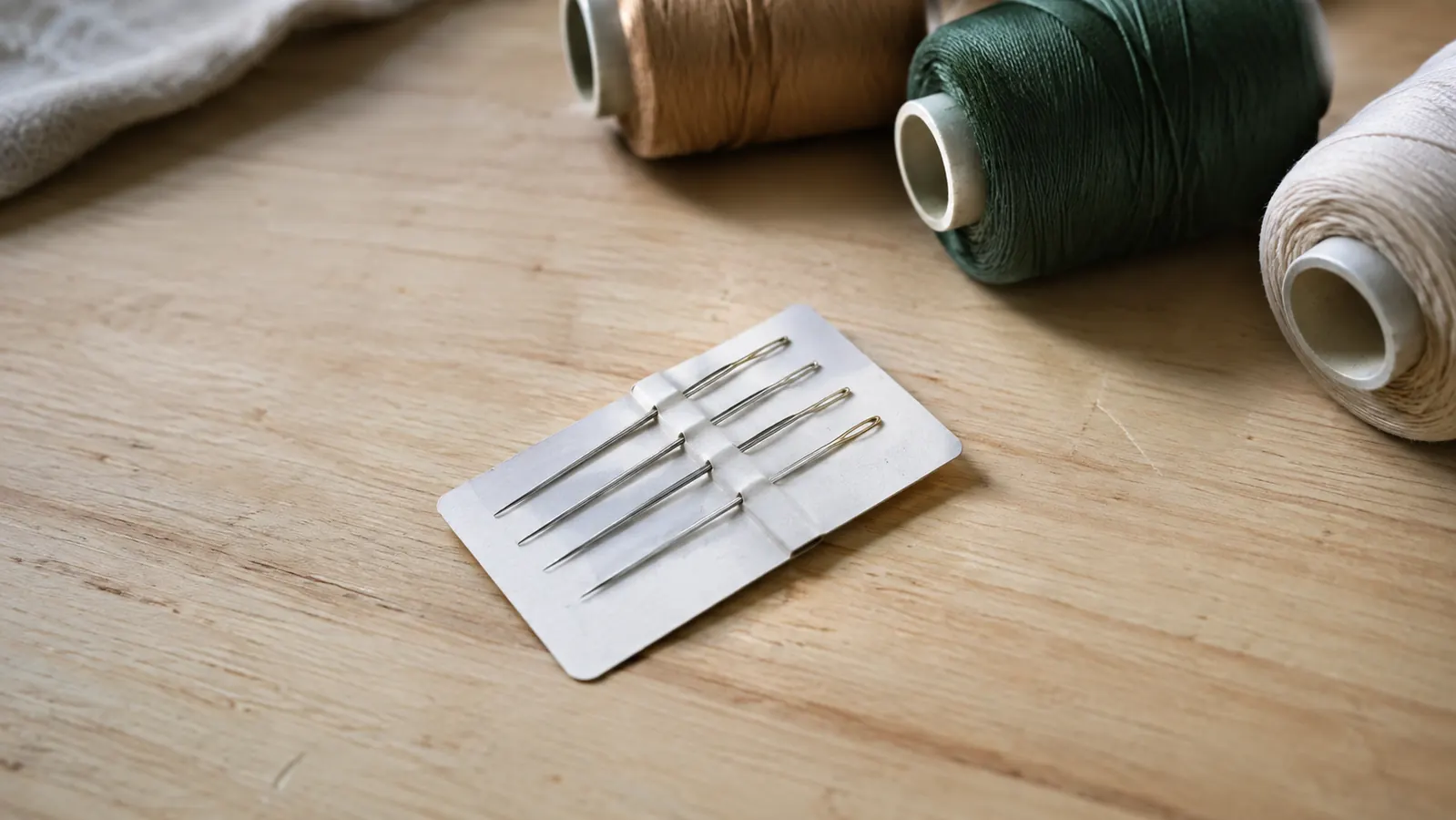
The SCHMETZ Gold 90/14 runs five needles to a card. I buy two cards to fill six positions and keep spares on the shelf.
Amazon Check Today's Price on Amazon →How I've Used It
My testing method is boring on purpose. I did not stitch one sample and declare victory. On the first Monday of March I put SCHMETZ Gold 90/14 needles into all six positions and used them for everything that came through the door. Every time something failed, I wrote down the fabric, the thread, the age of the needle, and my best guess at the cause. Then I changed one thing and watched whether the problem came back. That notebook is the source of every number in this review.
The workload matters because it is the worst case for needles. A normal week is two or three small jobs, between 12 and 60 pieces, and nearly all of it is 40 weight polyester thread on dense ground: structured hats with stiff fronts, terry towels, left-chest polos, and canvas totes with thick seam allowances. Needles do not die on soft fabric. They die in the first ten thousand stitches of a hat run, when the machine hops from letter to letter across a stiff seam and the needle has to stay sharp the whole time. That is where I watched the Golds.
Why Needles Wear Out on the Work You Actually Do
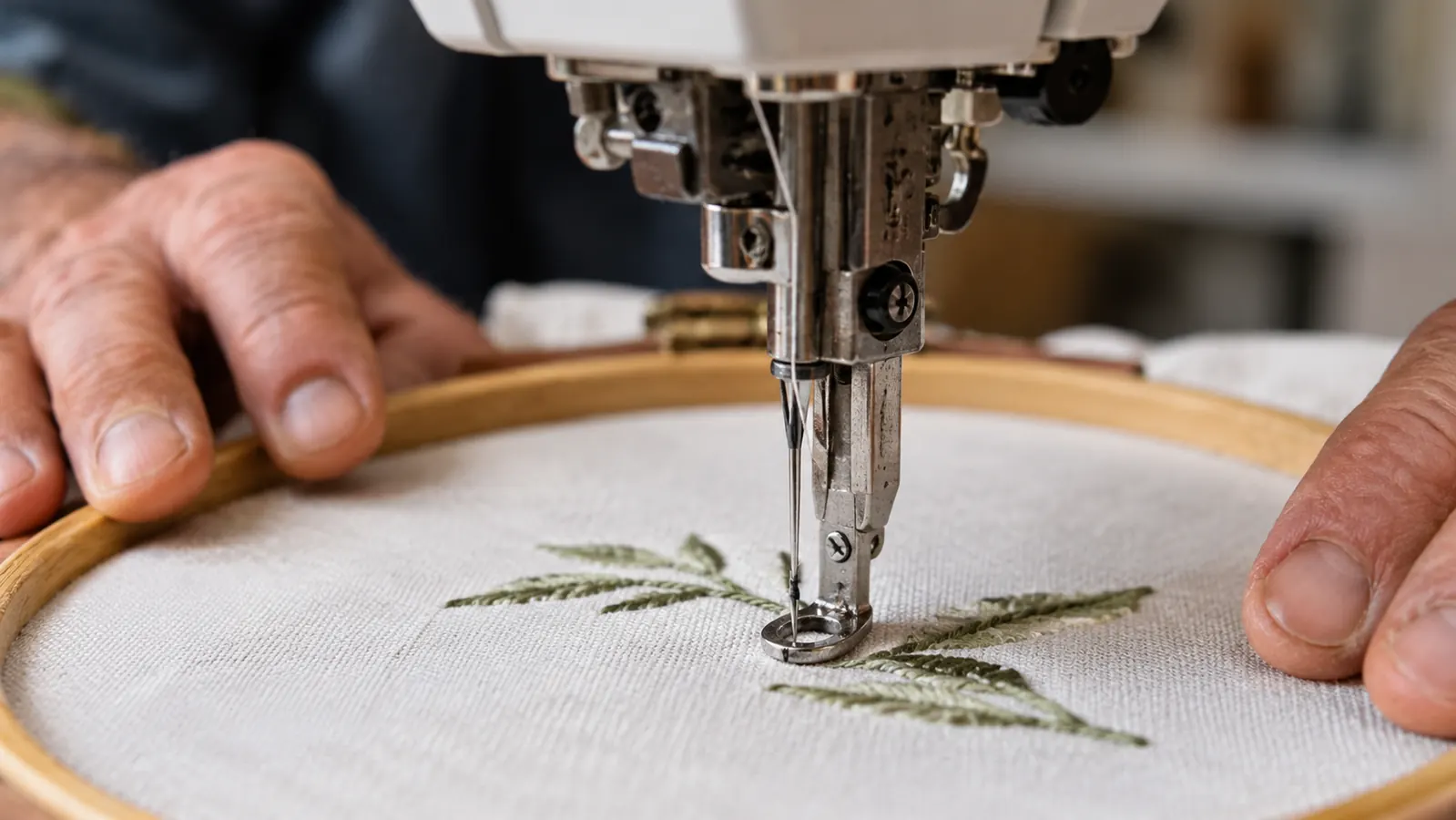
Here is the part most needle listings skip. An embroidery needle running at 750 stitches per minute punches through fabric hundreds of times in 60 seconds, and every punch makes friction. Friction rounds the point and roughens the eye, slowly at first. On a soft knit this happens slowly enough that you do not notice until the needle has done hundreds of thousands of stitches. On a hat front, a terry towel, or the folded hem of a canvas tote, it happens fast because the fibers are abrasive and the layers are thick. Once the eye is rough, the thread catches on every pass. The catch makes the stitch form late or not at all, and that is your skipped stitch.
This is why the titanium coating is worth understanding before you spend money. The coating is harder than the finish on a standard needle, so the point and the eye hold their shape longer. It is also slick, so the thread slides through with less drag and less heat. Less drag means fewer late loops, fewer skipped stitches, and fewer thread breaks on the dense jobs. The coating does not keep the needle sharp forever. It keeps the needle sharp longer, and on this kind of work longer is the whole point.
One honest note before the logbook. A coated needle will not fix a hoop that worked loose, a stabilizer that is too light, or a design digitized to jump over a seam at high speed. When those things are wrong, every needle skips. The coating buys you margin, not forgiveness. I fixed the setup problems first and let the needle do its job.
Six Months, One Logbook: What Actually Happened
Here is what the logbook says after six months. Roughly forty jobs and well over a thousand pieces, almost all of it dense: structured hats for a church league and a school, fundraiser towels, canvas totes, and left-chest polos for two HVAC companies and a barbecue place. I logged one genuine thread break, and it was a bad cone of red 40 weight snapping a couple of inches above the needle. That one was not the needle's fault. I logged two runs with a skipped stitch, and both times the hoop had worked loose on terry cloth before the needle ever got the blame. Neither skip came back after I re-hooped. So the count stands: zero skips I could hand to the needle.
The useful pencil math is needle changes. The busiest position on my machine carries most of my black thread, and it went through four Golds in six months. The quieter positions are still on their second needle. I replaced the chrome needle in that same position every two or three hat jobs before this. The Gold in that position did five or six hat jobs before it started to sound tired and I changed it. That is the difference the coating makes on real shop work.
A dull needle shows up as sound and feel before it shows up as skips. I listen for a change in the machine's pitch on hat fronts, and I run a fingernail down the point of any needle I pull. If it catches, it goes into the retired cup, which is an old pill bottle. That system is nothing special, but it tells me when a needle has stopped earning its keep.
Where It Earned Its Keep, and Where It Didn't
The clearest test I ran was thirty-two structured caps for a local youth team. These caps have a stiff buckram front and a center seam the design has to cross. That seam is where embroidery needles go to die. A needle hits the seam allowance at a slight angle, deflects, and if the point is at all dull you get a skip right in the middle of a letter. On a rush order one skip after cap twenty means re-hooping, re-aligning, and hoping the second pass lands where the first one did. I ran all thirty-two caps with the same needle, crossed that seam on every cap, and pulled the needle to check it afterwards. It was still smooth to my fingernail.
Towels tested a different kind of wear. Terry cloth is abrasive and the machine runs it at speed with a lot of hoop movement, so a rough eye pulls the thread and skips. I did fundraiser towels every month this summer and the Golds ran the whole run without a pull or skip. Canvas totes added thick seams that can bend a needle; I did not have one bend. On all three the coated needles did what chrome needles used to do for only the first two thirds of a run.
And here is the honest other side. On soft single-layer knits, like the lightweight polyester polos that take a left-chest logo, I could not tell the Gold apart from a standard 75/11. Same stitch quality, same tension, same thread breaks, which is to say none in either case. If my shop only sewed soft knits I would buy the cheaper needle and never look back.
The Details Worth Knowing Before You Order
A few things to know before you order. This listing is the 90/14 size, the workhorse for dense fabrics and medium to heavy thread. It comes five needles to a card, and a card is what you get with this listing. My machine holds six needle positions, so I buy two cards: one to fill the machine, one to keep spares within reach. Two cards give you ten needles, six in the machine and four in the drawer.
Second thing. For part of that six months I kept a card of standard chrome embroidery needles on the work table and used them on the soft jobs, so I had a direct comparison on identical work. On a soft knit, the stitch looks the same as with the coated needle. The standard needle is the right call there, and it costs less. I would not spend the extra money on the coated needle for that work.
One more thing I learned about needles in general, not just this brand. On dense fabric, needle choice changes registration more than people think. A needle that drags or deflects on one letter can shift the column of stitches just enough that the next color sits a hair off. You blame the digitizing, re-run the piece, and it lands wrong the same way, because the needle is the problem all along. The Golds have kept my registration boring, as in, I stopped thinking about it. That is what I want from a needle.
What I Liked
- Roughly twice the needle life of standard chrome needles on hats, towels, and canvas
- Zero skipped stitches I could trace to the needle across about 40 jobs
- Titanium coating stays slick, so thread passes through the eye with less drag and heat
- Five needles per card gives a small shop a sensible spare count
- Wears gradually, so it gives you warning before it starts skipping
Where It Falls Short
- Five needles per card, while a six-needle machine holds six positions, so expect to buy two cards
- Costs more than a standard embroidery needle of the same size
- No benefit on soft, lightweight knits where a plain 75/11 sews the same
- Will not fix skips caused by hooping, stabilizer, or digitizing problems
The chrome needle in my busiest position was done every two or three hat jobs. The Gold has run five or six before it starts to sound tired.
Who This Is For
Buy this card if you stitch structured hats, towels, canvas bags, or anything with thick seams on a regular basis. If your work is team caps, church fundraisers, school logos, or shop towels, the coating buys you something you can measure: fewer mid-run failures and longer life per needle. And if you charge by the piece, a needle change in the middle of a 40-piece run costs you more in time than the card did. That is the actual math that matters.
This is also for people who already do the boring maintenance: clean the machine, check tension, re-hoop when something feels loose. If you have ruled out the usual causes and a needle still skips late in a run, a fresh coated needle is the next thing to try. The needles do not replace good habits. They reward them.
Who Should Skip It
Skip them if your work is mostly soft knits: lightweight tees, microfiber polos, performance fabric. On those the standard needle sews the same and costs less. Skip them if you are seeing skips and have not checked hooping, stabilizer, and the design file yet. A new needle will not fix a loose hoop or a border that should never have been digitized. That needle change will just cost you money and then the skip comes back.
Also, do not stock these for every thread and fabric you own. The whole point is to put them where they earn their keep. I keep standard needles in the drawer for the soft stuff and reach for the coated ones when a hat or towel order comes in. Match the needle to the job and a card lasts longer.
And skip them if your shop policy is to change the needle before every job no matter what. If the needle is only used once, the extra life the coating gives you is money left on the table. These needles pay off when you run them until they earn a change.
For hats, towels, and canvas, this is the card I order by the pair.
SCHMETZ Gold 90/14 titanium-coated and sized for dense work. I run two cards so all six positions stay full and spares sit in the drawer.
Amazon Check Today's Price on Amazon →