I started using SCHMETZ gold embroidery needles about two years ago, after a run of bird nests on my six-needle machine that made me question every digitizing file I owned. At the time I blamed the designs, then the thread, then my hooping. The repair man who fixed a timing issue caused by a bent needle said something I still think about: change the needle more often than you think you need to. This is the honest version of what happened when I finally listened, across more than 1,000 caps and left chest polos.
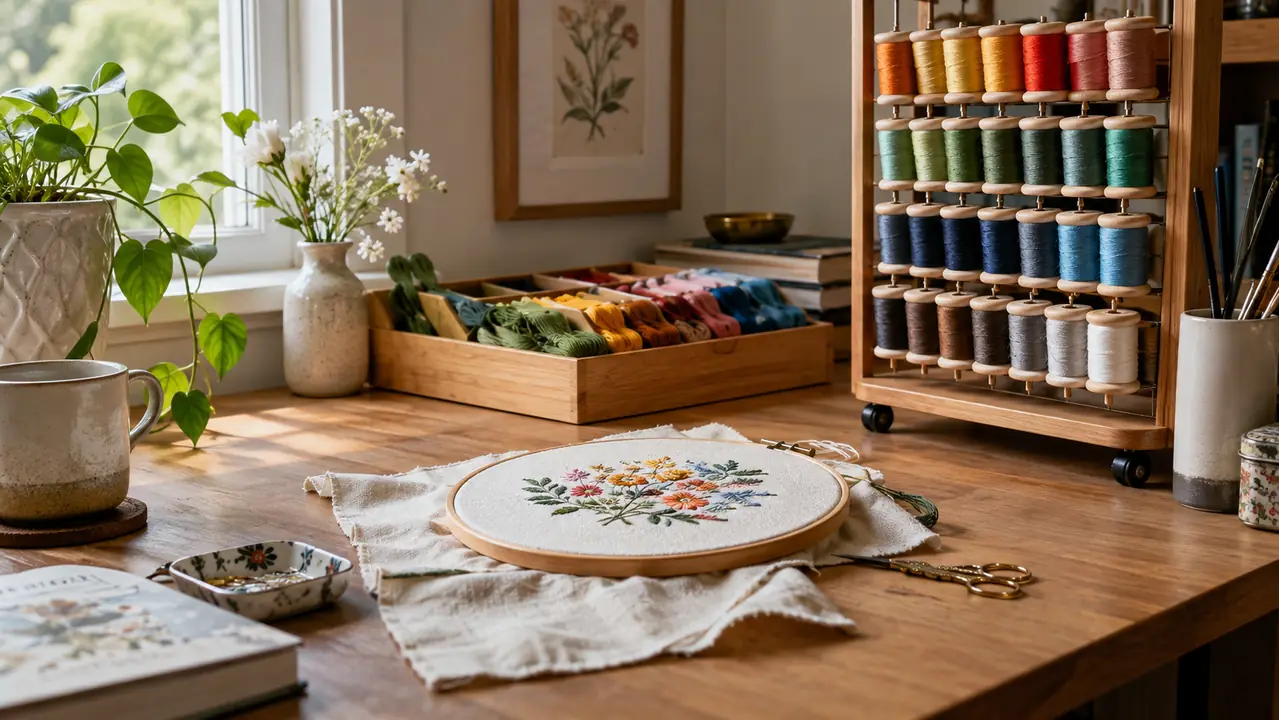
The machine is one six-needle commercial unit I bought used in 2019, and my shop is a converted spare bedroom with a work table and a rolling thread stand by the window. I work alone, mostly hats, small runs of twelve to sixty pieces. I am not affiliated with SCHMETZ and I paid for these needles. That matters because most needle reviews read like the writer tested one needle on one towel and then wrote a love letter. I have run these through polyester caps, cotton twill, performance polos, towels and canvas bags, and they have failed in instructive ways.
The Quick Verdict
The SCHMETZ gold titanium needle is the closest thing I have to a default needle, but only when I match size to fabric and replace it on a schedule. Skip it if you expect one needle to do every job.
Amazon Check Today's Price →The Needle I Put in My Machine After 1,000 Caps
If your machine is fighting you on caps or polo knits, this is the needle I reach for first. The titanium coating protects the eye longer than standard needles in my experience, but only when the size is right for the fabric.
Amazon Check Today's Price on Amazon →How I've Used Them
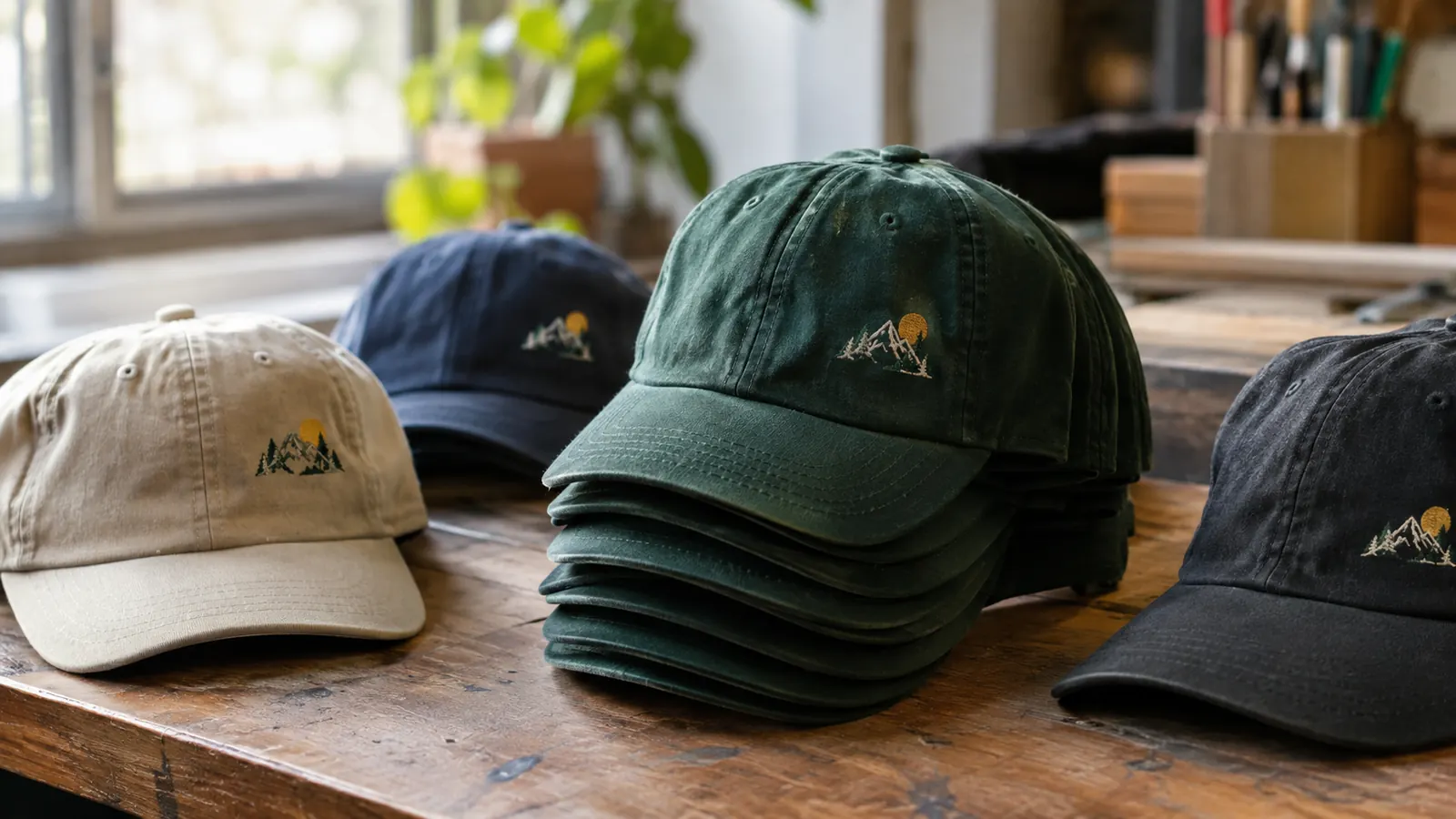
My standard setup is a size 75/11 SCHMETZ gold needle for left chest designs on lightweight polo fabric, and a 90/14 for caps and towels. I switched from regular SCHMETZ needles to the gold after I realized that the point and eye shape stay smooth longer. My most common job is the left chest logo, roughly two and a half inches wide, on a synthetic polo. Caps get a 90/14 because the fabric is dense and the needle has to push through a seam where the front panels meet.
The thousand cap mark came faster than you would think. In one month alone I did 340 hats for a youth baseball league, plus 80 shirts. Before this test I would have run all of those on one needle. Now I schedule a change every 8 hours of stitching or every 40,000 stitches, whichever comes first. That sounds wasteful, but needles are cheap compared with a shirt that has a pulled thread at stitch four thousand and cannot be sold.
I keep a log on a clipboard next to my machine. Every morning I write the date, the job, the needle number, and the hours. This is how I know the gold needle did not actually last forever. It just lasted long enough for me to stop blaming everything else.
What Nobody Tells You About Titanium Coating
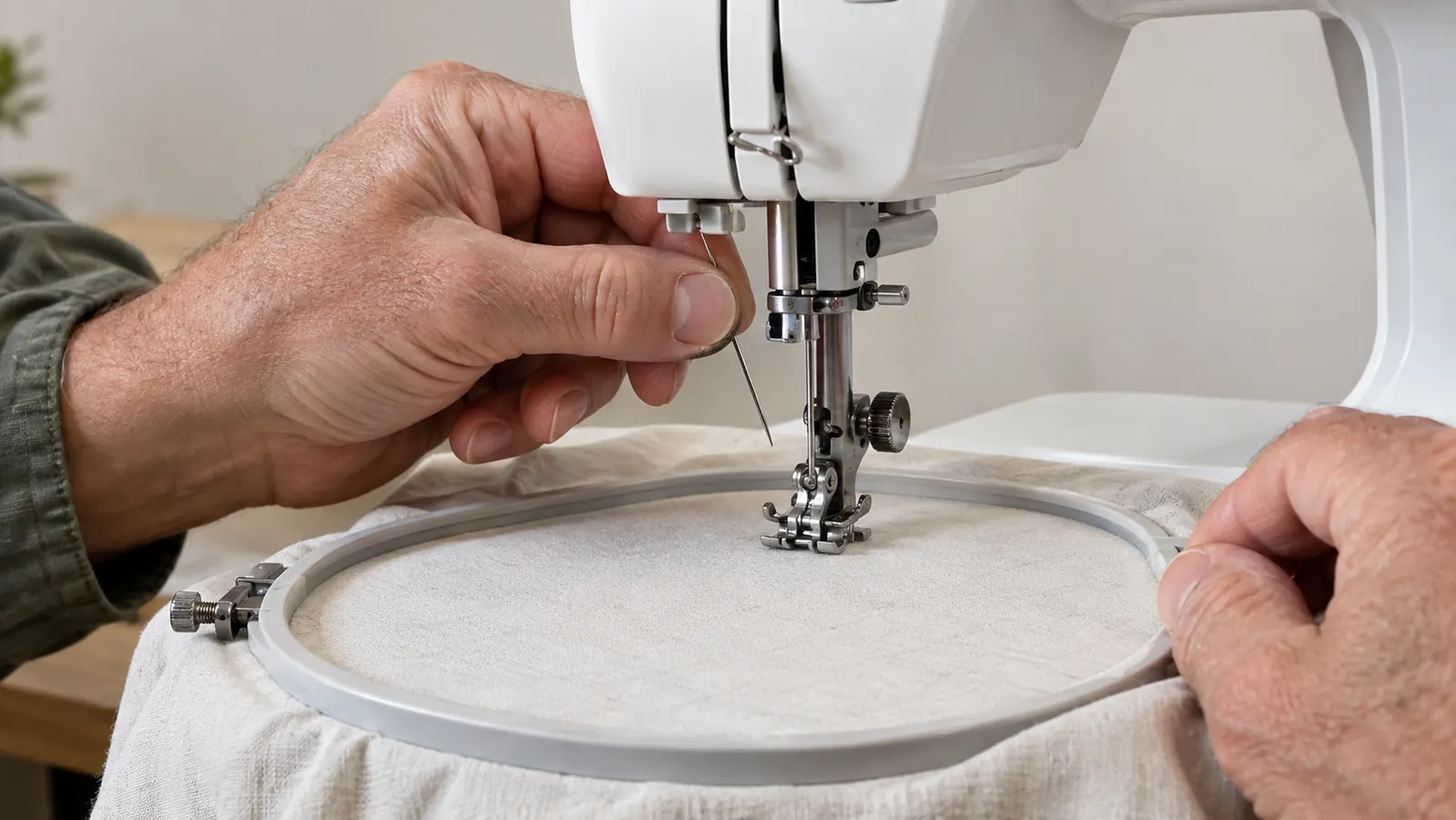
Everyone talks about titanium coating as though it makes a needle indestructible. It does not. What it does is reduce friction and help the thread glide through the eye without shredding. The coating does not keep the point from dulling. It does not fix a needle bent by bad hooping. I learned this the day I ran a needle through a stiff patch on a canvas tote and heard the dull point make a thump. The next cap lost its registration by a full eighth of an inch. That was not the coating failing. It was me not changing the needle.
The biggest difference I noticed came on dense satin lettering. On a jacket back with 12,000 stitches, a standard needle would gradually warm up and the thread would start to fray at the needle eye. With the titanium needle, I can run dense fills longer without the thread getting rough. What nobody tells you is that this matters most on multi needle machines because one bad needle can hurt every color that follows.
Titanium coating also matters when the thread path is long. My machine sits by a window, and in summer the room gets warm. Humidity is not huge in Macon, but heat softens some threads. A smooth needle reduces the drag that turns a small problem into a bird nest. I cannot prove it with laboratory numbers. I can prove it by the fact that my thread break count went down after I switched.
The Needle That Isn't Right for Every Job
Here is the part most reviews skip. There is no single SCHMETZ gold needle that works for hats, polos, towels, bags, and fleece. I keep three sizes on the shelf. Size 75/11 for lightweight performance fabric and neck labels. Size 80/12 for medium knits. Size 90/14 for caps, towels, denim, and canvas. If I use a 90/14 on a lightweight polo, I get visible holes on the reverse side and a needle hole that does not close. If I use a 75/11 on a cap, the needle flexes and I get wavy stitch registration along the seam.
I learned this on a rush order for a local barbecue place. They wanted a 3 inch design on 24 heavy cotton aprons. I started with the 75/11 I had used on the previous polo order, because I did not want to rethread all six needles. By apron six, the machine was skipping and the fabric was puckering. I stopped, switched to a 90/14, and the aprons ran clean. That delay taught me to set up the machine for the job before I thread it.
The gold needles come in a card of five, but you do not need five sizes. I buy cards of 75/11 and 90/14 and a smaller box of 80/12. Needles are not a place to guess. When in doubt, I test on a scrap of the actual garment fabric before I run the order.
Needle Size Matters More Than Brand
If you take nothing else from this review, hear this: the exact same needle geometry in a 75/11 and a 90/14 behaves like two different tools. On caps, the 90/14 pushes through the rigid buckram and the folded front seam with less deflection. The 75/11 is too thin and bends under pressure, which causes the needle to hit the rotary hook and eventually break. On performance polos, the 90/14 leaves a permanent hole in the knit and can cause a run that starts at the edge of the embroidery and travels down the side seam.
I keep a sample swatch book for every fabric I regularly embroider. Before I set up a job, I hoop a scrap from the same bolt and run a 20 stitch test. The test tells me if the needle is going to push the fabric down or pull it up. Most of the tension problems people blame on their machine are really a needle size problem. This is true no matter which brand of needle you choose, which is why I respect SCHMETZ for printing the size clearly on every card.
A sharp needle enters a weave, a dull one shreds it. The difference is visible under a magnifying lamp. After fifty hats I can see the point has started to wear. That is the honest truth people who sell needles do not mention, because they want you to think each needle lasts for years. It does not. It lasts for a run of work, if you are lucky.
How Long a Needle Actually Lasts
This is the question I ask every time I teach someone to use my machine. My honest answer is that I change needles after about 150,000 to 200,000 stitches, and more often when I am stitching over seams. On hats that means roughly every 8 to 10 hours of running time. If I wait longer, the first sign is usually a skipped stitch in lettering that has a small serif, or a thread break in the top thread at color changes.
I once ran a 300 piece order of towels for a church fundraiser on one needle because I was trying to finish before lunch. The towels are loosely woven, so the needle never felt rough. But at piece 210 the lettering started to develop a rough edge on the right side of every h. The digitizing was fine, the thread was fine. I changed the needle and the next towel was clean. That is the moment most people would have sent the design back to the digitizer or blamed the thread. The needle is the cheapest variable and the first one you should test.
Some people rotate needles from heavy jobs to light jobs to extend their life. I tried that and do not recommend it. A needle that has hit a cap seam can be bent enough to cause intermittent needle breakage even if it looks straight. I now retire a needle when it has done a cap run, or when it has sewn over heavy canvas. It goes into a small tin, not back into service. That rule alone cut my needle breakage by more than half.
What It Feels Like When It Fails
Most embroiderers think a broken needle makes a loud snap. Sometimes it does. The more common failure is quiet. The point wears down or the needle bends a tiny amount that you cannot see, and the machine starts making a faint thump. The design still comes out, but the thread path feels rough. I spent an entire afternoon chasing a pull on a logo, changing tension settings and re-hooping, before I realized that the needle had been in the machine for three weeks. I changed it and the pull disappeared.
The second sign is skipped stitches in small letters. A needle that is slightly dull does not pierce the fabric cleanly. It pushes the fabric down and then the thread does not seat in the loop. You notice one skipped stitch, ignore it, and then another appears at the next letter. By the time you are seeing two skips per letter, the needle is not the only problem. It has bent and may have damaged the hook timing. That is why I check the needle before I check anything else.
I keep a stack of old used needles in a tin and label the tin with the date. If a design starts acting up, I can look back and see that this needle has sewn more caps than I remembered. That log is the one piece of advice I would give anyone, and it is exactly the kind of thing nobody includes in the box.
A needle that has hit a cap seam can be bent enough to cause intermittent needle breakage even if it looks straight.
Is It Worth the Extra Cost?
The honest answer is that SCHMETZ gold needles cost more per card than the standard bright needles. For a small shop like mine, that difference adds up when I change needles as often as I do. But I spend less time on needle changes and fewer shirts are ruined by a dull needle. I also break fewer needles, because the coating makes the needle slide through dense fabric instead of grabbing it. In my experience, the gold needles pay for themselves in saved fabric and saved time, not because they last forever.
If you are doing mostly low stitch count designs on light fabric, standard SCHMETZ needles will probably work fine. The gold one earns its keep when you sew heavy or slippery fabric, when you do dense lettering, or when you are stitching caps over a front seam. The extra cost is like buying good thread. It is not going to fix a bad design, but it removes one more variable from a process that is already full of things that can go wrong.
One thing I will not do anymore is buy random needles from discount sites. I learned that lesson after a box of bargain needles felt smooth in the package and then bent on the first hat. I now stick with SCHMETZ because the sizing is consistent and I can trust that a 90/14 is actually a 90/14. I do not have time to test the quality of every bargain.
What I Liked
- Titanium coating reduces thread shredding in dense satin work
- Point holds its shape noticeably longer than bright needles when sewing over cap seams
- Clean, consistent eye means fewer thread breaks
- Printed size and brand make it easy to pick the right one
- Good value for small shops that change needles often
Where It Falls Short
- Costs more per card than standard needles
- Does not last forever, still needs regular changes
- You need to buy multiple sizes for different jobs
- Coating will not fix a needle that is already bent or dull
Who This Is For
This is for you if you run a home or small shop machine and you stitch on caps, towels, denim, canvas, or other dense fabrics. It is for you if you have already ruled out tension problems and digitizing problems but still get the occasional thread break in a long satin column. It is for you if you like to change needles on a schedule, because the gold needle makes it easy to feel when the point is starting to drag.
Those are the people who will get the most value. If you do lightweight shirts and fleece only, a standard needle might be enough. If you are running thousands of high stitch count designs every month, the gold needle will not stop you from needing routine maintenance, but it will reduce the number of interruptions in the middle of a rush order. For my work, the trade-off is worth it.
Also, this needle works on any machine with a standard home needle system. I use it on my six-needle, and my neighbor uses it on a two-needle machine. It is not a specialty tool.
Who Should Skip It
Skip the gold needles if you are embroidering only light cotton tees and fleece with low stitch counts. On those fabrics you will not see much difference. Skip them also if you have a tendency to use one needle for months. No coating will save you from a dull point. And if you are in the middle of a tension or timing issue, changing to a gold needle will not fix a machine that needs service. I learned that on the day I broke my first needle. The machine made a sound like a tiny hammer and then the needle was in two pieces. The problem was not the needle brand. The problem was that the machine was out of time.
If you expect a needle card to last a year, these are not for you. They will not make you a better digitizer and they will not repair a bad hoop. They are simply a smoother, more reliable needle, not a substitute for basic skills.
Start With a 90/14 for Caps, a 75/11 for Polos
Order a card of each size today and test them on scrap fabric before your next order. That is the honest way to find out if they will help you. SCHMETZ sizes are consistent, so what you test is what you get.
Amazon Check Today's Price on Amazon →