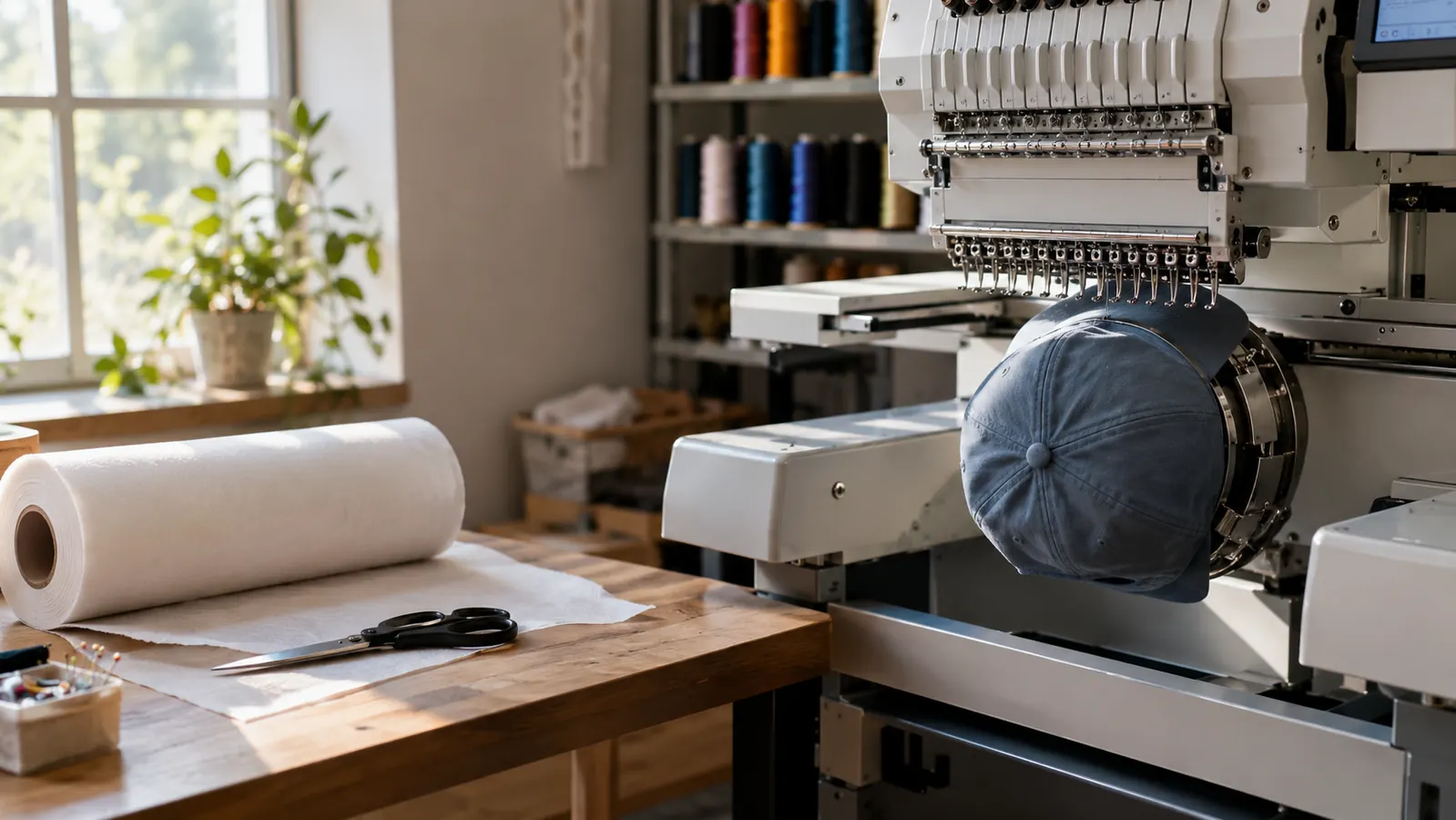
I have stitched 536 caps in the last eighteen months. That is not a made-up number for a review. It is the count that got high enough to make me sit down and tell you the truth about the tear-away stabilizer I keep on my shelf. The roll is New brothread Tear Away Embroidery Stabilizer, 12 inches wide and 50 yards long. It has been behind hats for three youth baseball teams, a church picnic, a barbecue place, and a heating and air company that orders the same left-chest logo every spring. I know this material better than I know some of my neighbors. After 536 caps, here is the straight story: tear-away is a good tool, but it is not the only tool, and too many embroiderers treat it like it is.
I am a home embroiderer in Macon, Georgia. I work alone in a converted spare bedroom on a used six-needle machine I bought in 2019. My customers are local, my runs are small, and I do not have the patience for thread that snaps at 9:00 on a Tuesday night. That is why I started using tear-away in the first place. It pulls clean, it leaves a soft edge, and it does not add bulk to a cap back. But after a few hundred caps I also learned where it lets you down. This review covers both sides, the easy pull and the ugly tear, because nobody told me the ugly part when I opened my first roll.
The Quick Verdict
New brothread tear-away is a solid stabilizer for caps and dense designs on stable woven fabrics. It is not a replacement for cut-away on knits or on anything that will see a washing machine more than a few times. Buy it for what it does well and keep a roll of cut-away for the rest.
Amazon Check Today's Price →The Roll I Reach For When a Cap Order Lands
For stable caps, canvas bags, and woven polos, this 50 yard roll pulls clean and holds a dense logo. It is the backing I keep within arm's reach of my machine. Check today's price on Amazon and see if it fits your stack of work.
Amazon Check Today's Price on Amazon →How I Put 536 Caps Through This Roll
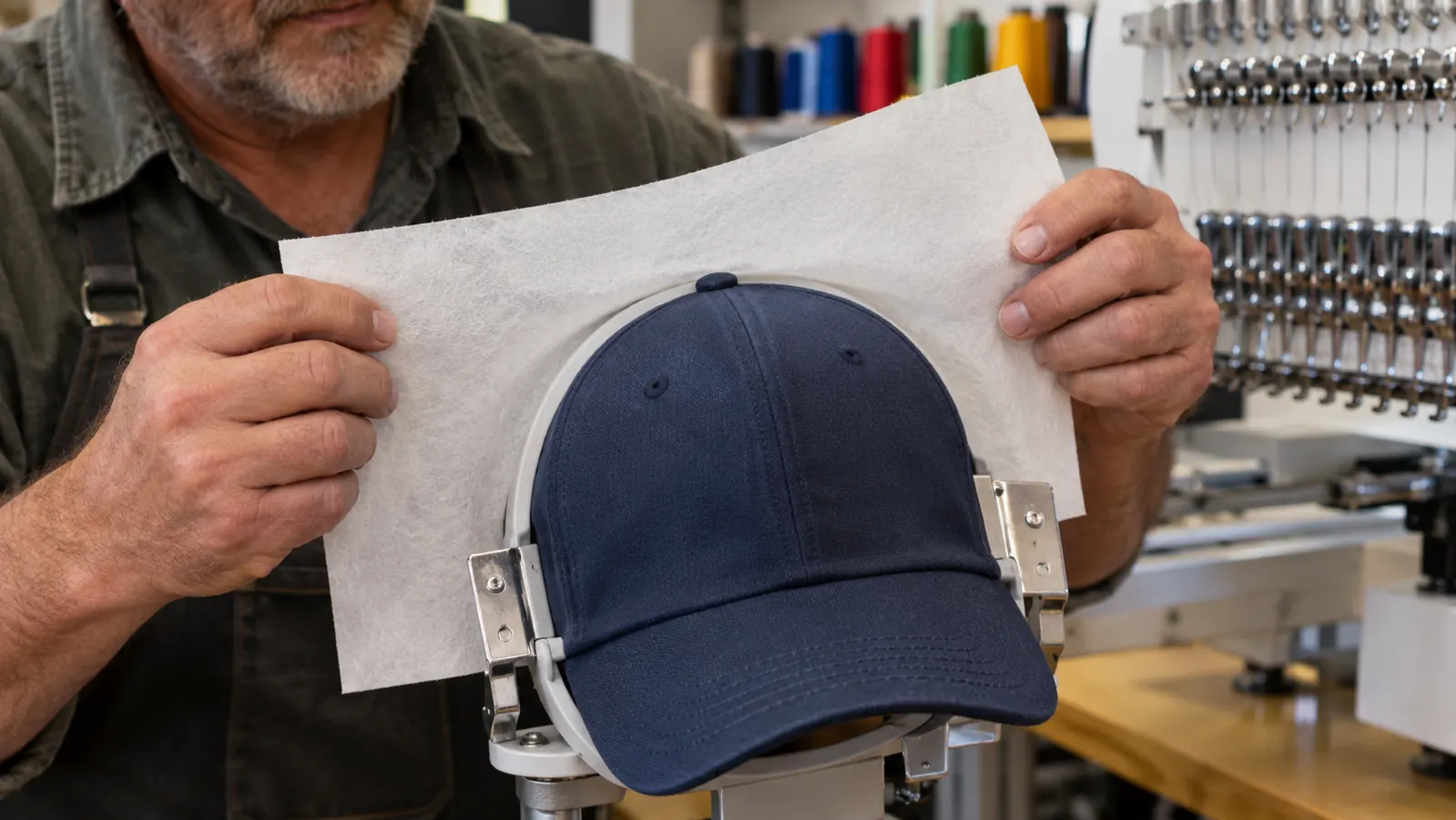
Most of my cap orders are small runs of twelve to sixty pieces. A typical week is two or three jobs and maybe one rush order that has to be out the door by Friday. To set up a cap, I cut a strip of this tear-away about eight inches long and a little wider than the cap back, hoop the cap with the stabilizer behind it, and stitch the design. For the first two hundred caps it worked without fuss. The tear-away pulls off in one piece when you grab the corner right, and the edge it leaves behind is almost invisible on the twill of a structured cap. I could move from front panel to side patch and not think about backing at all.
The real test came in March when a church group ordered forty-eight beanies for a youth retreat. Beanies are stretchy, and I knew better than to use tear-away on stretchy knit. I did it anyway because the order had to be ready by Friday. By the time I finished the third beanie, the stitches had started to tunnel. The fabric stretched under the needle while the tear-away stayed flat, so the logo looked wavy and the knit pulled up into a little ridge along the edge. I unpicked three logos, threw away two ruined beanies, and switched to cut-away for the rest. That was the day I stopped believing tear-away was the answer to everything.
The same roll has also been through towels, canvas bags, and the backs of a few polyester jackets. On towels, the tear-away did what I asked as long as I used a medium tack and a 75/11 needle. On canvas bags, it was a dream because the canvas is stable and dense. On the jackets, the backing tore away cleanly but left a scratchy edge against the collar, so I finished those by sewing a strip of fold-over elastic over the seam. That is the sort of lesson that does not show up in the product description.
Counting caps is not a brag. It is the only way I can tell you honestly how the roll holds up. Somewhere around cap number 180 I had to adjust my hoop pressure because the tear-away was compressing a little more than a fresh piece of cut-away would. After cap 240 I noticed my needle was dulling faster than usual, which makes sense when you think about how much abrasive fiber passes under the needle. I changed to a new 75/11 needle at cap 300 and again at cap 450. Those small maintenance clues matter more than any first impression, and they are exactly what a 500-cap review can give you.
One afternoon I ran the same two-letter monogram on a cotton kitchen towel, a piece of jersey knit, and a structured cap, all with New brothread tear-away. I washed all three three times. The cap stayed crisp, the towel developed a slight ripple along the letters after the third wash, and the jersey looked like a crumpled flag. That sidebar is a big part of why I do not trust anyone who tells you there is one backing for everything.
Where Tear-Away Earns Its Keep
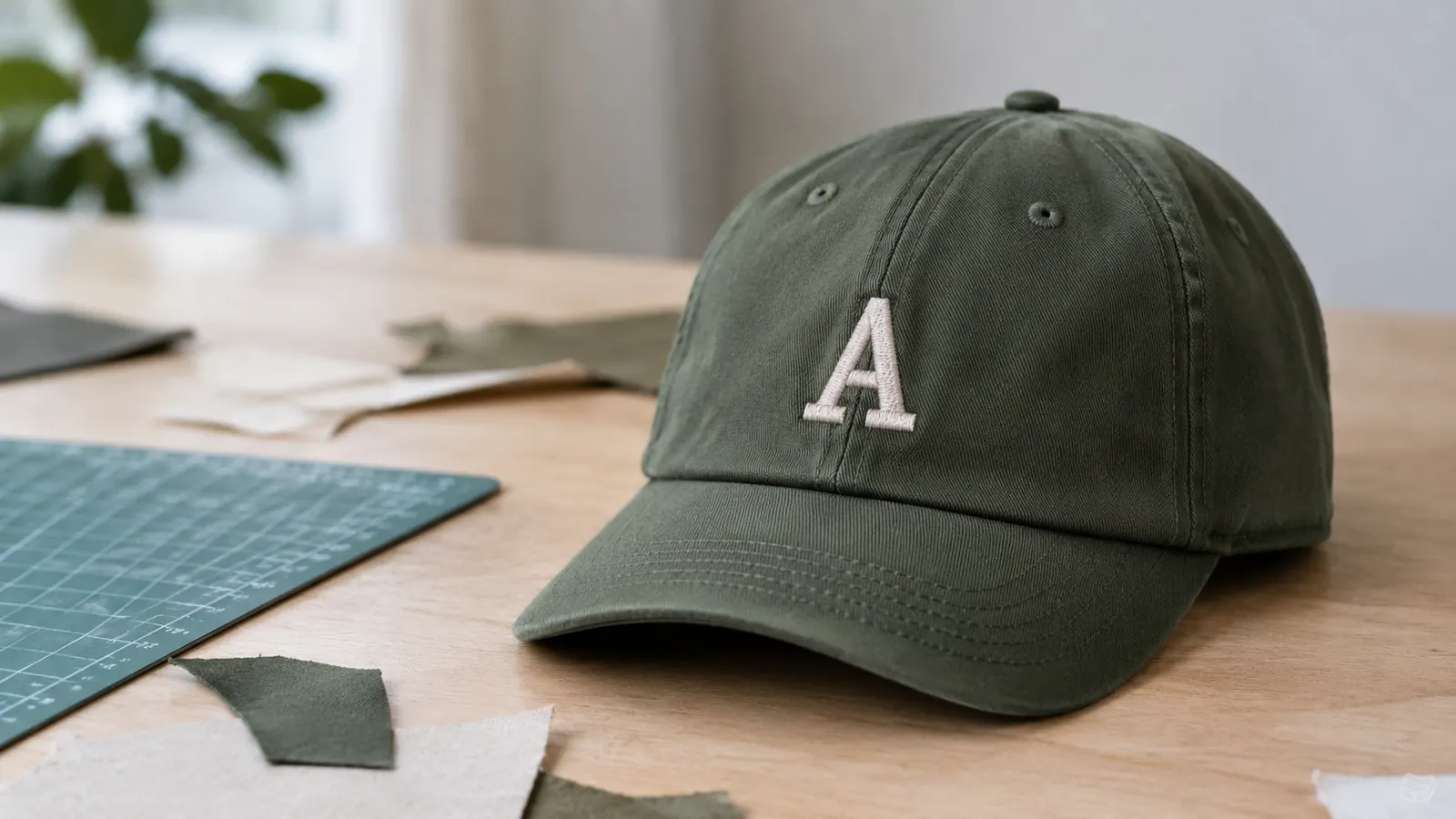
Let me be fair about what tear-away does right on a cap. A structured baseball cap is made from stiff twill with a buckram front, so there is very little stretch to fight. The backing does not need to stay in the garment forever. It needs to hold the stitches while the cap is in the hoop, then come out and leave the design supported by the cap itself. Tear-away is ideal for that job because it pulls away without distorting the buckram. It is fast, and on a schedule of twelve caps before lunch, anything that saves you from clipping tiny bits of backing with curved scissors is a win.
New brothread makes this particular roll tear cleanly. The sheet tears in a straight line down the roll, and it does not crumble into dusty fibers the way some cheap stabilizers do. It has enough body to stand up to a dense satin stitch without winking or shifting. I used it on a set of thirty-six caps with a high-density left chest logo and the fabric did not pucker. The roll is fifty yards long. In my shop, one roll lasts between three and five months, depending on how many bags and towels are mixed in.
The tear itself is the part people ask about. You do not need to rip in every direction. You trim the outside edge with scissors, catch the corner behind the cap, and pull gently toward the center. It releases as one sheet about nine times out of ten. On the rare cap where it splits into two stubborn strips, pull the second piece from the opposite side. There is a trick to getting the angle right, but it is not complicated. It took me about ten caps to learn it and the failure mode is only a few minutes with tweezers.
In May, a local fastpitch league asked for thirty-six caps with a two-color front logo and a small side patch. That gave me a chance to see how the tear-away behaved under a long run. Each cap had about 11,000 stitches, and I pushed the machine at 850 stitches per minute. The stabilizer held registration from the first color to the last. The front logo stayed sharp while I swapped thread colors, and the pull test at the end showed no gaps in the satin columns. That is the kind of performance the fans do not notice and the coach would notice immediately if it failed.
Where It Lets You Down
The first place tear-away lets you down is stretchy fabric. I learned that on the beanies in March, and I have seen it again on the knit shirts a local school orders for field day. The moment the fabric is a jersey knit or anything with spandex, tear-away cannot support the stitches over time. It feels fine when you pull it out of the hoop, but after a wash or two the design gets a pulled, wavy look. The stitches are not anchored into anything permanent. Cut-away is the right backing for knit, period. It stays in the garment forever and gives the design structure once the fabric relaxes.
The second issue is the grain of the material. Pull at the wrong angle and tear-away shreds into little strips, leaving fibers in the lettering. My first roll, a generic brand that I will not name, did that constantly. This New brothread roll tears more predictably because the fiber seems to run straight down the roll, but it still has a grain. I had to train myself to tear from the same side of every design. Every time I forget, I spend five minutes with tweezers picking tiny threads out of a finished letter.
The third thing is washing. Tear-away is meant to be removed, so it gives no lasting support in the laundry. On a cap that people wear and sweat in, the design stays put because the cap fabric and the cap's own backing hold it. But on a towel that gets washed every week, any little bit of tear-away left behind will eventually fray and catch. I have seen the edge of a letter start to lift after six or seven washings. That is the honest trade-off. You save time at the hoop, and you give up durability in the machine.
Here is the fourth thing I want to be honest about, and it is the one I never see in the marketing. Tear-away dulls needle points faster than cut-away. The material is lightly coated so it tears in a straight line, and that coating acts like very fine sandpaper as the needle punches through. A needle that starts out sharp will feel dull after about three hundred caps. A dull needle causes skipped stitches and pulls the fabric. I now change my needle every two or three jobs when I am working mainly with tear-away. That is an extra expense people do not budget for when they order a roll of this size.
Now, before you decide this review is all complaints, let me tell you how I work around the weak spots. For stretchy fabric I use cut-away. For towels I use a slightly larger hoop and a medium tack, and I tear slowly from the center out. For anything a customer will wash every week, I trim the tear-away close with snips and press the seam. Tear-away still saves me time on the jobs it is built for. The answer is not to quit using it. The answer is to know exactly where it belongs.
What I Wish I Knew Before the First Cap
Fifty yards is much bigger than it sounds. I use a 12 inch width for caps and I do not need the full width on every job. I cut narrow strips for small left chest logos and save the full width for a large back-of-jacket design. A roll of this size will sit on the shelf for months if you do hats and polos. The roll is not a product you finish like a spool of thread. It is a supply you restock every season.
The thickness matters more than people think. Some tear-away is so thin it wads up under the needle, and some is so thick you can see it through the fabric. This New brothread roll lands in the range I like for caps. It gives a clean registration, but the cap still flexes normally under the needle. It is the same weight from the start of the roll to the end, and that consistency keeps a production home shop sane.
There is also a learning curve to the tear. The first five caps look like a disaster because every sheet seems to tear on its own angle. After a few dozen, your hands learn the motion and it becomes easy. That is not a flaw. It is a skill. If someone tries this product once and quits on the first cap, they are missing what tear-away can really do.
One more piece of storage advice. Keep the roll flat, not standing on end. A 50 yard roll standing on its end will settle, and the lower edge can develop a crease from pressing against the table. That crease can show up as a line in your stitch field. I keep mine on a shelf above the work table, lying flat, and I have not had a bad roll since I started doing that.
What I Liked
- Tears cleanly in one sheet once you learn the grain.
- Holds dense designs stable on structured caps.
- 50 yard roll lasts my small shop for months.
- Adds very little bulk behind a finished cap.
- Saves you from clipping inside every curve.
Where It Falls Short
- Not for stretchy knits or anything that needs permanent support.
- Dulls needles faster than cut-away, so budget for replacements.
- Pull against the grain and it shreds, leaving fibers.
- Still needs sharp scissors for the outside edge before you tear.
After cap number 240 I noticed my needle was dulling faster. That is the kind of detail a 500-cap review exists to catch.
Who This Is For
If you run mostly structured caps, woven pique polos that do not stretch much, and canvas bags, this is the stabilizer to keep in reach. It is also for you if you are tired of clipping around tight corners of small lettering. Tear-away lets you pull the excess away instead of reaching in with a curved blade. New brothread's version is smooth, consistent, and stiff enough for the dense logos that local teams want.
Who Should Skip It
Skip tear-away entirely if most of your work is T shirts, jersey knit polos, performance fabric, or baby clothes that hit the washing machine every day. They need cut-away backing that stays inside the garment. Skip it too if you will not change your needle more often. Tear-away is not a shortcut for a shop that cannot tell the difference between stretchy knit and stable twill. It is a specific tool for a specific stack of work.
The short version is simple. Buy this roll for caps and for stable woven jobs where you want a fast, clean tear. Keep a different roll for anything that stretches or gets washed hard. That two-roll system, not any single product, is what keeps my small shop moving.
The Two-Roll Rule That Saved My Small Shop
If your week looks like mine, a roll of New brothread tear-away will carry the caps and a roll of cut-away will carry the shirts. See today's price on Amazon and decide if it earns a spot beside your machine.
Amazon Check Today's Price on Amazon →